I grew up in Lithuania knowing about the Hill of Crosses, but somehow I never actually visited it as a child. It took living in Asia for over ten years, coming back to Lithuania and seeing my own country with slightly different eyes before I finally made it there.
I’ve now visited the Hill of Crosses twice – once in early December, in some of the most spectacularly horrible weather imaginable, and once on a warm, sunny August day. They felt like two completely different places. And I think that’s partly what makes the Hill of Crosses so fascinating.
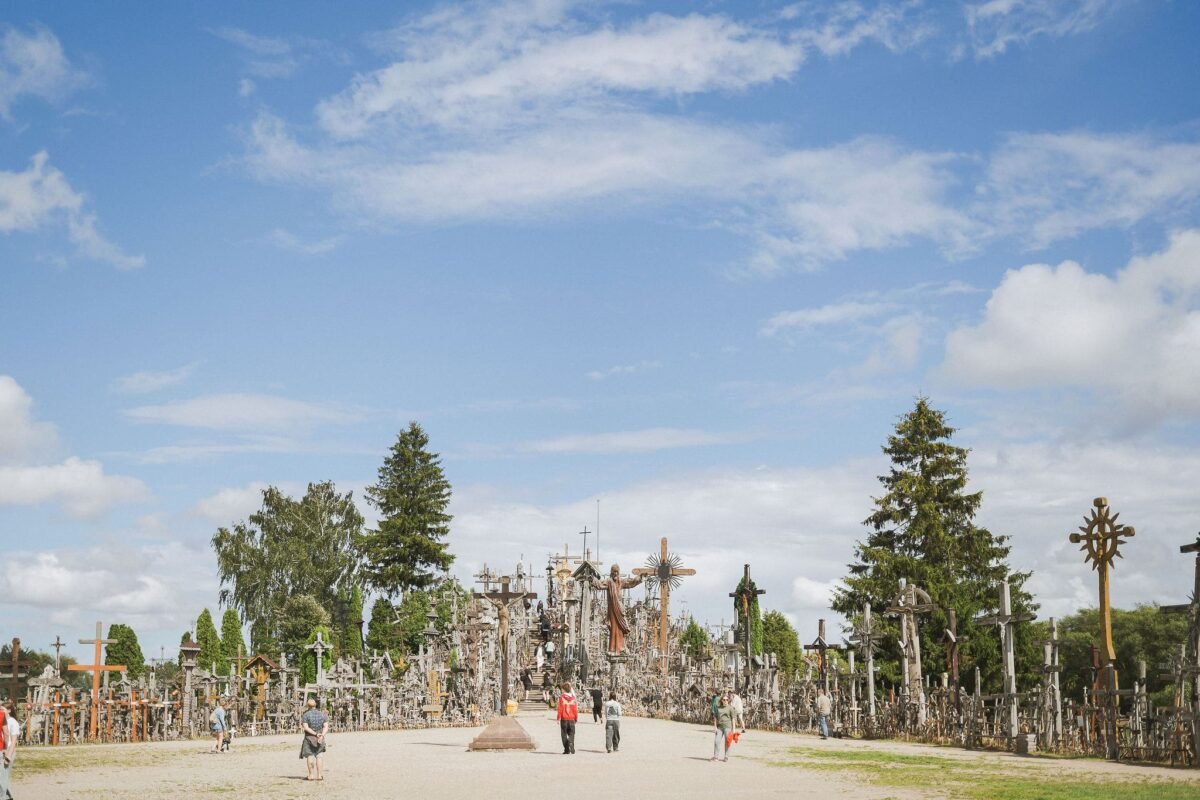
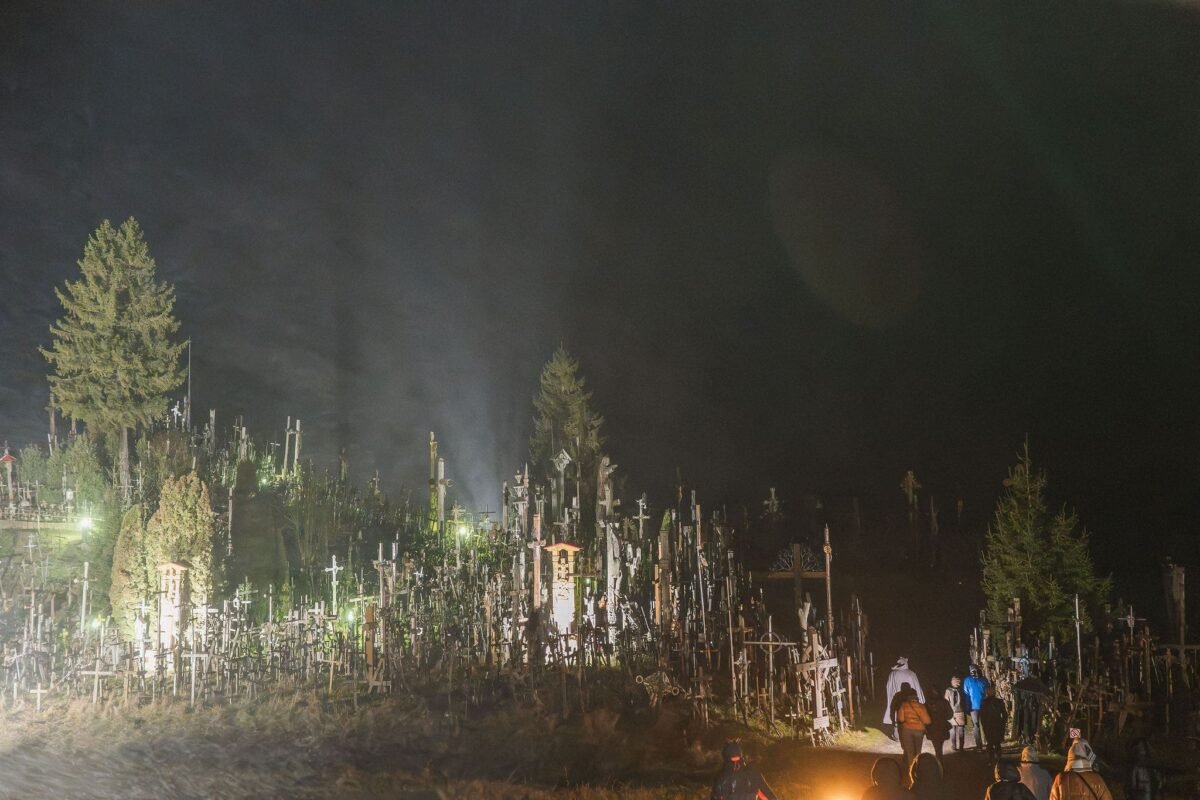
If you’re planning a trip to Lithuania and wondering whether the Hill of Crosses is worth making the journey from Vilnius, here’s what to expect, how to get there and what else you can do around Šiauliai while you’re there.
What is the Hill of Crosses?
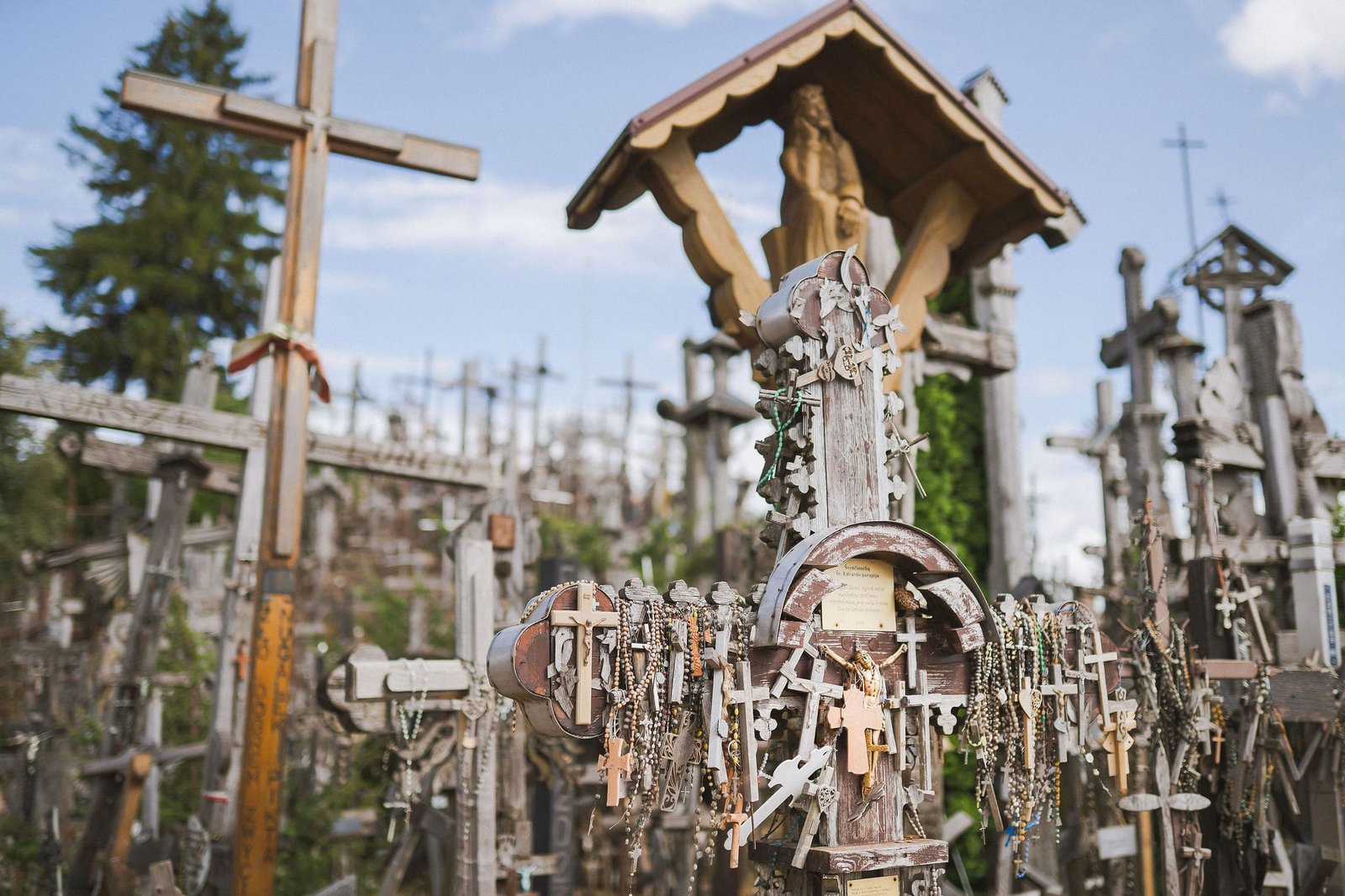
The Hill of Crosses, or Kryžių kalnas in Lithuanian, is exactly what its name suggests – a small hill covered with crosses. Except “covered” doesn’t really do it justice. There are estimated to be around 200,000 crosses here today, from enormous wooden crosses towering above you to tiny crosses, rosaries and religious objects tucked into every available space. The effect is quite extraordinary. Paths weave between them, crosses lean against crosses, rosaries hang from wooden arms and the whole collection continues to grow as visitors leave new ones behind.
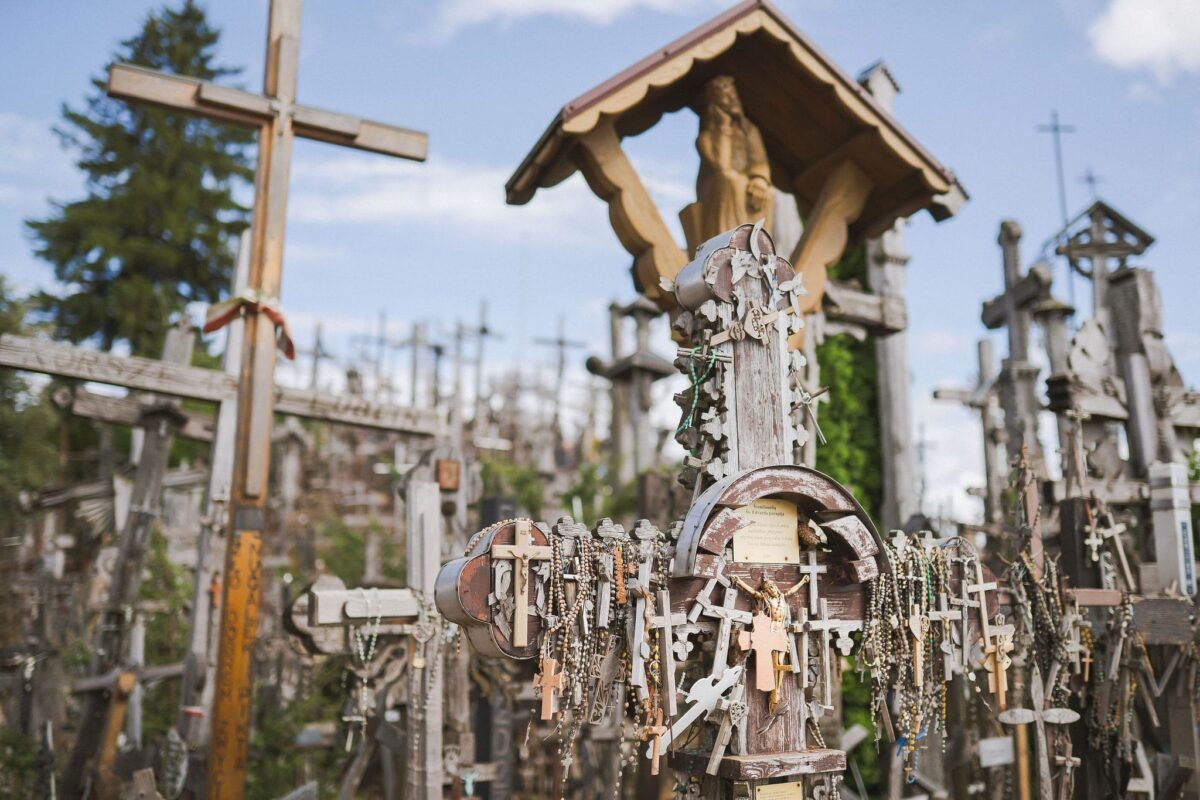
The Hill of Crosses is located around 12 kilometres outside Šiauliai in northern Lithuania, so this isn’t an attraction you can simply wander over to while sightseeing in Vilnius. You’ll need to make a little effort to get here. I think it’s worth it.
Why are there so many crosses?
Nobody knows precisely when the tradition began. There was once a medieval wooden castle on the site, while written references to the Hill of Crosses appeared in the 19th century. One explanation links the first crosses to those killed during uprisings against Imperial russian rule; another tradition says people came here to pray for health and left crosses after experiencing miraculous healings.
What happened later is much better documented. During the soviet occupation of Lithuania, the Hill of Crosses became a powerful symbol of religious faith and resistance. The soviet authorities repeatedly tried to destroy it. In 1961, crosses were pulled down: wooden ones were burned, metal crosses were taken for scrap and stone and concrete ones were buried or used in road construction. And people simply brought them back.
Again and again.
That history changes the way you look at the place. You’re not simply standing in front of an unusual collection of religious objects. You’re looking at something people continued rebuilding despite attempts to make it disappear. After Lithuania restored its independence in 1990, the Hill of Crosses became an increasingly important pilgrimage site. Today people come from Lithuania and all over the world to leave crosses and rosaries, often praying for health, family wellbeing or in gratitude for something that has happened in their lives.
Pope John Paul II and the Hill of Crosses
One of the most important moments in the Hill’s modern history happened in 1993, when Pope John Paul II visited Lithuania. On 7 September, he came to the Hill of Crosses, prayed here and celebrated Mass. His visit brought international attention to a place Lithuanians had known for generations. You’ll notice a large crucifix near the Hill before you enter. It is connected to that visit: the crucifix was a gift from Pope John Paul II and arrived at the Hill the following year.
His visit also eventually led to the construction of the Franciscan monastery about 300 metres away. After visiting Lithuania, the Pope encouraged Franciscan brothers in Italy to establish a monastery beside the Hill of Crosses; it was consecrated in 2000.
My first visit: the Hill of Crosses in December
My first visit was in early December. There was no snow yet. It was dark, freezing and incredibly windy. Basically, perfect Hill of Crosses weather. We visited with a Franciscan monk who guided us around the Hill. We were each given headphones, which meant he could simply walk ahead talking normally while we followed between the crosses listening to the history and individual stories behind some of them. I loved doing it this way. The Hill is visually impressive on its own, but having somebody explain what you’re actually looking at makes the experience completely different.
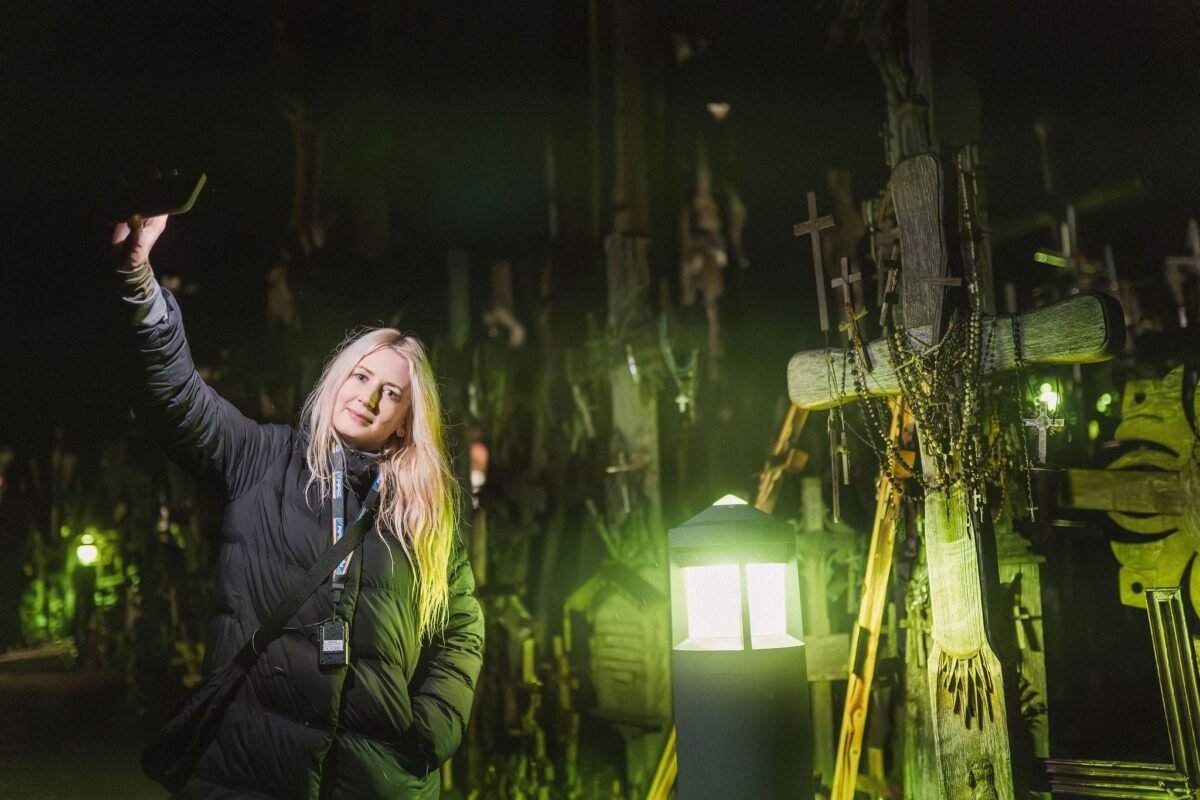
At one point, as we were walking towards the crosses, my friend commented:
“Well, at least it’s not raining.”
Approximately three minutes later, Lithuania decided to punish her optimism. The rain arrived with such an enormous gust of wind that it wasn’t really falling from the sky anymore. It was travelling horizontally. I don’t think I’ve ever experienced rain quite like it. So there we were – walking among thousands upon thousands of crosses in darkness, illuminated by lights, being battered sideways by freezing rain while a Franciscan monk calmly told us stories through our headphones. It was completely surreal. And strangely, I wouldn’t have changed the weather.
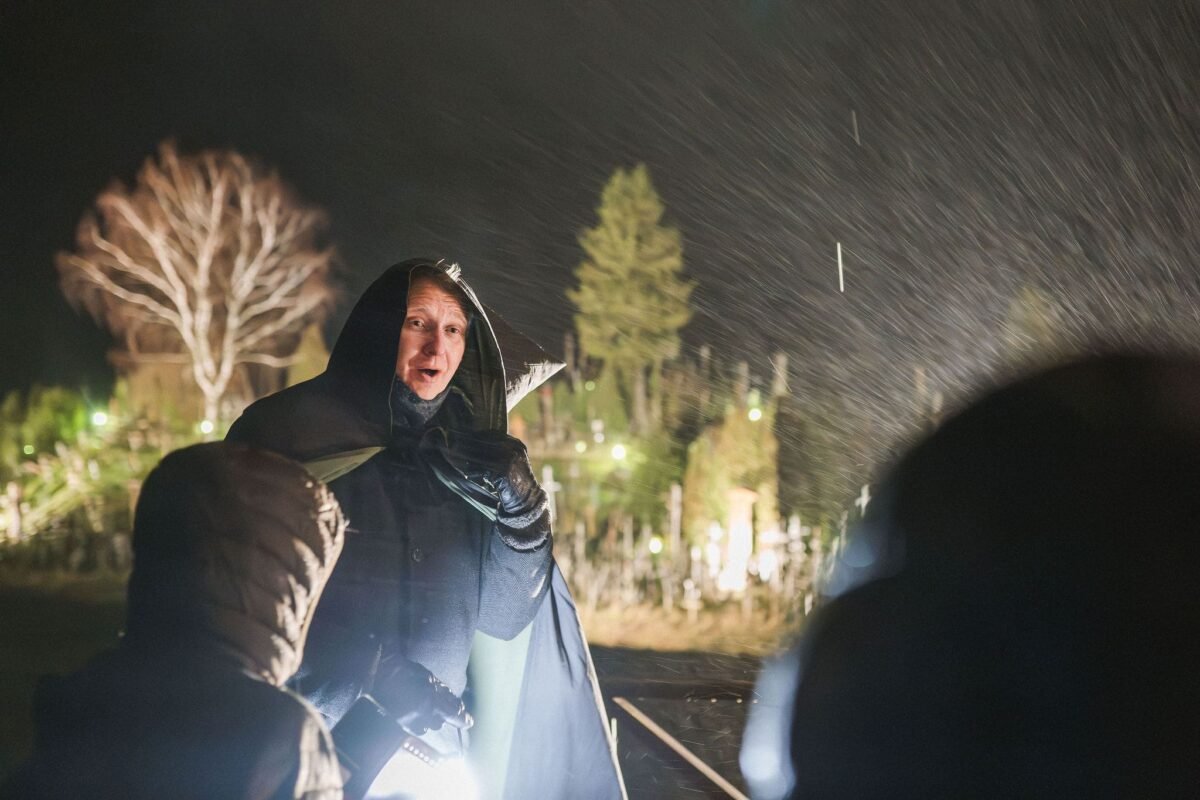
If you visit later in the day or during the darker months, I particularly recommend experiencing the Hill with a guide. The crosses themselves are fascinating, but understanding some of the individual stories behind them gives the place another dimension.
My second visit: summer couldn’t have been more different
My second visit was in August. This time it was sunny and hot – relatively hot for Lithuania, anyway. Suddenly I could properly see everything I’d walked past in darkness during my first visit. Thousands of crosses layered over one another. Tiny details. Rosaries. Inscriptions. Crosses brought from other countries. New ones beside old ones.
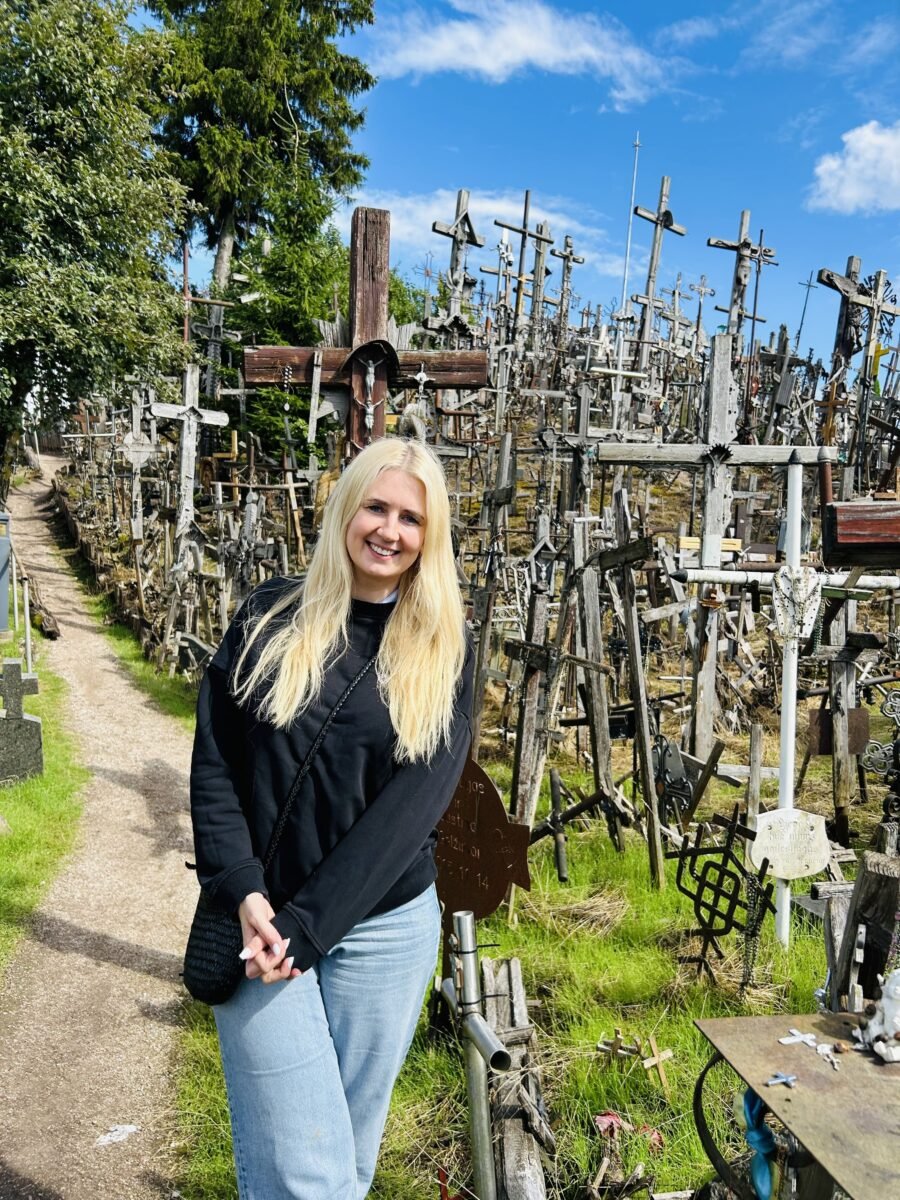
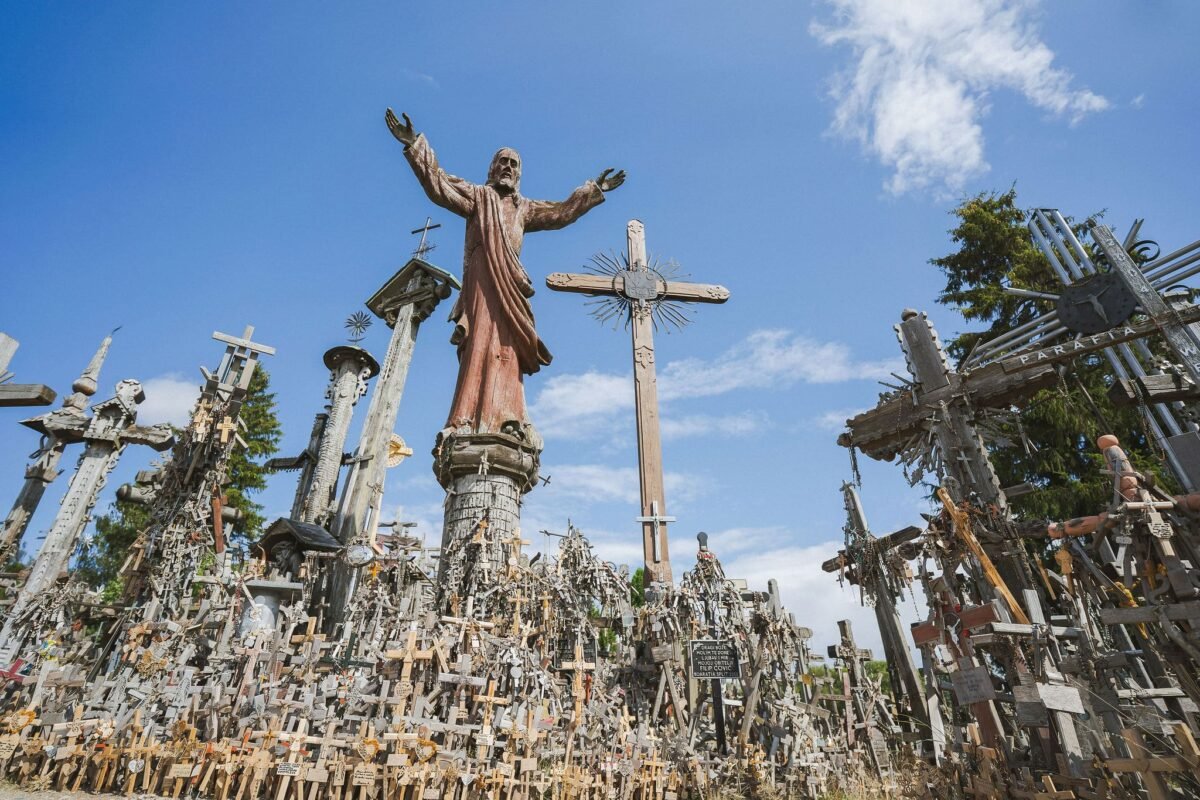
We again had a guide, and being there in daylight gave me much more time to simply wander around and look. One woman travelling with me bought a small cross for her sick cat. Yes, her cat. She left it on the Hill hoping he would get better. And somehow that little story explains the place quite well. People leave crosses for enormous reasons and very personal ones – for health, for relatives, in gratitude, in hope and sometimes for beloved pets.
Can you leave a cross at the Hill of Crosses?
Yes. You don’t need to arrive in Lithuania carrying one in your suitcase, though you are welcome to do that if you prefer. There are small souvenir kiosks near the entrance where you can buy crosses of different sizes and leave one on the Hill. Even if you’re not religious, I’d still approach this as a sacred place rather than simply an Instagram attraction. You don’t need to leave anything yourself to appreciate what the Hill represents.
Is the Hill of Crosses worth visiting?
For me, yes – but I would particularly recommend it if you’re interested in Lithuanian history, unusual places, religion, photography or soviet-era history. If you simply arrive, photograph the crosses for ten minutes and leave, I think you’re missing quite a lot of what makes this place interesting. That’s why I’d strongly recommend either joining a guided trip or arranging a guide at the Hill.
Once you know why people kept rebuilding it after the authorities destroyed it, and once you start hearing the stories attached to individual crosses, it stops being merely an unusual-looking landmark.
How long do you need at the Hill of Crosses?
I’d allow approximately one to two hours, particularly if you’re visiting with a guide. You can physically walk around much faster than that, but this isn’t really a place I’d rush. There are countless little details to notice, and if you’re interested in photography you’ll probably spend considerably longer here than you expect. The Hill itself is open to visitors throughout the year and can also be visited at night.
How to get to the Hill of Crosses from Vilnius
This is the slightly inconvenient part. The Hill of Crosses is roughly 200 kilometres from Vilnius, close to Šiauliai, so it’s not really a spontaneous detour from the capital.
By car
If you’re renting a car in Lithuania, driving gives you the most freedom and also makes it easy to combine the Hill of Crosses with Šiauliai and other places in northern Lithuania.
On a guided tour from Vilnius
For most visitors without a car, this is probably the easiest option.
See Hill of Crosses tours from Vilnius → Book HERE
With transport and pick-up organised for you, you don’t have to work out the train/bus connections and onward journey from Šiauliai.
By public transport
You can also travel from Vilnius to Šiauliai by train and continue towards the Hill from there. If you’re choosing this option, I would check the latest Lithuanian Railways and local bus schedules shortly before travelling, as timetables can change. If you’re already staying in Šiauliai, you’re much closer: the Hill is only around 12 km outside the city.
Don’t just visit the Hill – spend some time in Šiauliai
If you’ve travelled all the way from Vilnius, I wouldn’t necessarily photograph the Hill of Crosses and immediately drive back. There are several other places in Šiauliai worth adding to your day.
Visit Chaim Frenkel’s Villa
One of my favourites is Chaim Frenkel’s Villa. Chaim Frenkel was a hugely successful Lithuanian Jewish industrialist who arrived in Šiauliai in 1879 and developed a small leather workshop into a major factory. In 1908, Chaim and his wife Dora built an impressive Art Nouveau villa beside their flourishing leather factory. It had all the luxuries and technological innovations of the period – electricity, central heating, running water and even a telephone.
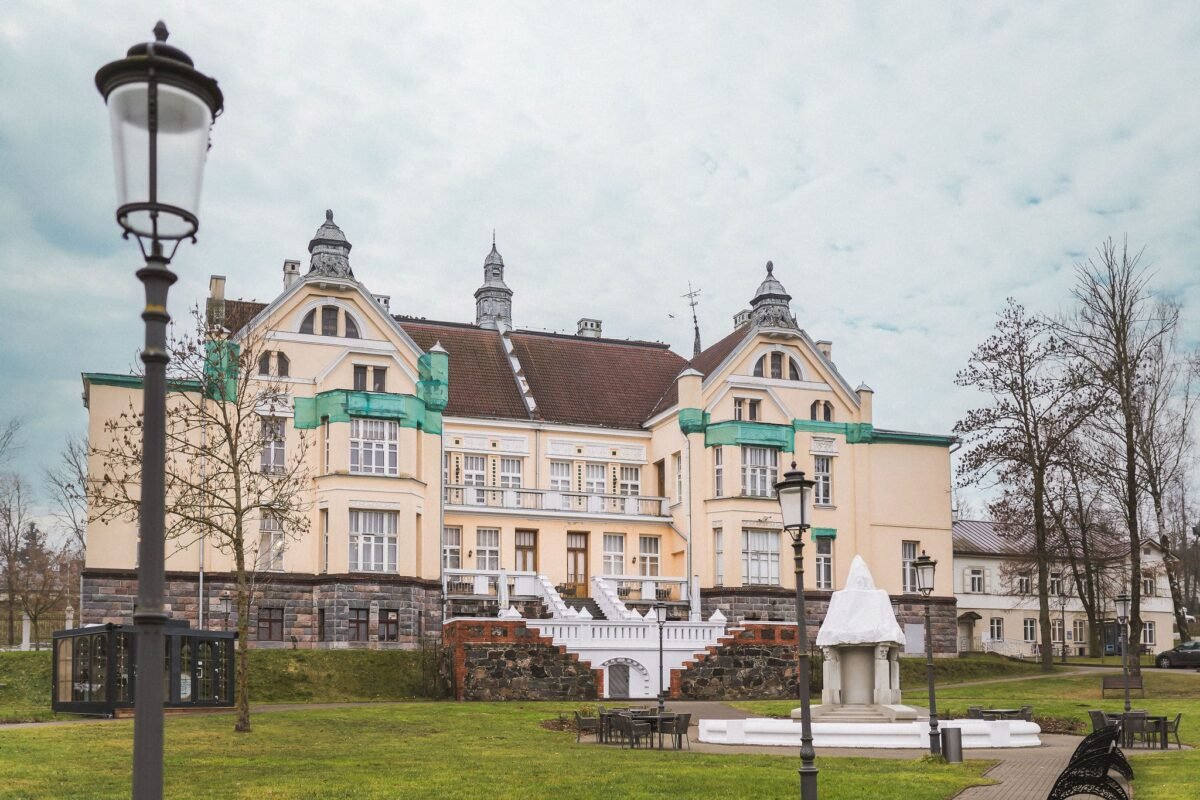
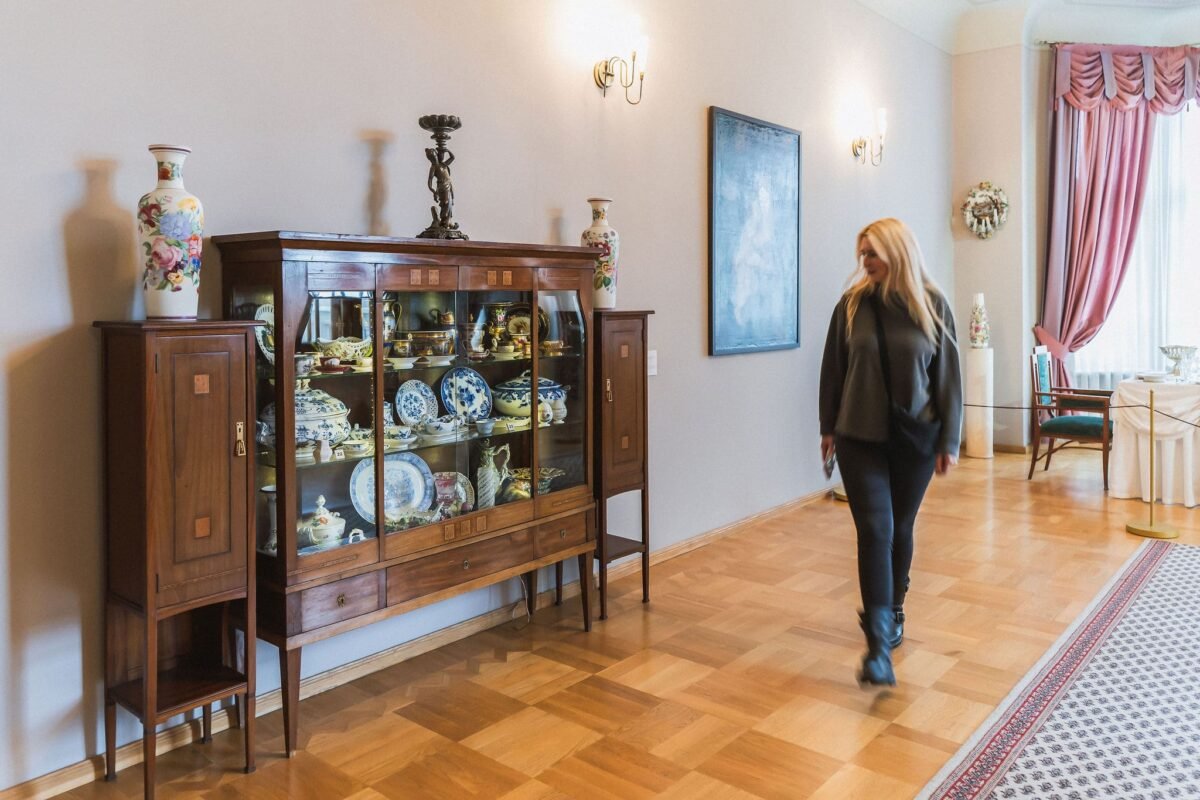
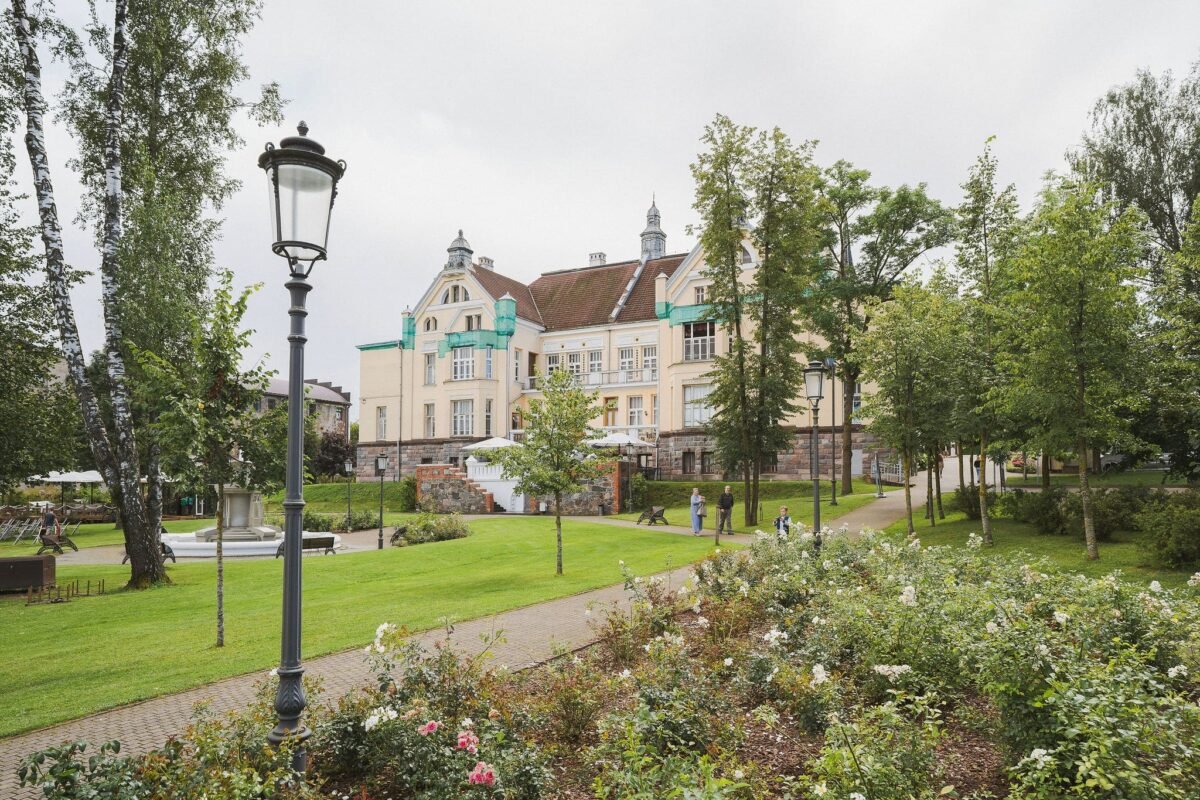
Today it’s a museum, and you can walk through recreated interiors while learning about the Frenkel family, Jewish heritage in Šiauliai and what life was like for a wealthy industrial family at the beginning of the 20th century. I found it particularly interesting because it’s not simply a beautiful house – it tells another part of Šiauliai’s story that you wouldn’t necessarily discover by visiting the Hill of Crosses alone.
Have lunch at Bleu de Frenkel
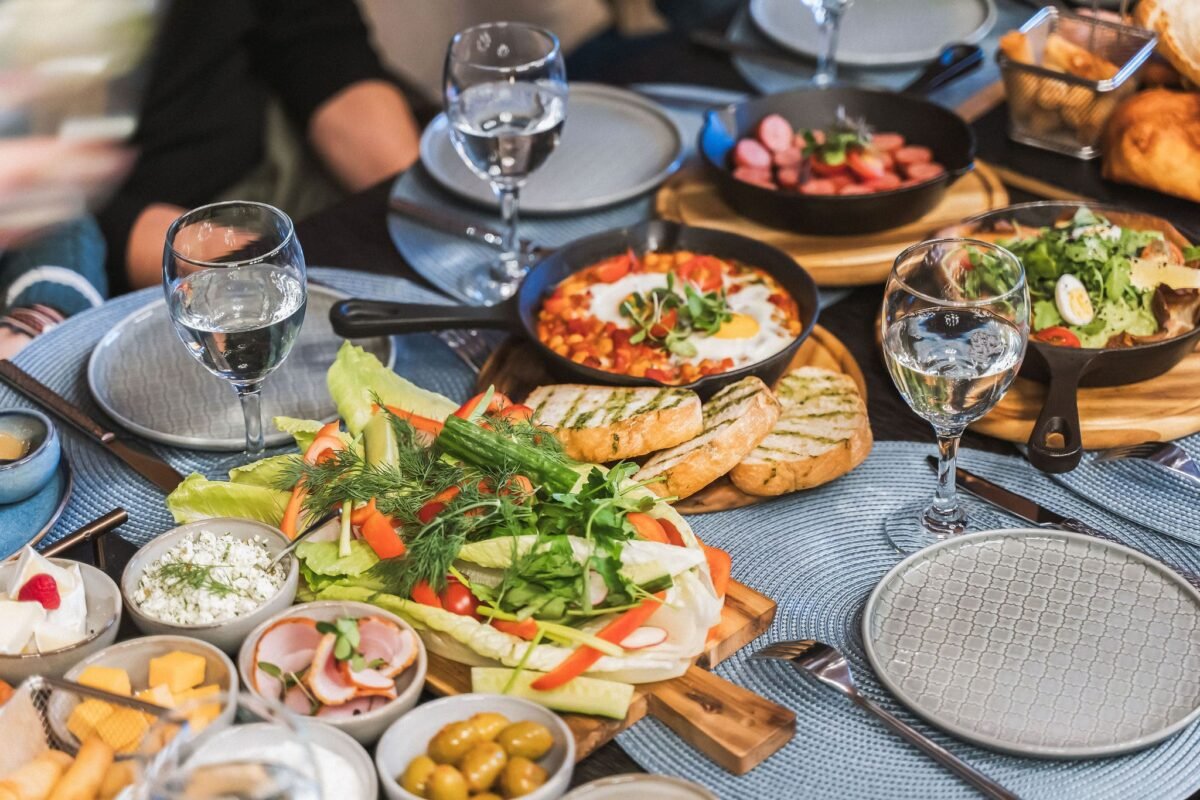
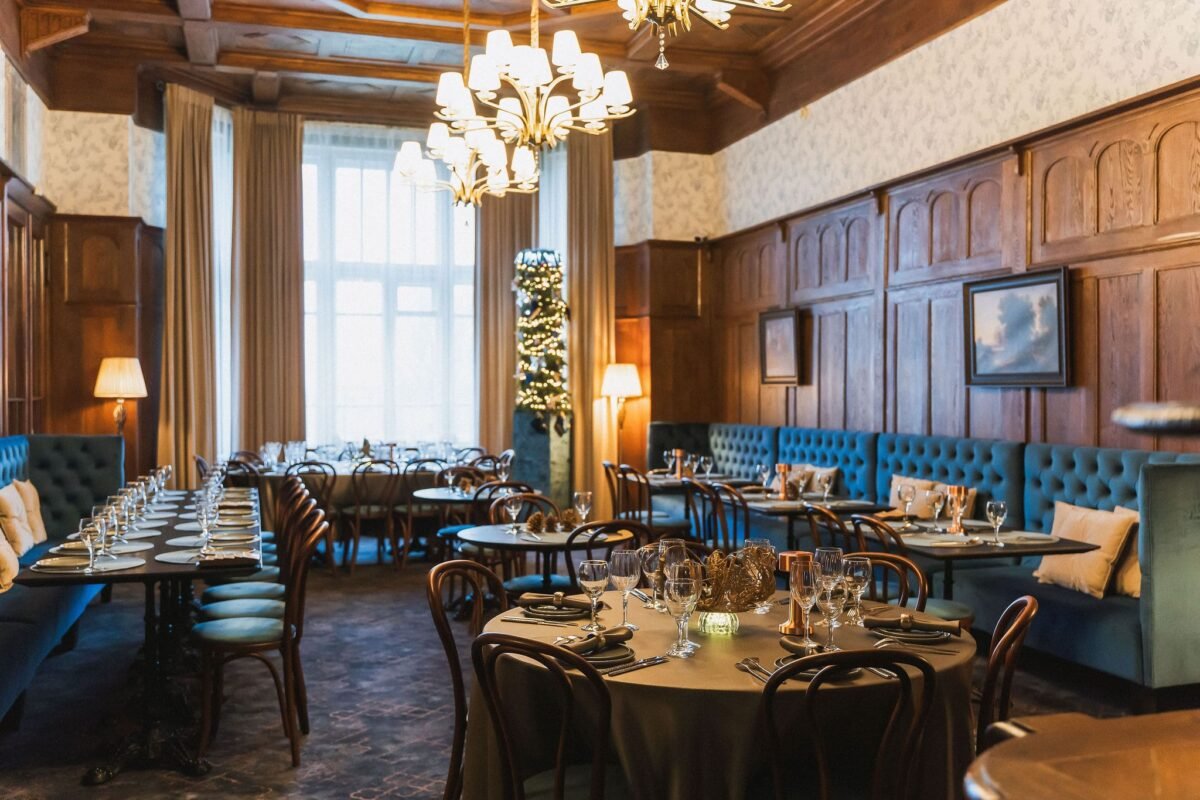
There’s also a restaurant right at the villa called Bleu de Frenkel. I ate here and really enjoyed the food. The portions were rather generous, so arrive hungry. The restaurant is inside the historic villa complex, which makes it a particularly convenient place for lunch if you’re visiting the museum.
Go underground at Lithuania’s oldest brewery
Another surprisingly interesting stop is Gubernija. It is considered Lithuania’s oldest brewery, with its history going back more than 350 years, and its historic cellars date back to the era of the Grand Duchy of Lithuania.
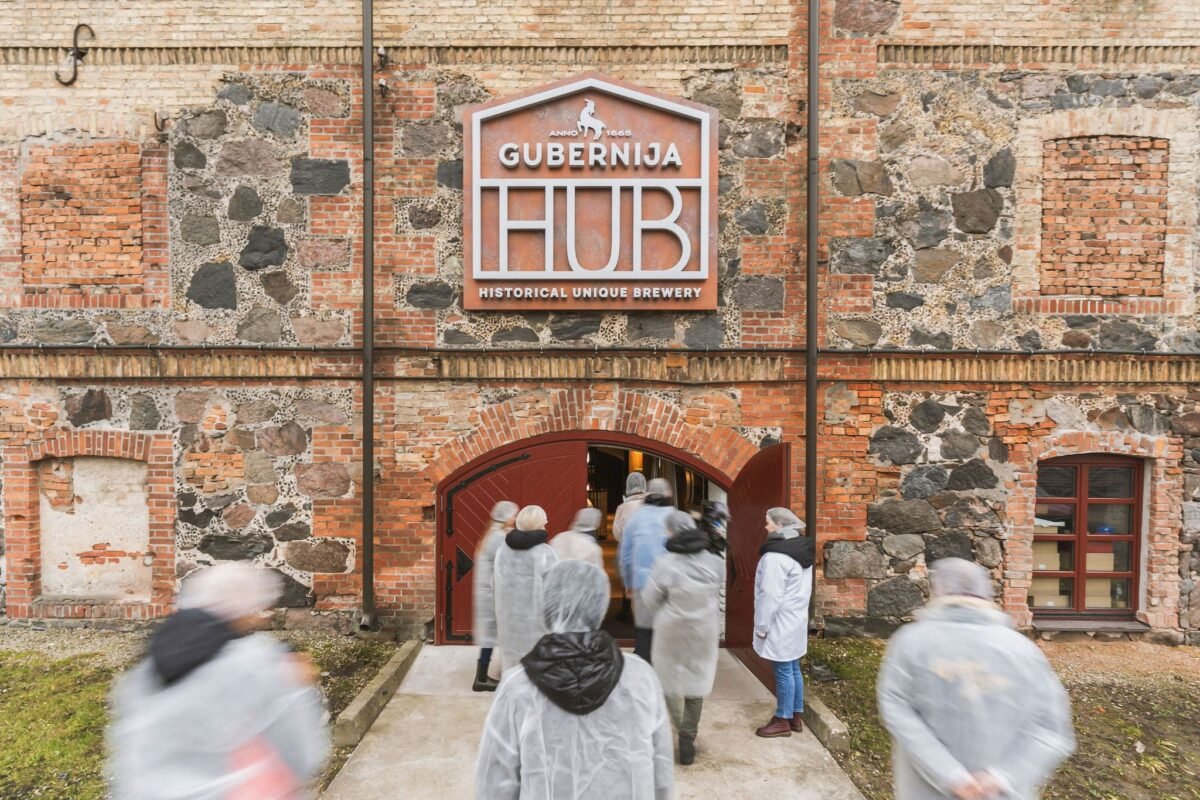
And there’s much more to the story than beer. Between 1864 and 1904, when Lithuania was part of the russian Empire, the authorities banned Lithuanian-language publications printed in the Latin alphabet. Lithuanians responded with one of my favourite chapters of our history: the knygnešiai, or book smugglers, who secretly transported and distributed Lithuanian books.
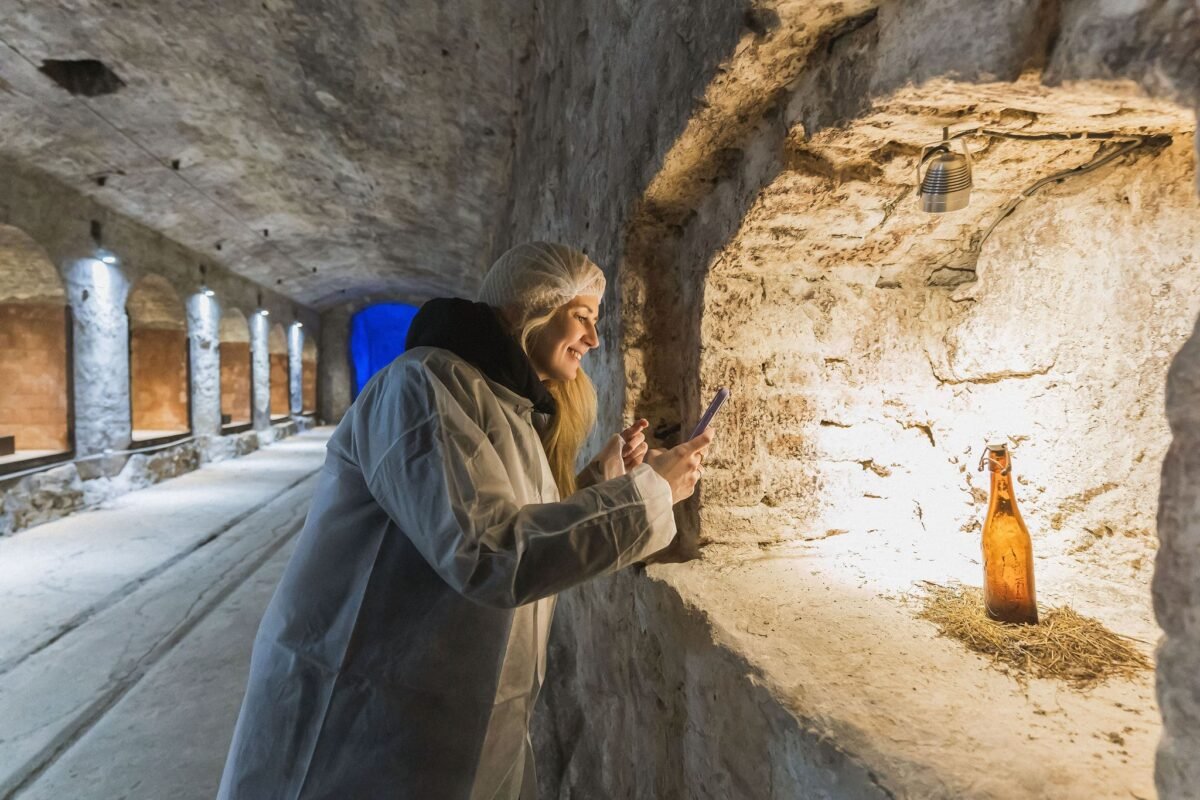
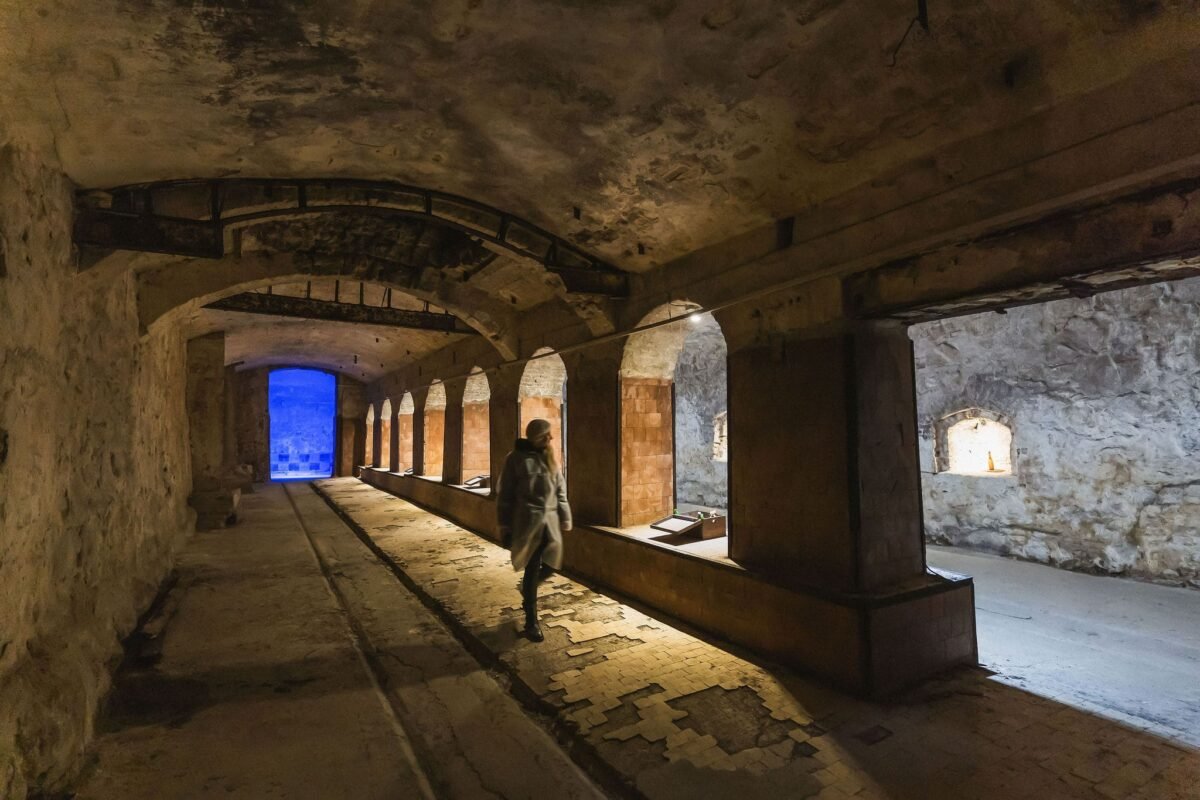
Gubernija became one of the hiding places. Lithuanian books were stored in the brewery’s cellars and, wonderfully, even concealed inside beer barrels to hide them from the tsarist police. I love details like this because suddenly an old brewery becomes much more than an old brewery.
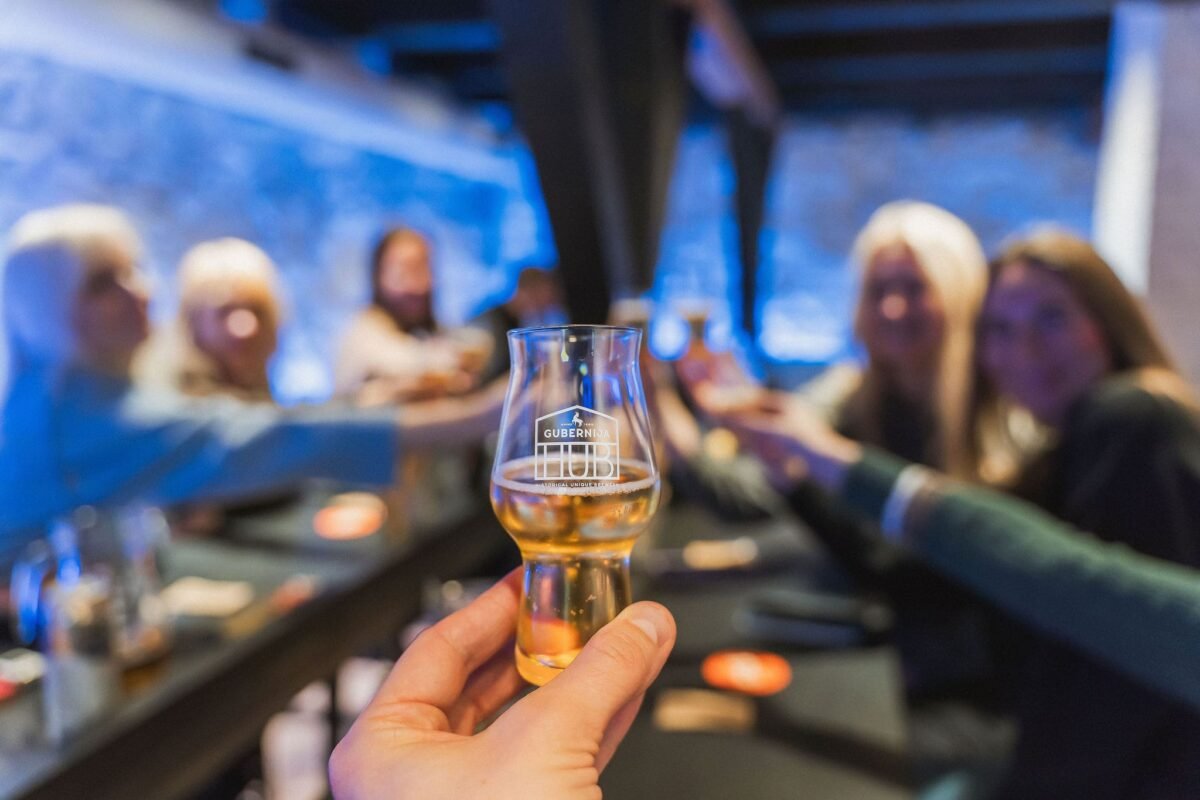
Today the renovated Gubernija HUB has tasting and exhibition spaces where you can learn about the brewery’s history. And if, like me, you hate beer, don’t worry. Try kvass instead. It’s a traditional fermented bread drink with no alcohol, and the easiest way I can describe it to someone who’s never tried it is: Lithuania’s answer to Coca-Cola. Sort of.
Where to stay in Šiauliai
If you don’t want to squeeze everything into a day trip, staying overnight in Šiauliai makes the journey much more relaxed. I’ve stayed at Sun City Hotel. I certainly wouldn’t describe it as a destination hotel in itself, but it was comfortable enough for a good night’s sleep and worked perfectly well as a base for exploring. Then you can visit the Hill of Crosses without watching the clock and add Chaim Frenkel’s Villa, lunch and Gubernija to your itinerary.
When is the best time to visit the Hill of Crosses?
Having visited in both December and August, I’m actually reluctant to choose. Summer is obviously easier. You have long daylight hours, warmer weather and plenty of time to look closely at the crosses and take photographs. But my December visit was far more atmospheric. Darkness, wind, rain, lights and thousands of crosses created an experience that would have been impossible to recreate on a perfect summer afternoon.
So I wouldn’t necessarily avoid the Hill because you’re visiting Lithuania outside summer. Just bring waterproof clothes. And perhaps don’t say “at least it’s not raining” out loud. Lithuanian weather may hear you.
Hill of Crosses: practical tips
The Hill itself is free to visit and accessible throughout the year. Wear comfortable shoes because you’ll be walking on outdoor paths rather than perfectly smooth city pavements. In autumn and winter, waterproof footwear and a proper coat are a very good idea – I speak from experience.
I’d also give yourself more time than you think you’ll need, consider visiting with a guide, and don’t forget that this remains an active place of pilgrimage. Take photographs, absolutely, but treat the crosses and objects people have left there respectfully. And if you’d like to leave your own cross, you can buy one near the entrance.
So, should you visit the Hill of Crosses?
If you’re travelling through Lithuania and have enough time to venture beyond Vilnius, I think the Hill of Crosses deserves a place on your itinerary. It’s strange, beautiful, slightly eerie and deeply connected to Lithuania’s history. But don’t make the mistake of thinking the experience is simply about seeing a hill covered in crosses.
Hear the stories.
Walk slowly.
Look at the tiny crosses hidden between enormous ones.
And if you can, spend some time in Šiauliai afterwards. Visit Chaim Frenkel’s Villa, have lunch, explore the history of Gubernija and turn the journey into a full day in northern Lithuania rather than a 20-minute photo stop.
Planning your visit?
Check Hill of Crosses tours from Vilnius → The Hill of Crosses: Full-Day Tour from Vilnius
Route of John Paul II: Hill of Crosses, Tytuvenai & Siluva → click HERE
Browse more Hill of Crosses experiences → HERE
Photo credit: Simas Bernotas, Lithuania Travel and myself
Travelling to Lithuania’s coast? Check out THIS ARTICLE packed full with information of the best experiences on the coast of the Baltic sea.