Lithuania’s Baltic Coast: Palanga, Klaipėda, Karklė & the Curonian Spit
Lithuania may have a relatively short coastline, but there is a surprising amount to experience along it. Wide sandy beaches, pine forests, excellent restaurants, tiny fishing villages, enormous sand dunes, amber washed up by the Baltic Sea – and, perhaps best of all, plenty of space.
One of the things I love about Lithuania is how compact the country is. If you are staying in Vilnius, you can get into a car and roughly three hours later find yourself beside the Baltic Sea. You can also reach the coast by bus or train, although having a car makes this particular itinerary much easier.
I have travelled along Lithuania’s coast several times now, and if you want to experience more than simply a day at the beach, I would combine Palanga, Karklė, Klaipėda and the Curonian Spit into one trip.
Palanga gives you beaches, spas and some surprisingly good gastronomy. In Karklė you can wade into the Baltic Sea and hunt for amber. Klaipėda adds history and a completely different port-city atmosphere. And then there is the Curonian Spit – a landscape of forests, fishing villages and huge dunes that feels unlike anywhere else in Lithuania.
If you have three or four days, this is how I would do it.
Palanga: beaches, good food and a little nostalgia
Of all the places on Lithuania’s coast, Palanga is probably my favourite.
There is some nostalgia involved. Like many Lithuanians, I used to come here with my family when I was a little girl. Then I moved abroad and somehow more than 15 years passed without me returning.
When I finally came back, I was genuinely surprised.
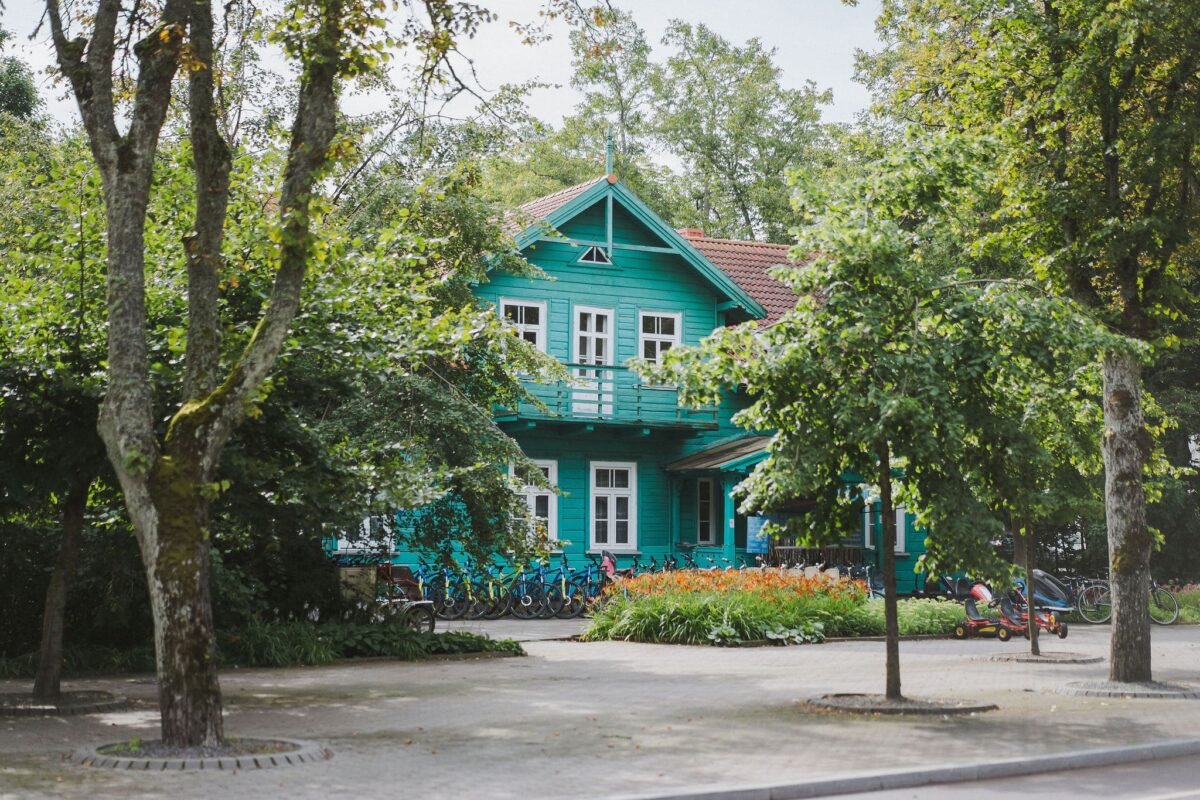
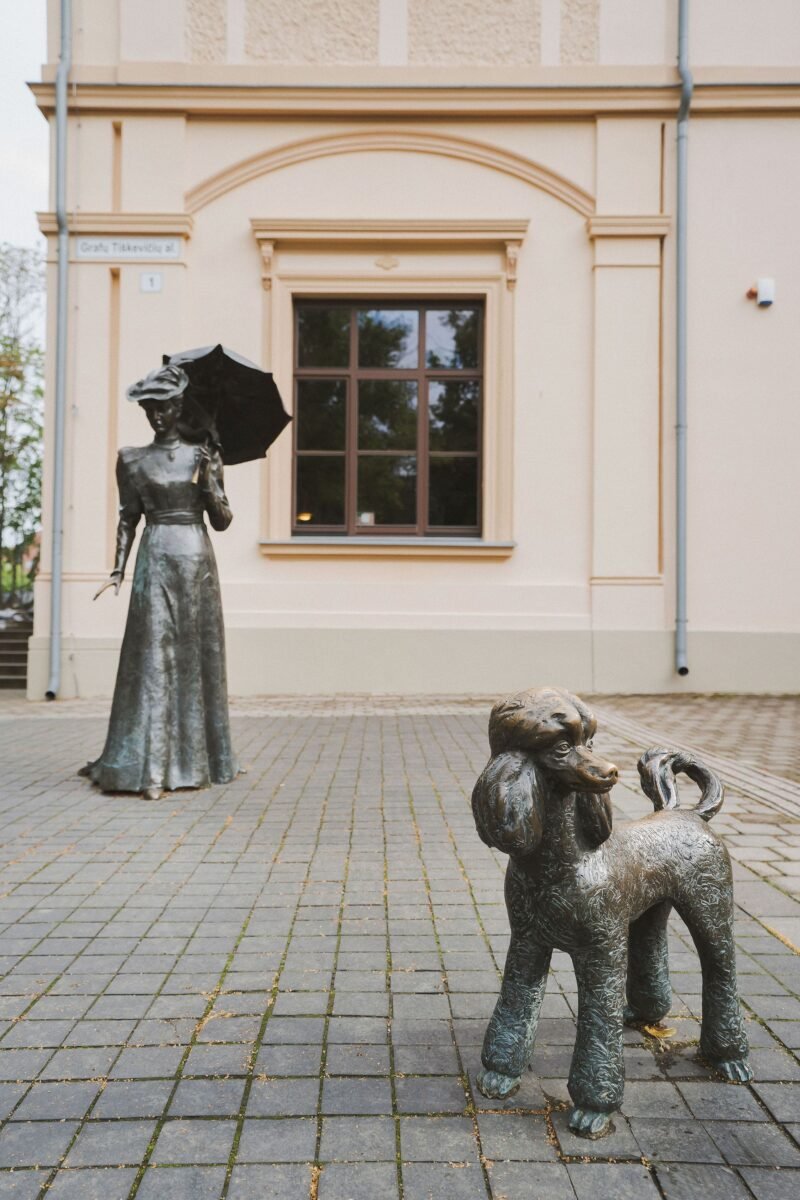
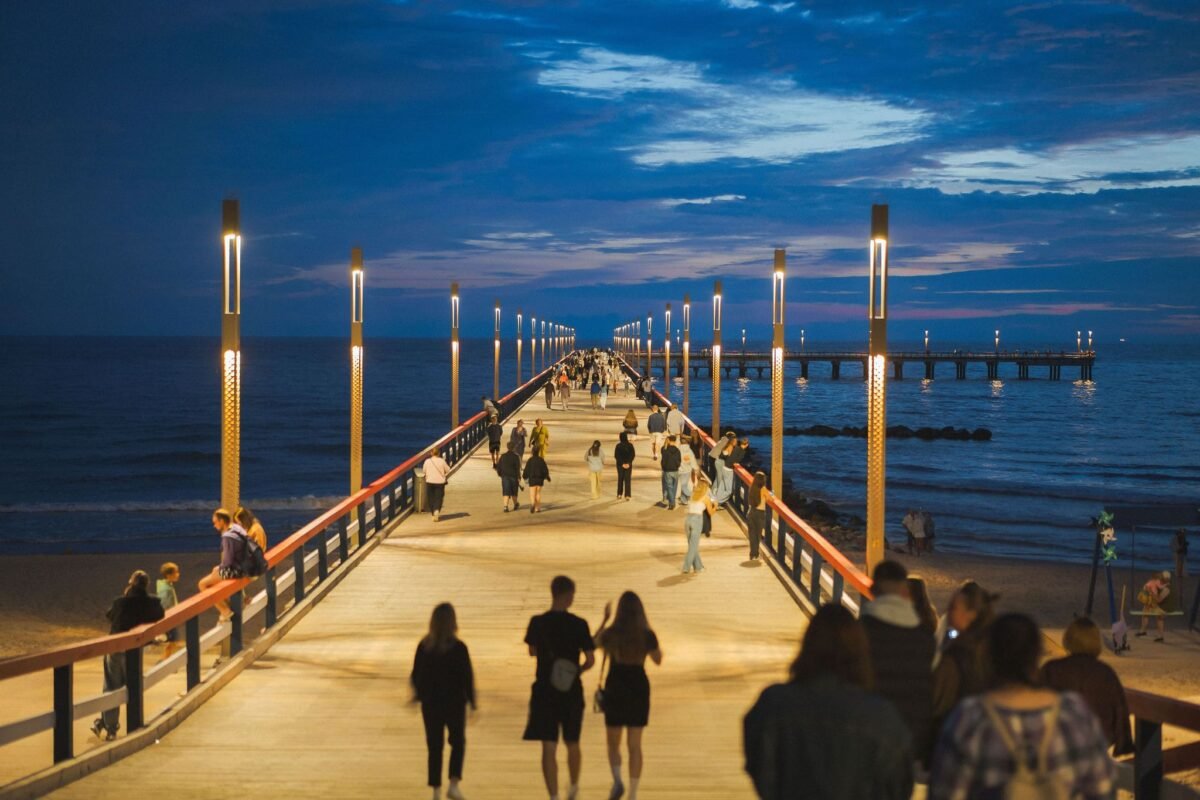
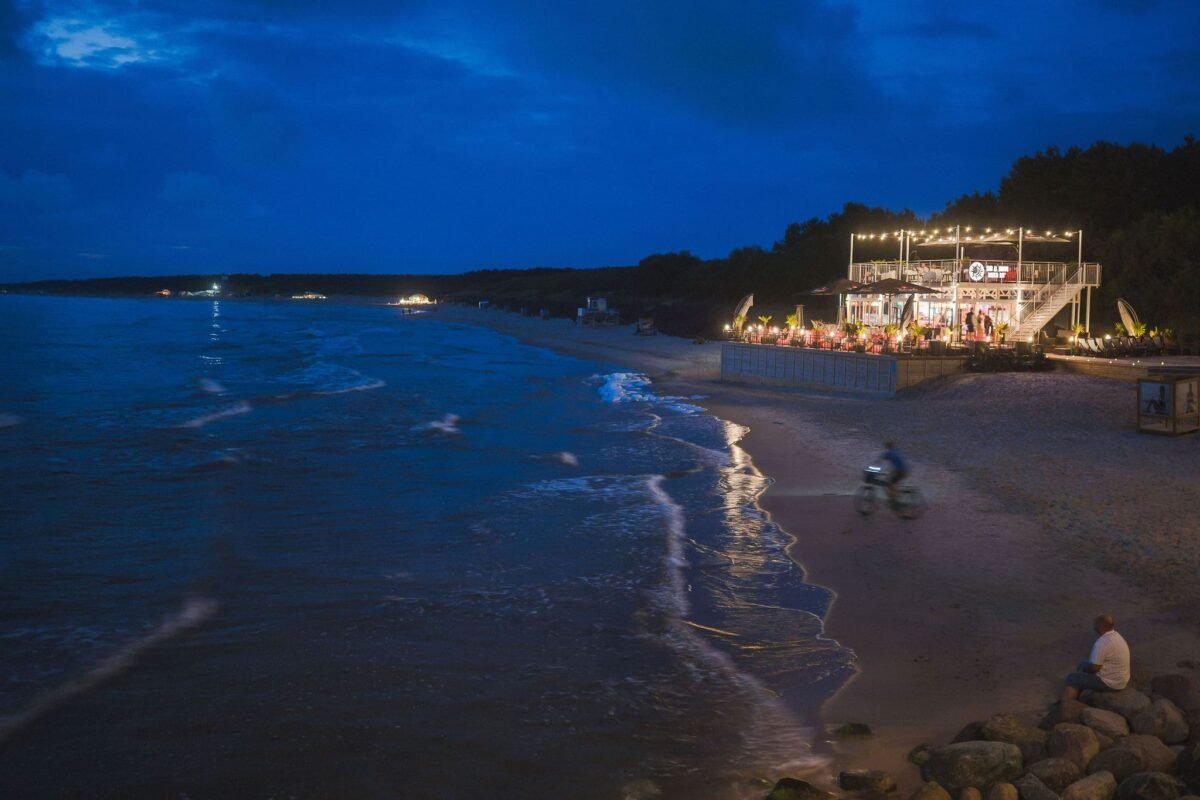
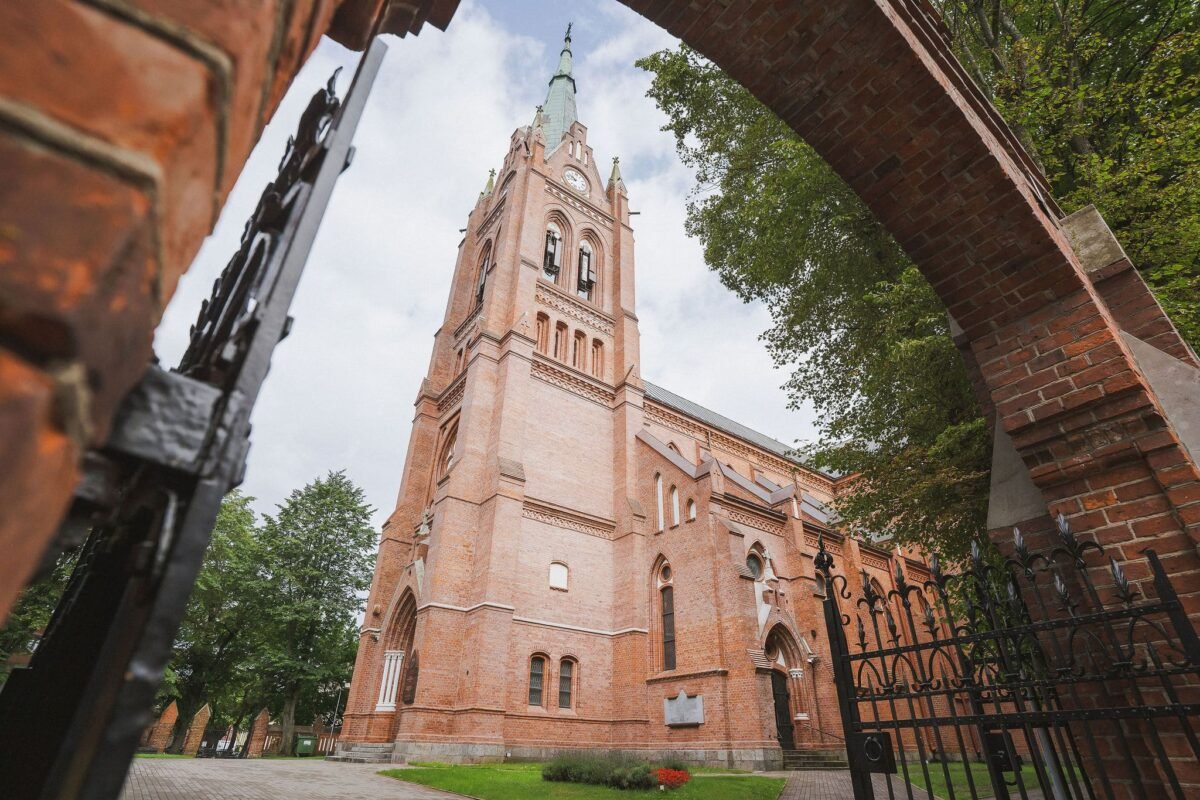
The Palanga I remembered was still there – the pine trees, the Baltic Sea, the long sandy beach and the pier – but the town itself felt much more polished and developed. There are lovely hotels and spas, good cafés and a restaurant scene that has become seriously interesting.
After years of living in huge cities such as Beijing, Delhi and Singapore, I think I appreciate places like this even more now.
Walk along Palanga Pier
If it is your first visit, start with the obvious: Palanga Pier.
It stretches far out into the Baltic Sea and, on a beautiful day, walking to the end with water all around you is one of those very simple things that somehow makes you happy.
For me, it is also incredibly nostalgic. I think almost every Lithuanian has at least one childhood photograph taken on Palanga Pier.
Coming back as an adult – with the wind, the sound of the seagulls and the smell of the Baltic Sea – takes me straight back to those childhood summers.
If you can, come back around sunset too.
Explore Palanga with a guide – although perhaps not a conventional one
Palanga is easy to walk around independently, but if this is your first visit, a guide can give you much more context. I explored the town with Antanas Jonaitis, who happens to be both a guide and a stand-up comedian. I love stand-up comedy, so for me this combination worked brilliantly. There were plenty of jokes and it certainly wasn’t one of those tours where you quietly follow someone around listening to a list of historical dates.
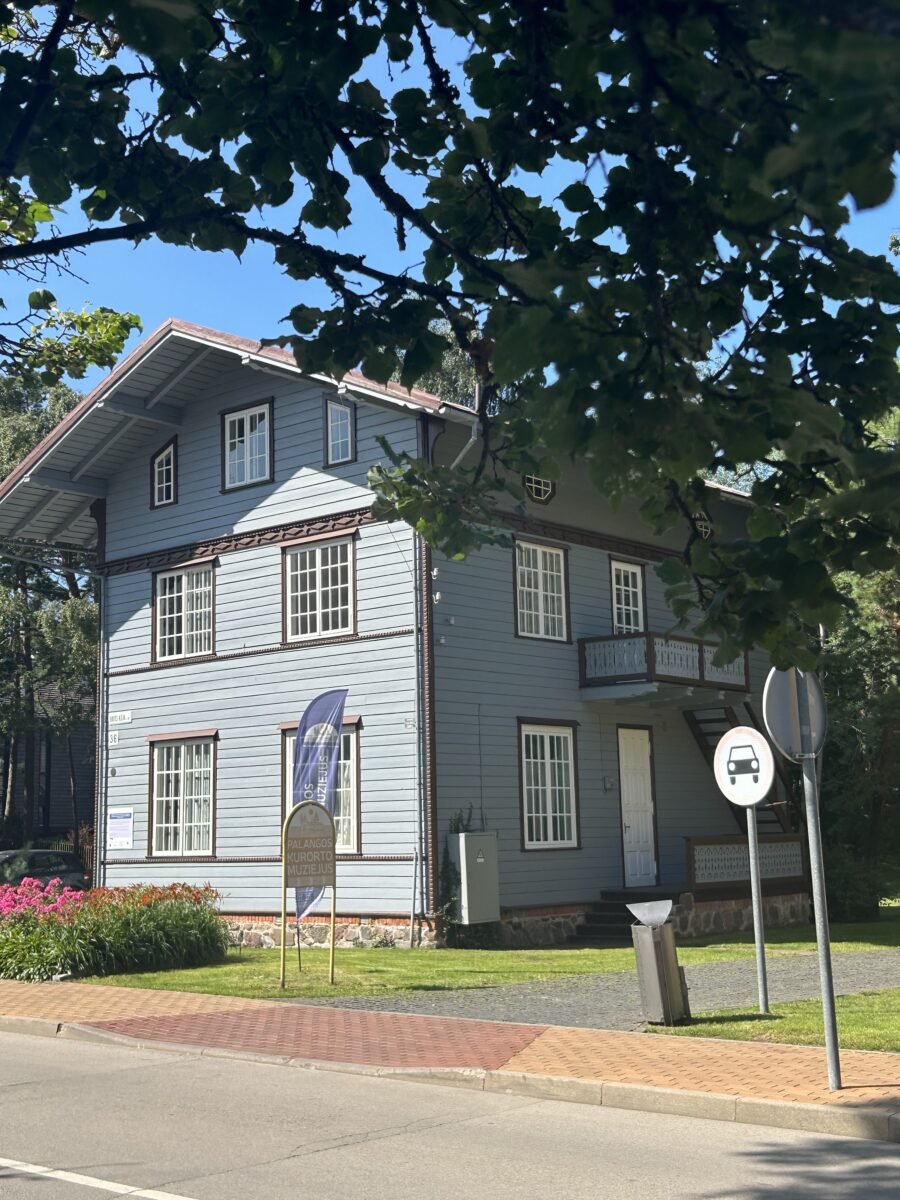
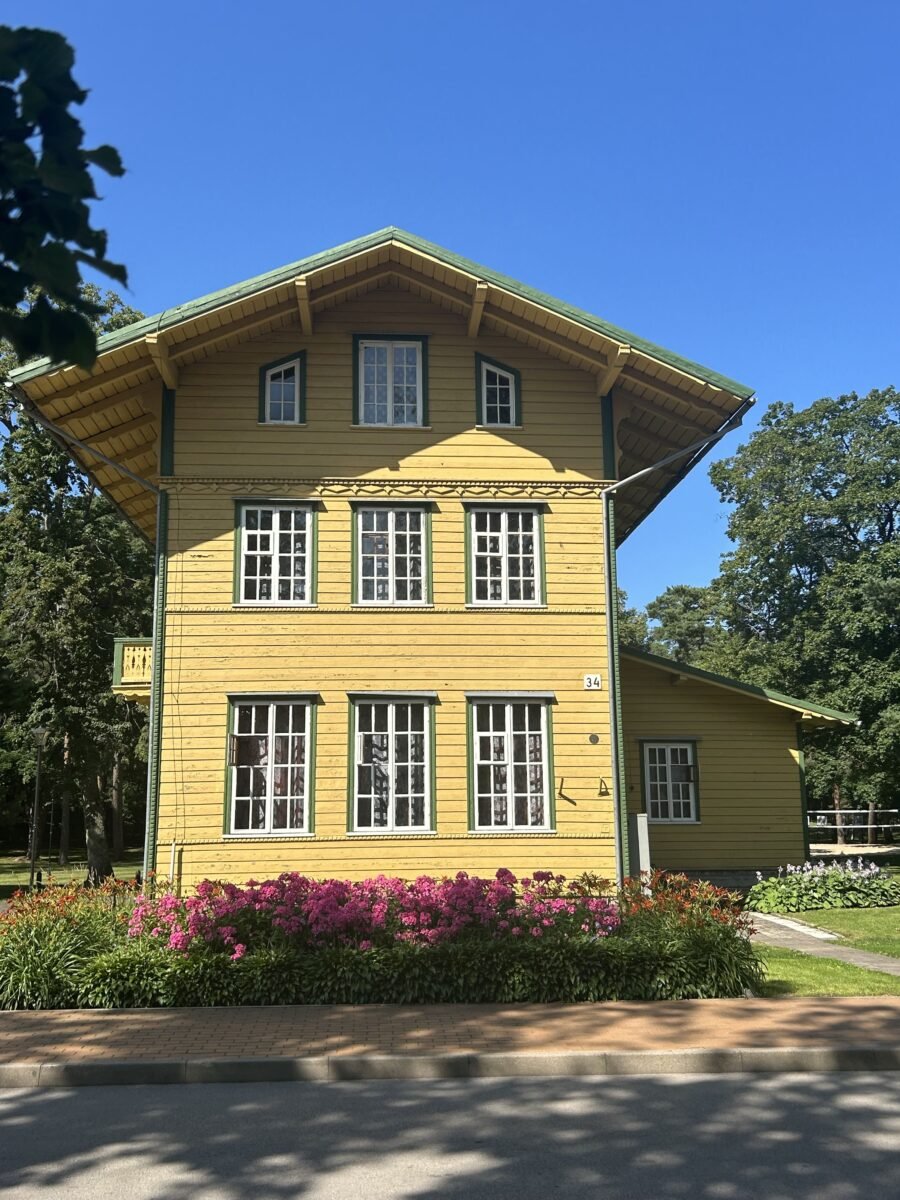
A warning, though: some of his humour can be borderline offensive. You have to be prepared to be challenged a little. If that sounds horrifying, perhaps choose another guide. If you enjoy that kind of humour, you may find it very funny.
Visit the Antanas Mončys Art Museum
One of my favourite cultural stops in Palanga is the Antanas Mončys Art Museum.
Mončys was a Lithuanian modernist sculptor who left Lithuania during World War II and eventually settled in Paris, where he studied with Ossip Zadkine. Although he spent most of his artistic career abroad, his work remained strongly connected to Lithuania. The museum in Palanga opened in 1999 and preserves much of the collection he donated to Lithuania.
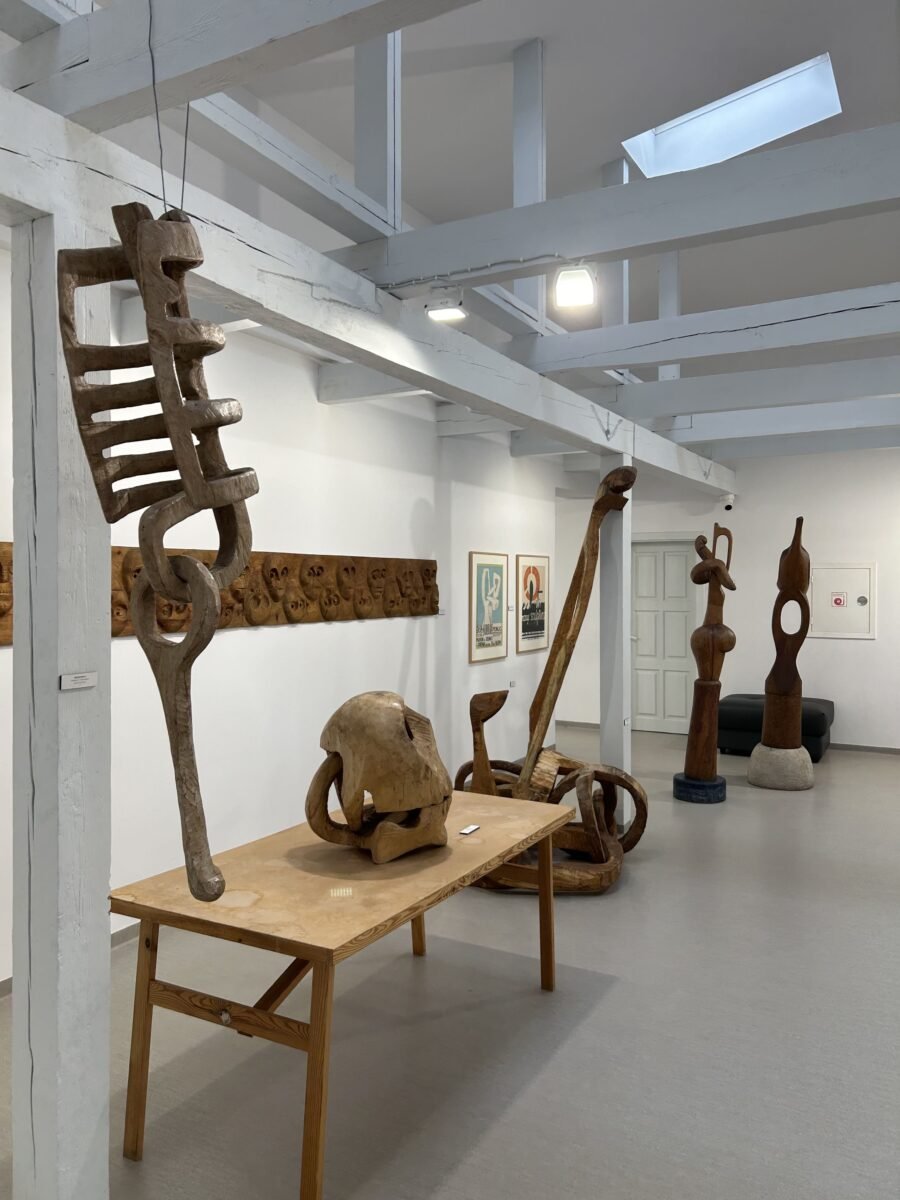
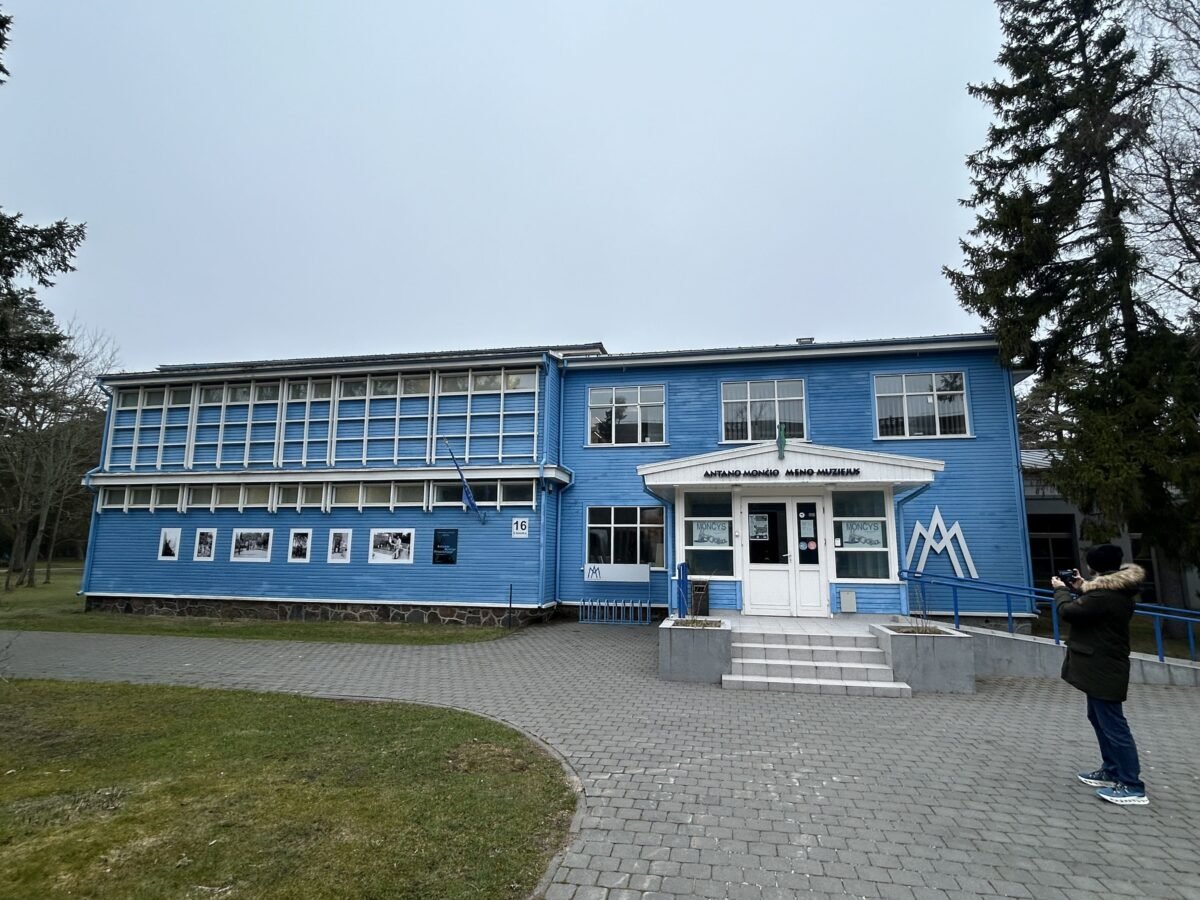
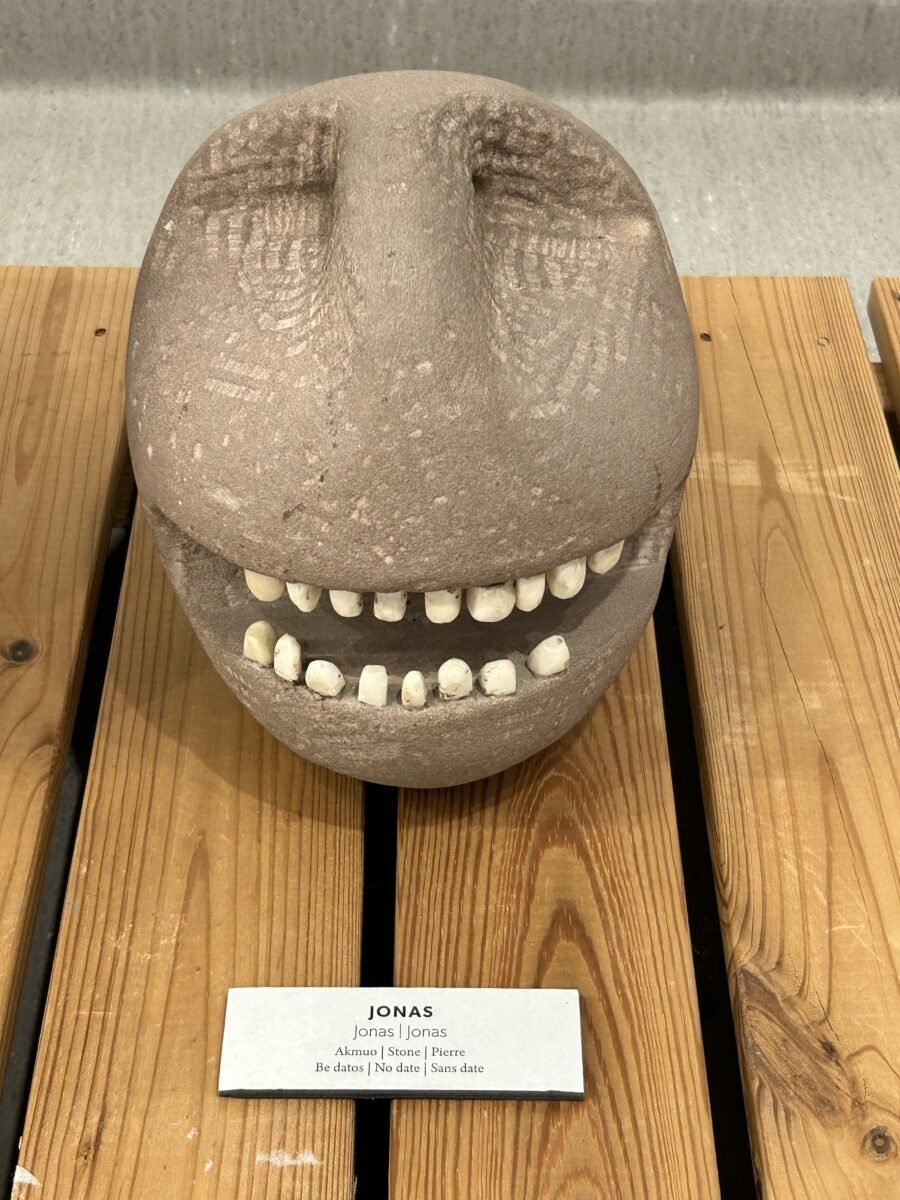
It’s small and intimate, which I actually prefer to a huge museum when I’m travelling.
It is also unusually good with children because, in accordance with Mončys’ wishes, visitors are allowed to touch some of the sculptures. Try telling a child not to touch anything in an art museum and you’ll understand why this is such a refreshing concept.
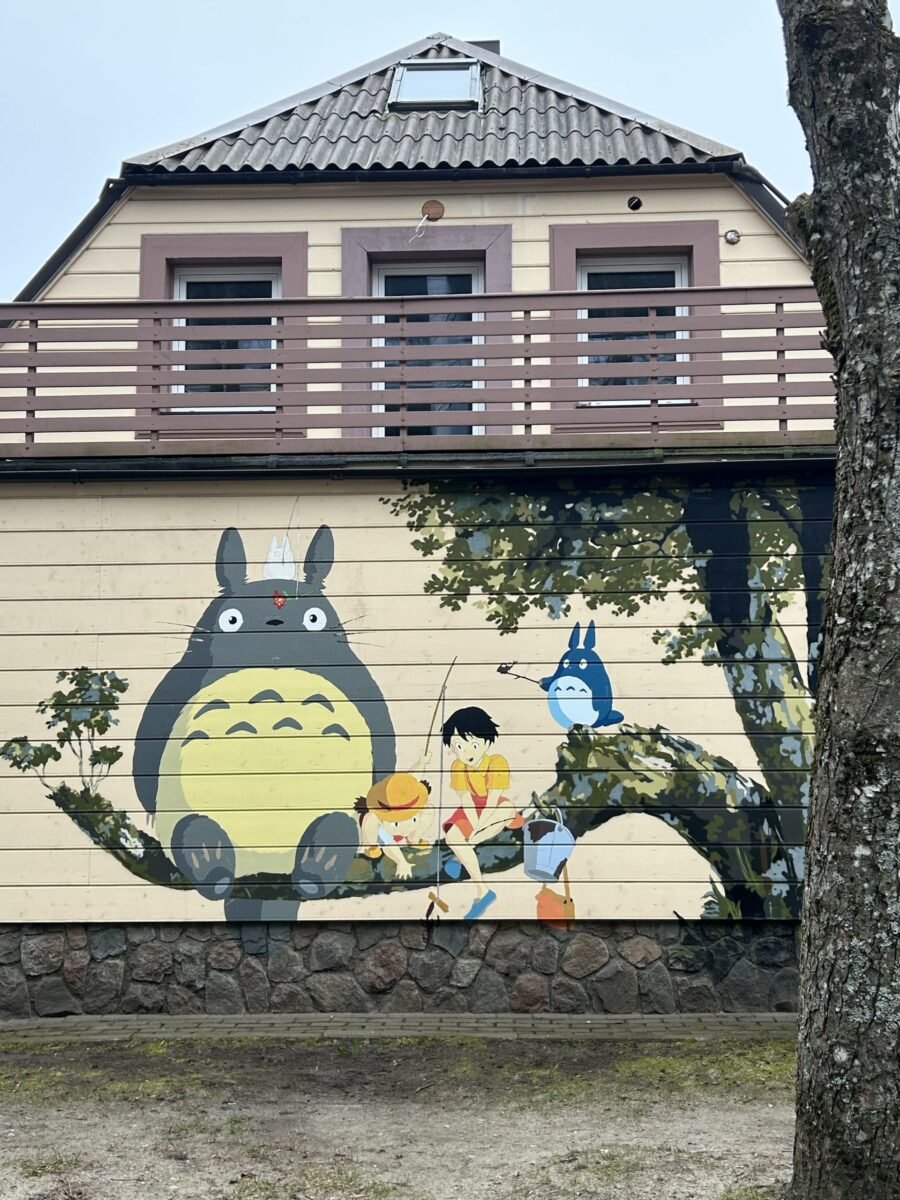
And if you happen to love Studio Ghibli, keep your eyes open nearby. There is a very cute My Neighbor Totoro mural in the area!
Stroll through Birutė Park and visit Palanga Amber Museum
Another place I wouldn’t miss in Palanga is Birutė Park, surrounding the beautiful former Tiškevičiai Palace, which today houses the Palanga Amber Museum. The museum tells the story of Baltic amber and has a huge collection, including fascinating pieces with insects and plants trapped inside millions of years ago.
But I actually love the park itself just as much as the museum – and my favourite time to visit is after dark. In the evening, the paths, trees and sculptures are beautifully lit, and the whole park feels completely different: quiet, atmospheric and slightly magical. And don’t worry about walking through a park after dark. Lithuania is a very safe country, and I personally feel perfectly comfortable walking around Palanga and Birutė Park in the evening.
Your biggest enemies are much more likely to be mosquitoes. They can be annoying on warm summer evenings, particularly around trees and water, but Lithuania isn’t a destination where you need to worry about mosquito-borne tropical diseases. Just bring some mosquito repellent and enjoy the walk.
Inside the palace, the Palanga Amber Museum is also well worth your time. Even if you don’t think you’re particularly interested in amber, it’s a lovely introduction to something you’ll encounter again and again while travelling along Lithuania’s Baltic coast.
Palanga and Amber Museum Guided Tour BOOK HERE
And if all that amber makes you wonder where it actually comes from, that’s exactly what we’re doing next – heading to Karklė to look for it in the Baltic Sea ourselves.
Where to eat in Palanga
This is one of the areas where Palanga has changed enormously since my childhood.
You can still have the traditional Lithuanian seaside experience, of course, but Palanga now has restaurants recognised by MICHELIN and Falstaff, making it very easy to combine a beach holiday with some genuinely excellent meals.
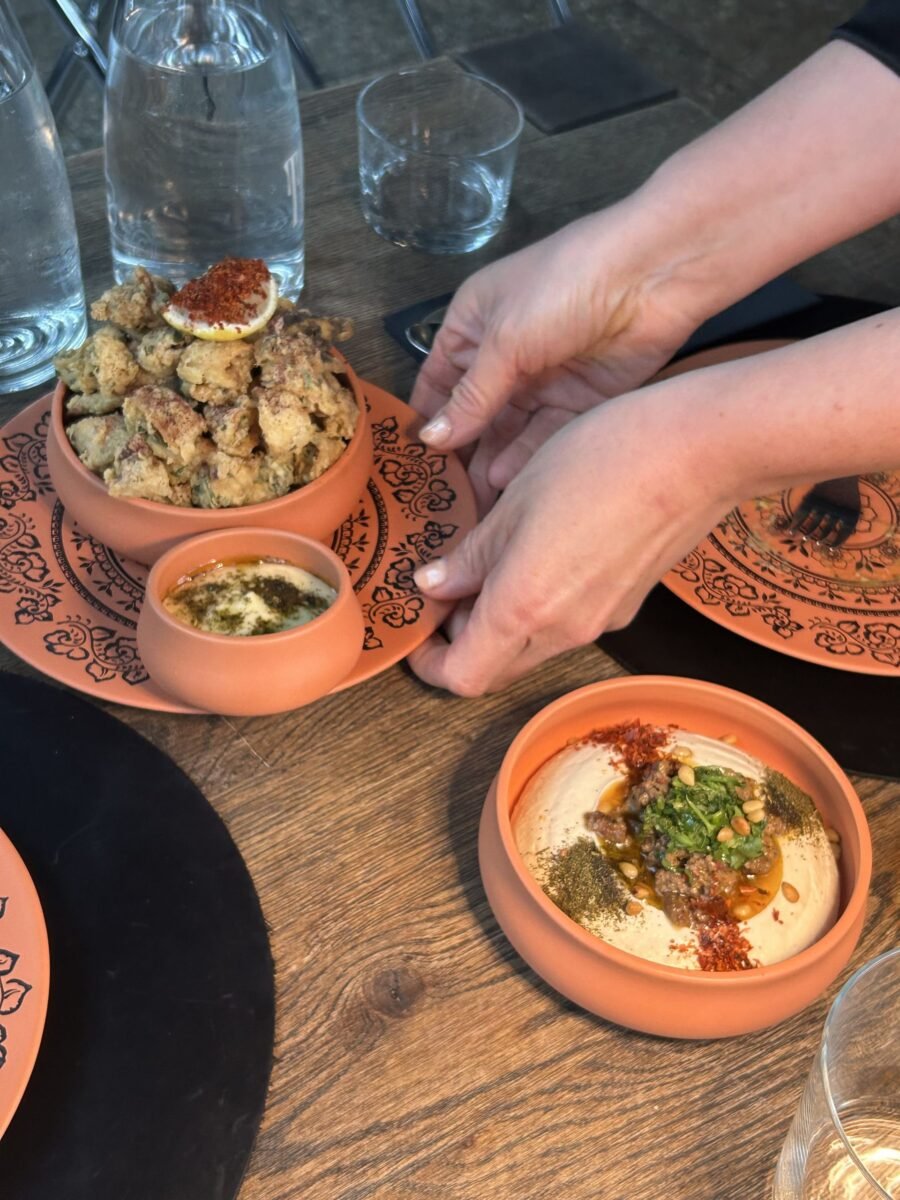
Todá
For something more casual, I really like Todá, with its Middle Eastern-inspired food. And whatever else you order, try the baklava. It is insanely good.
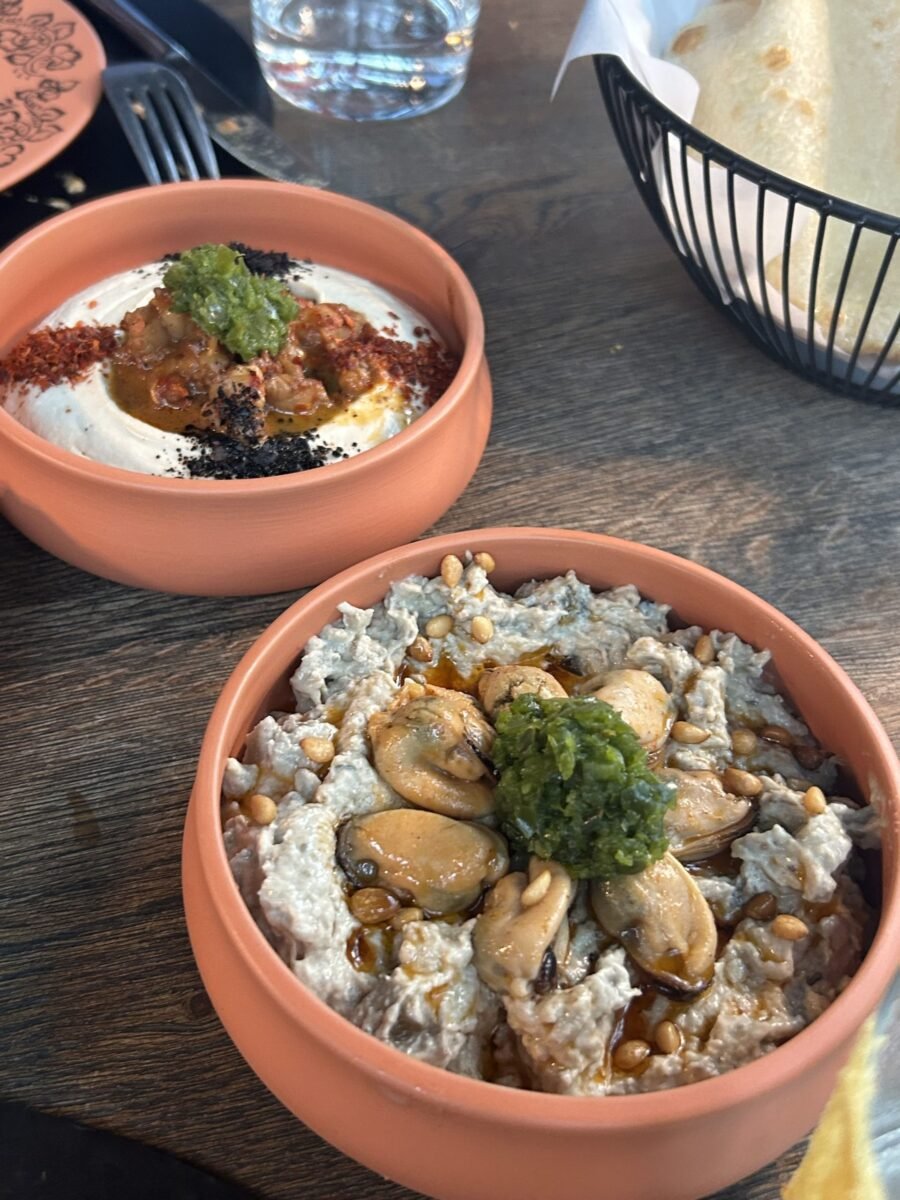
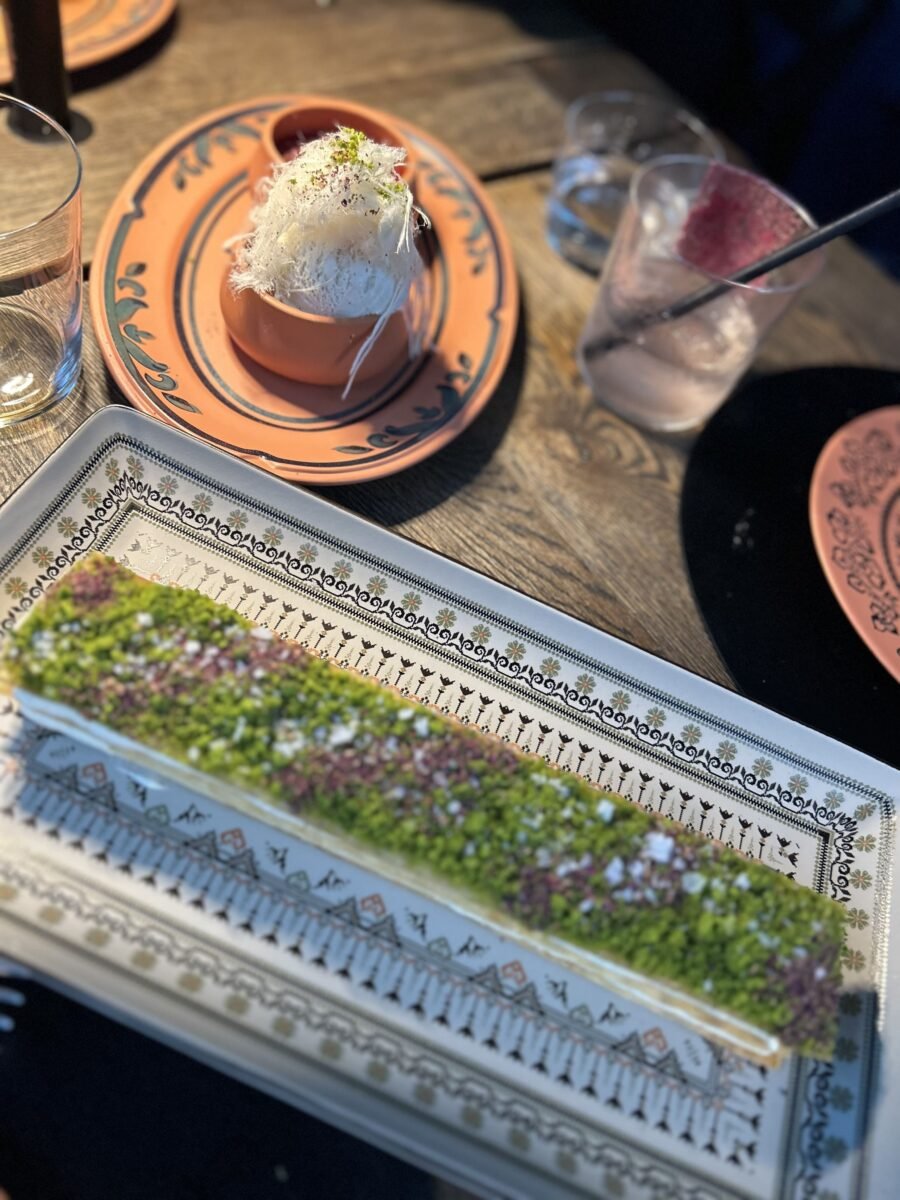
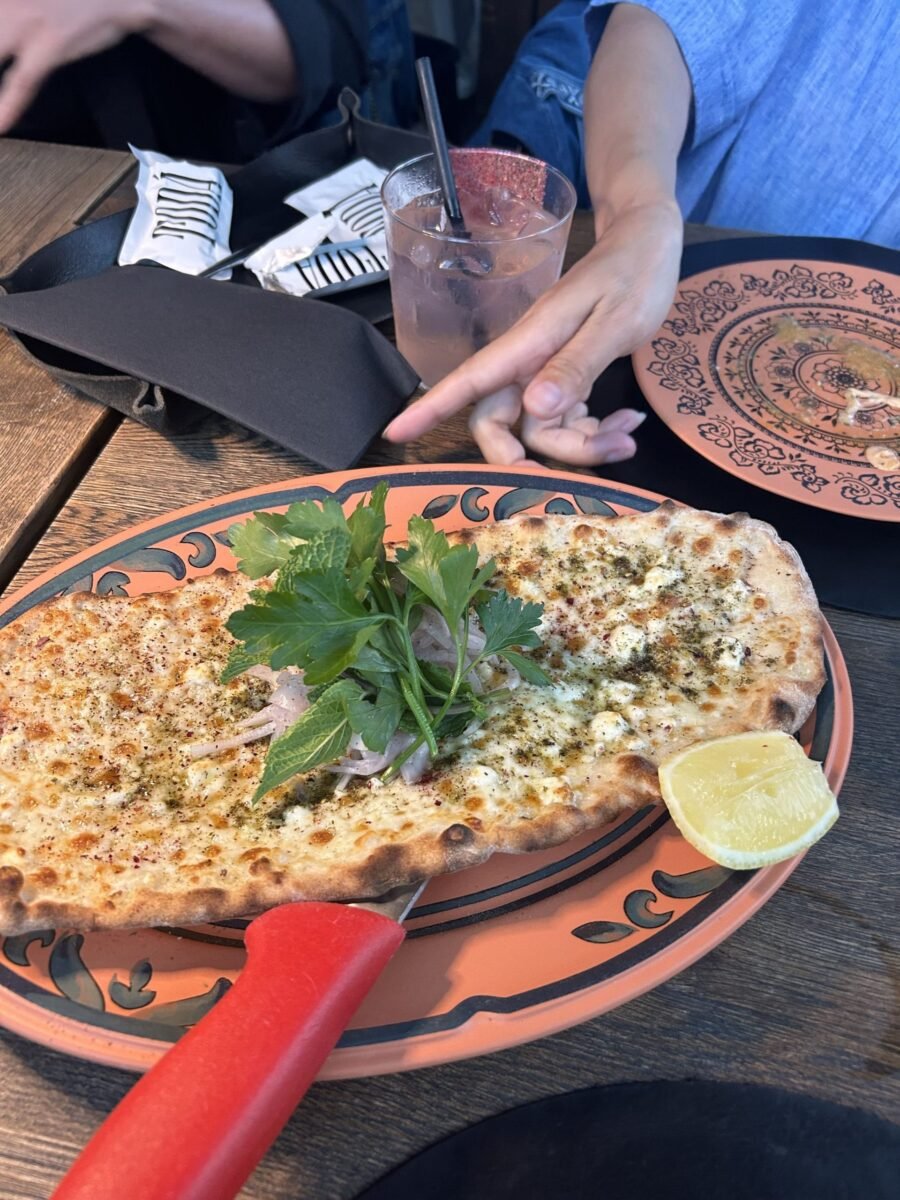
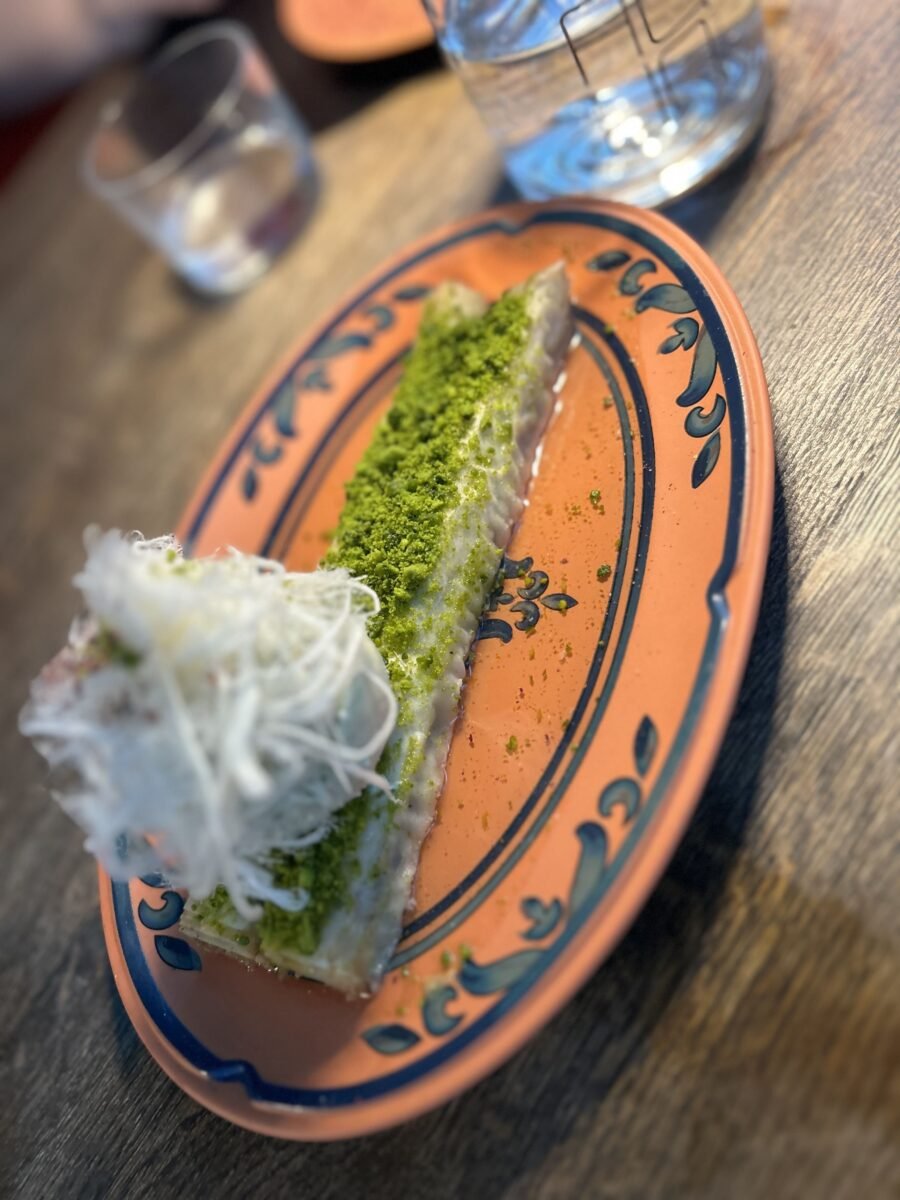
Monist Hotel and Restaurant
Monist is one of the restaurants in Palanga I would happily recommend for either lunch or dinner. I’ve eaten here several times and the food has been consistently excellent. It focuses on modern interpretations of Lithuanian and Baltic flavours, with local and seasonal produce at the centre of the menu. Falstaff named it its Culinary Hideaway of the Year in Lithuania in its 2026 Nordic guide. I should probably concentrate on the food here, but I also need to mention their Pornstar Martini. Very good.
Interestingly, my opinion of staying at Monist is rather different. I spent a night here once and there was loud music from a nightclub nearby late into the night – the repetitive boom, boom, boom that becomes impossible not to hear once you’re trying to sleep. The hotel provided earplugs, which helped, but considering this isn’t a cheap hotel, I personally don’t want to need earplugs to get a good night’s sleep. This was, of course, my experience during one particular stay rather than something I can say happens every night. The hotel itself is highly rated – Falstaff actually named Monist its Best Gourmet Hotel in Lithuania for 2026.
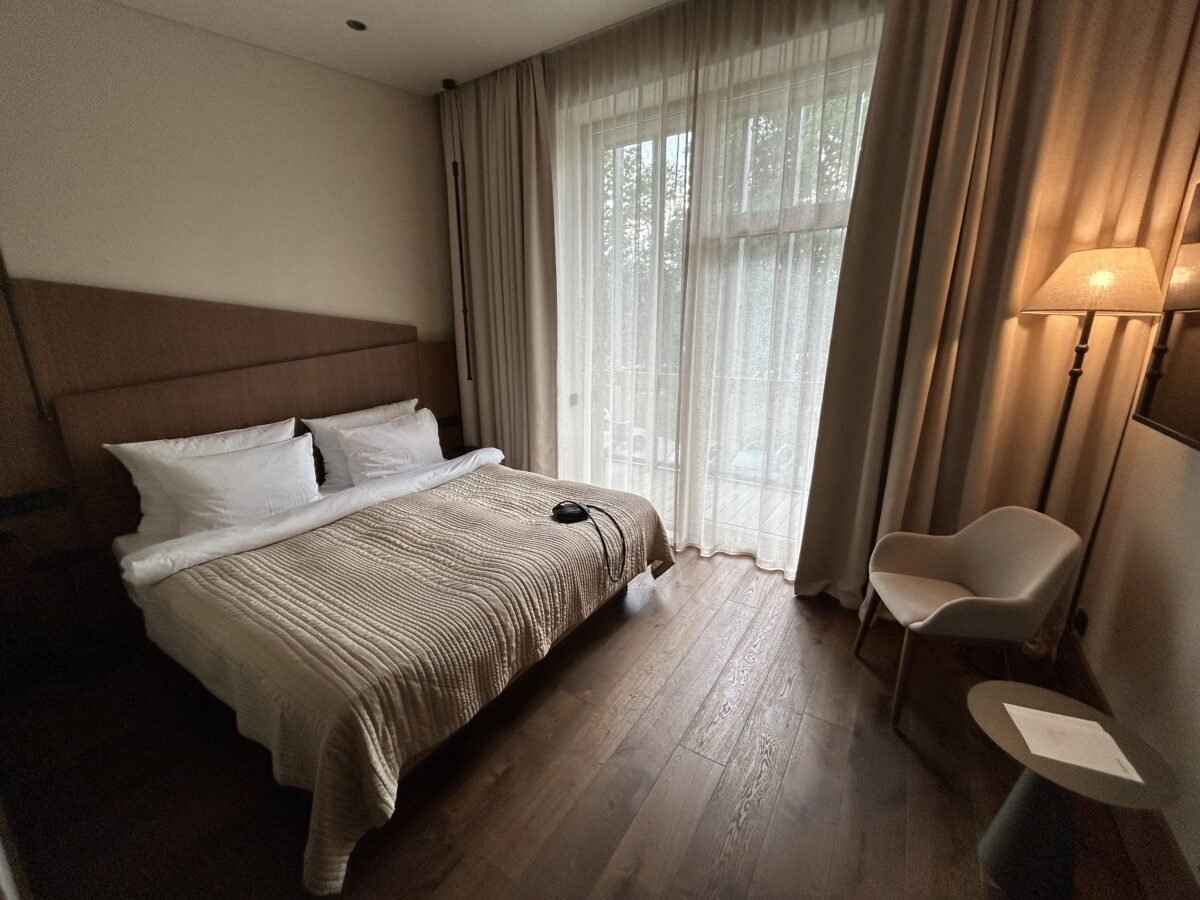
My verdict? I would absolutely return for the restaurant. For sleeping, I personally prefer somewhere quieter.
Restaurant Palanga
For a more elegant meal, I also really like Restaurant Palanga, inside Palanga Life Balance SPA. The kitchen is led by Italian chef Giorgio Pignagnoli and is rooted in Italian cuisine while incorporating local ingredients and seasonal produce. The restaurant is MICHELIN recommended.
I’ve eaten here more than once, and the sea bass has been excellent. They also serve oysters and other seafood, and I like the cocktail menu.
Vila Komoda
I’ve only eaten at Vila Komoda once, so I don’t know its menu as well as the others, but I enjoyed the food and particularly remember the desserts.
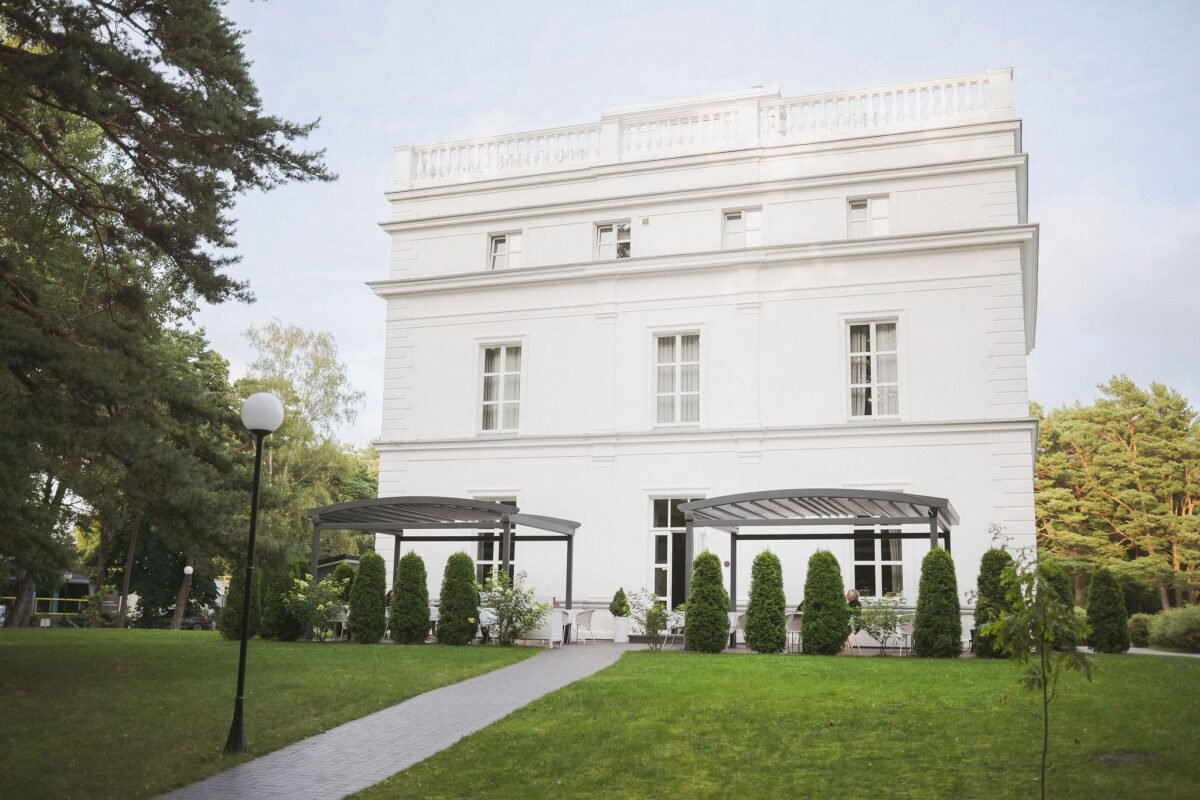
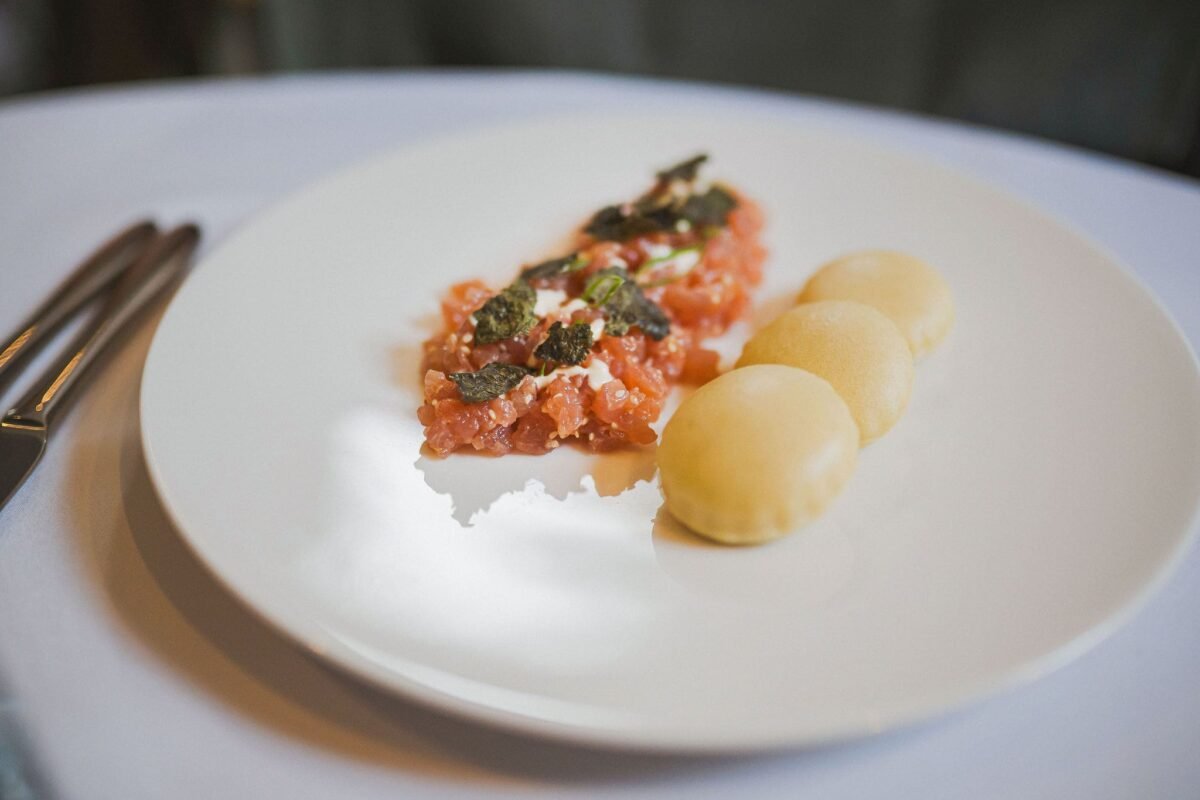
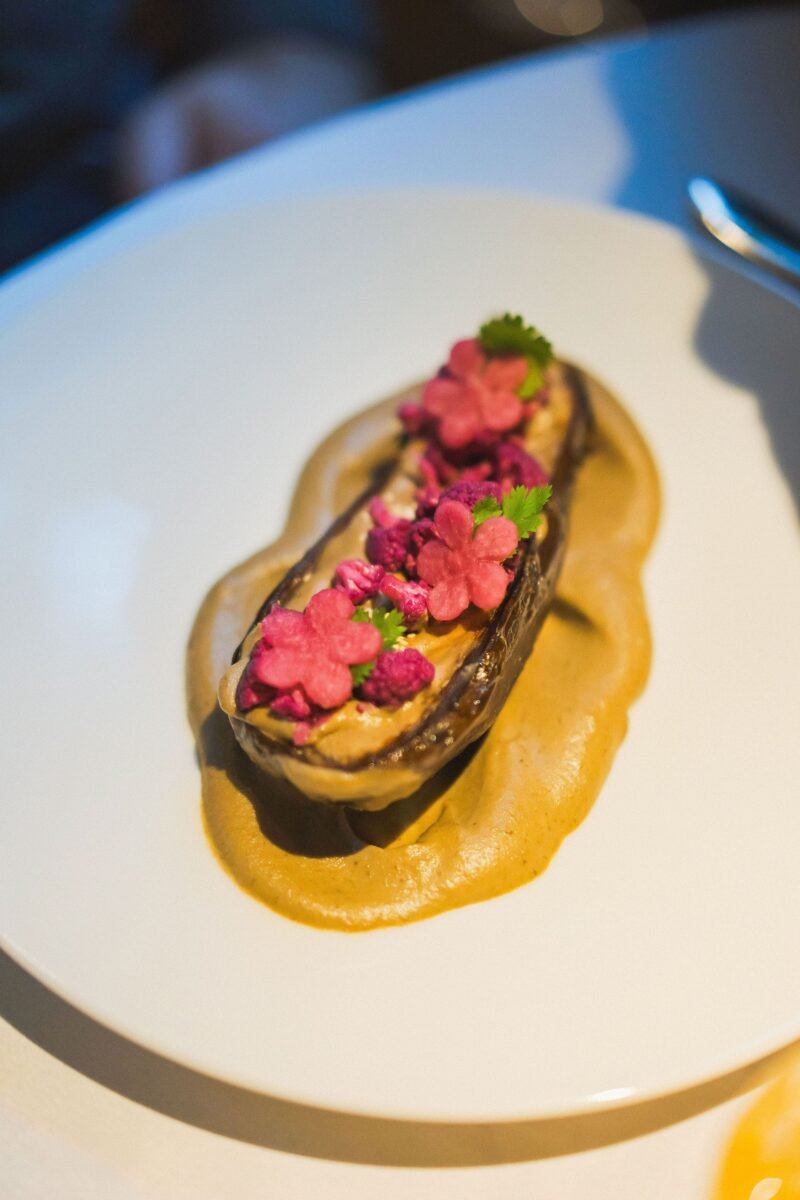
The restaurant is housed in a restored historic Tiškevičiai villa, which gives it a completely different atmosphere from many of Palanga’s newer restaurants. It has also been recognised in the MICHELIN selection.
Coffee and matcha: BREW
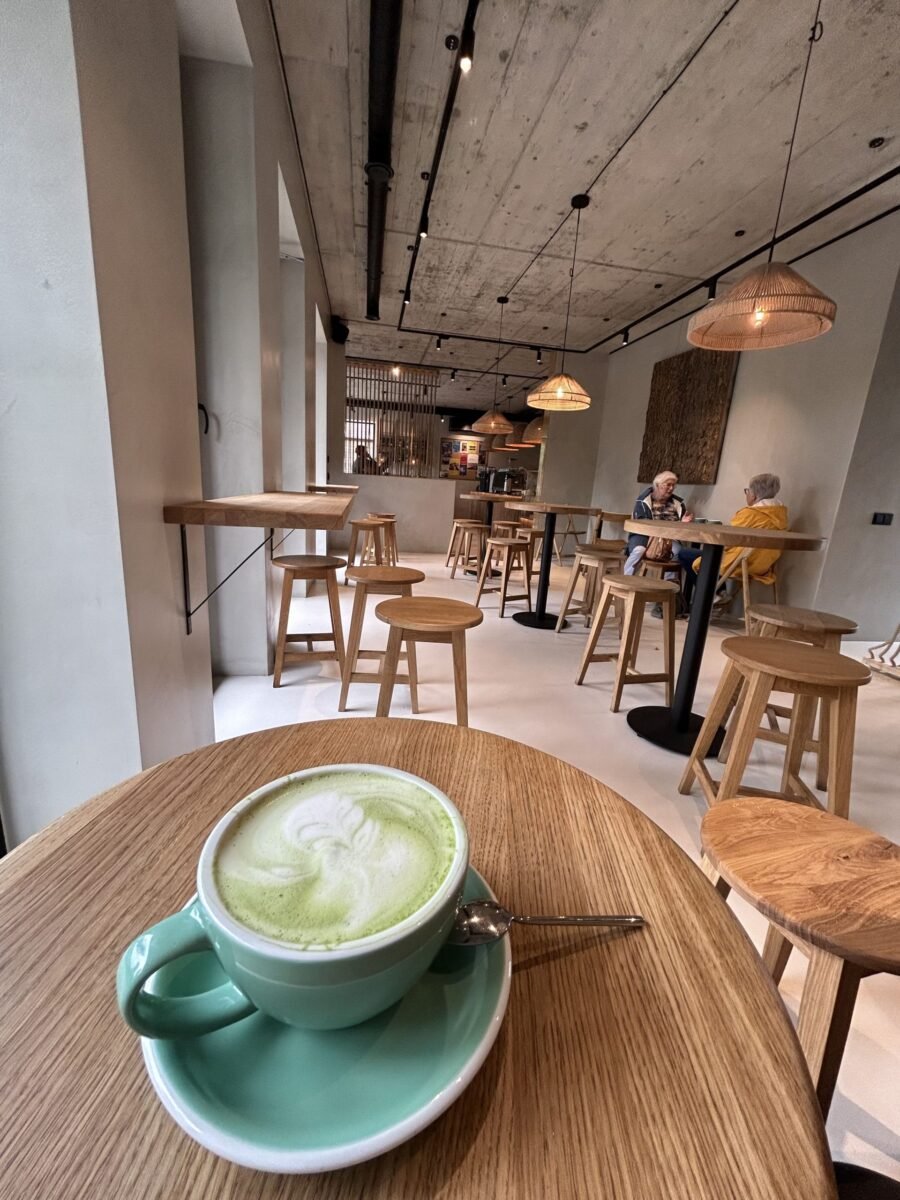
For a coffee break, I usually head to BREW on Vytauto Street. I’ve been several times, mainly because I can get my matcha fix there, but they also serve specialty coffee and vegan sweets.
Where to stay in Palanga
I’ve stayed in several Palanga hotels now, and my experiences have been quite different. As mentioned above, I would not stay at Monist again, however would be happy to return to Vanagupe and Palanga SPA Life Balance hotel.
Mercure Palanga Vanagupė Resort – my first choice
If I had to choose one, I would probably stay at Mercure Palanga Vanagupė Resort. I’ve stayed here several times and it has consistently been a pleasant experience. The rooms are spacious, breakfast is good, the staff have always been welcoming, and it is around 900 metres from the sea.
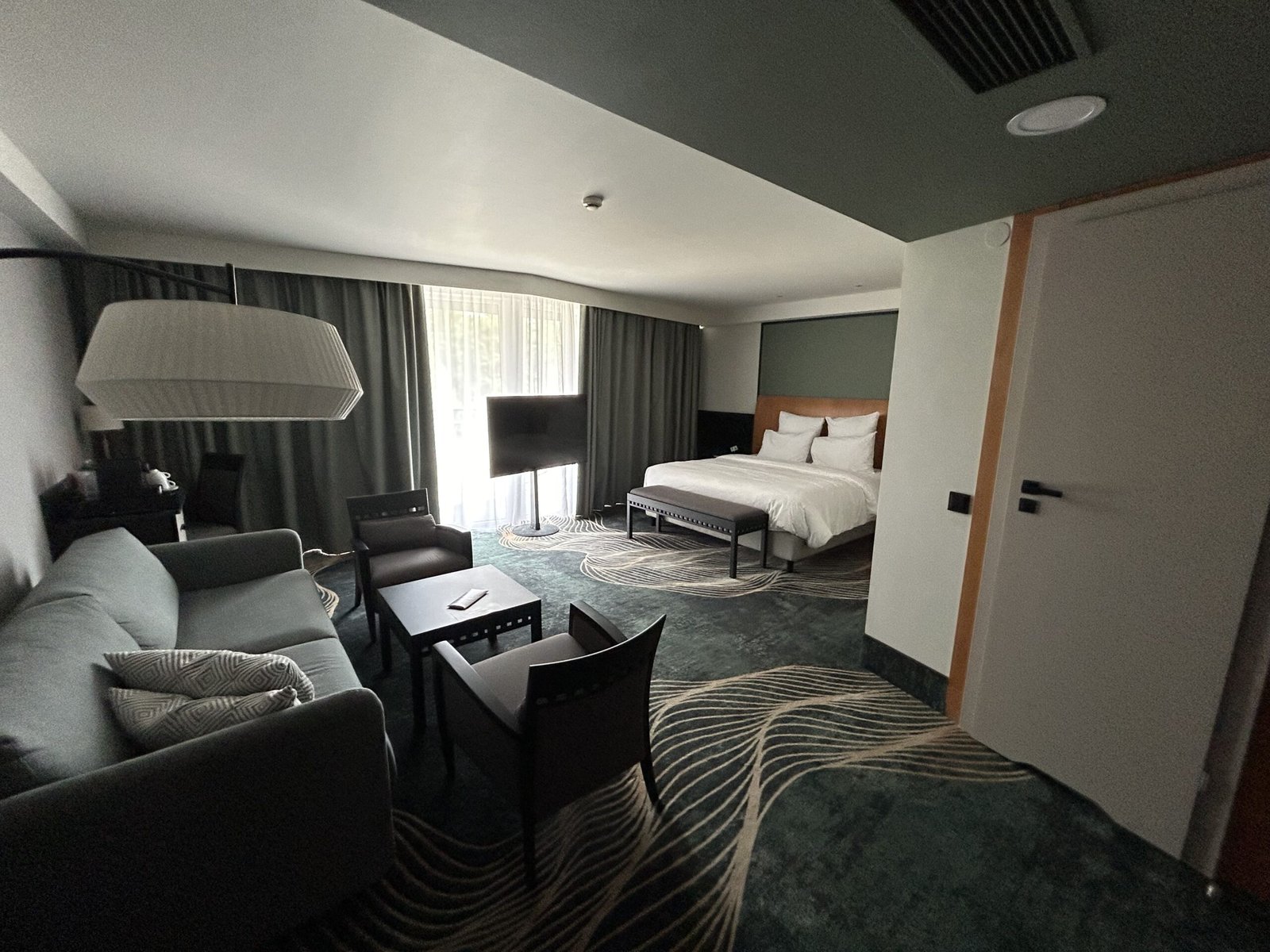
The biggest reason to stay, though, is the spa. There are several pool and sauna areas and, during summer, a heated outdoor pool. If you want to try something particularly Lithuanian, book the amber ritual. It combines a steam bath, body scrub with amber dust and massage using amber stones. I’ve tried it myself and it is exactly the kind of spa treatment that makes sense when you’ve just arrived on the Baltic coast.
Palanga Life Balance SPA
I’ve also stayed at Palanga Life Balance SPA, which I would recommend, particularly if the spa is important to you. There is also a very unusual feature in its Design building: the floors are deliberately tilted by five degrees. Walking around feels slightly like being on a ship. I remember noticing it immediately, and apparently I wasn’t imagining things – the hotel confirms that the inclination is an intentional part of the architecture.
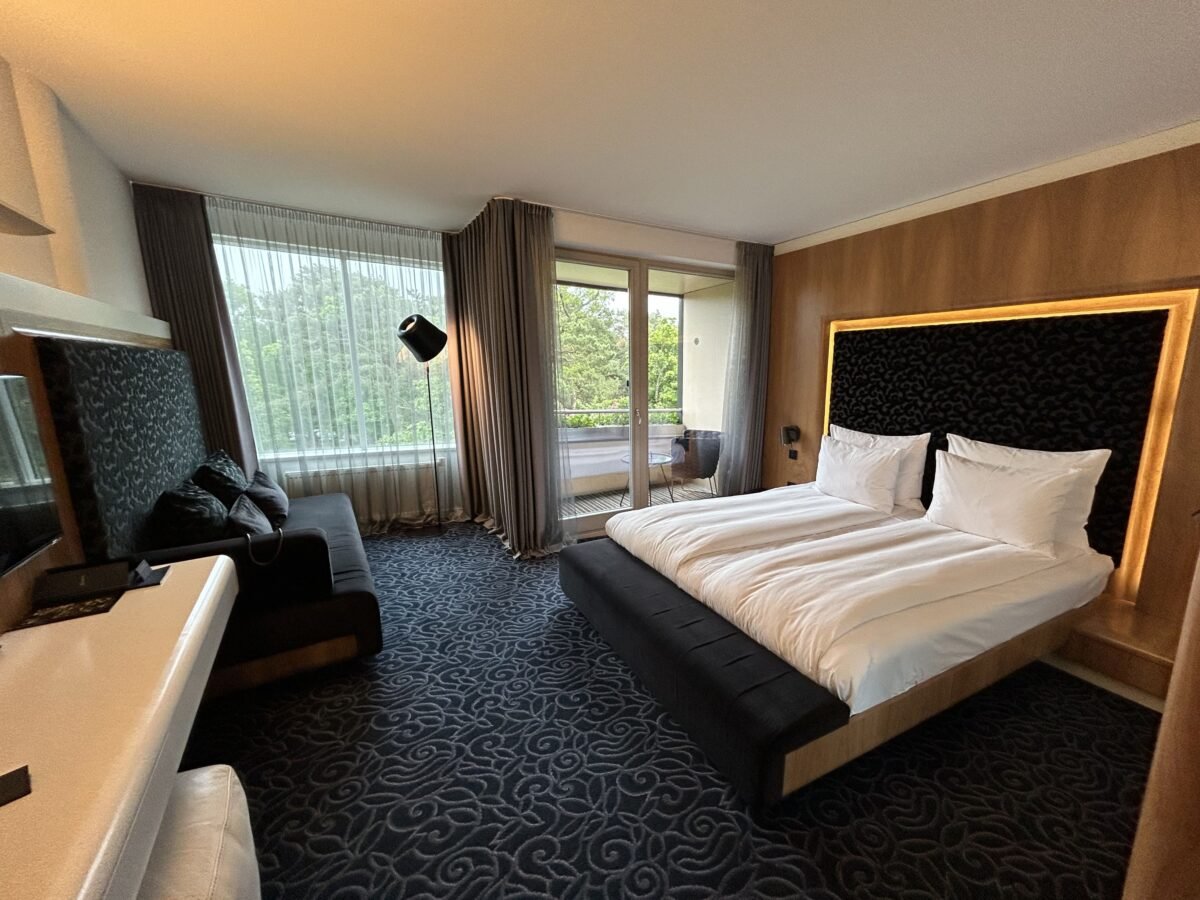
The hotel actually has several very different accommodation sections, including the classic Luxury building, the more contemporary Design building and Vandenis Suites.
Personally, I much prefer the modern design, so I would check exactly which building and room category you are booking rather than assuming all rooms look the same.
Day 2: Hunt for Baltic amber in Karklė
After breakfast in Palanga, drive south towards Karklė, roughly 20 minutes away.
This is where you can try one of the most unusual activities I’ve experienced on Lithuania’s coast: catching amber in the Baltic Sea.
And I mean actually catching it.
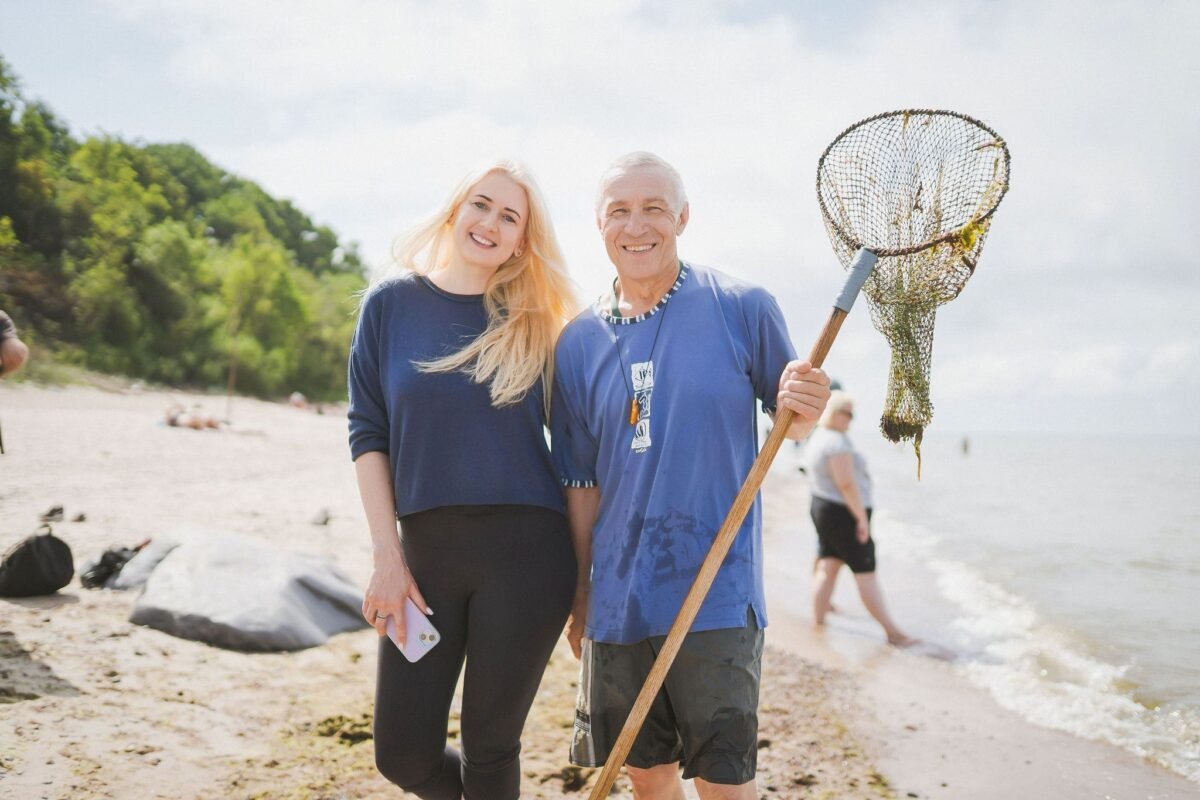
I went out with Igor Osnač, an experienced guide and amber hunter. Before heading to the water, he explains where Baltic amber comes from, shows different types from his collection, talks about real versus fake amber and teaches you what you’re actually looking for. Then you head to the sea with a large scoop net.
I have to admit that at first I was slightly suspicious.
Had someone perhaps scattered a few pieces of amber on the shore before we arrived?
But no. This really is amber hunting.
You wade knee-deep into the Baltic, put the net into the waves and pull up seaweed, little sticks and stones. Then you start searching through everything the sea has brought in.
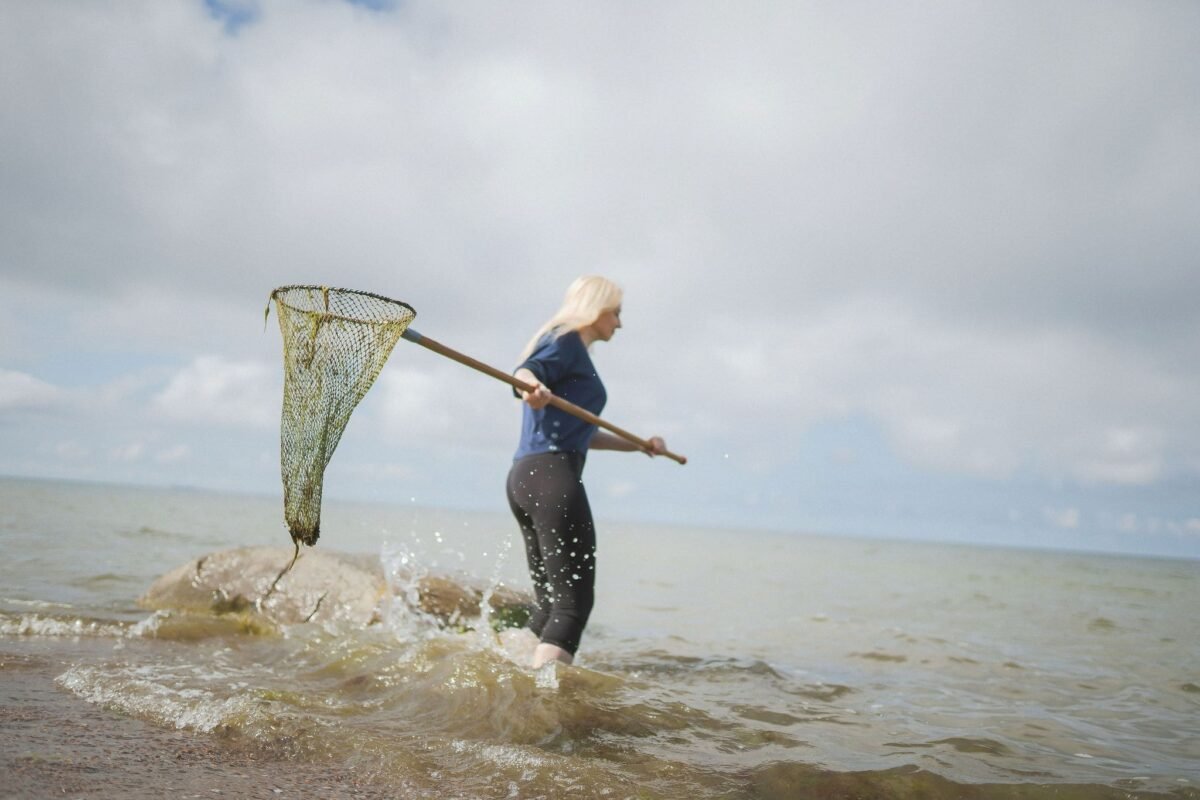
And eventually you find amber.
Baltic amber is around 50 million years old, which makes holding one of those tiny pieces you’ve just pulled from the sea rather extraordinary.
Amber hunting isn’t simply an activity invented for tourists either. It’s a genuine coastal tradition, practised by professional and amateur amber hunters, and the tradition is included in Lithuania’s Inventory of Intangible Cultural Heritage.
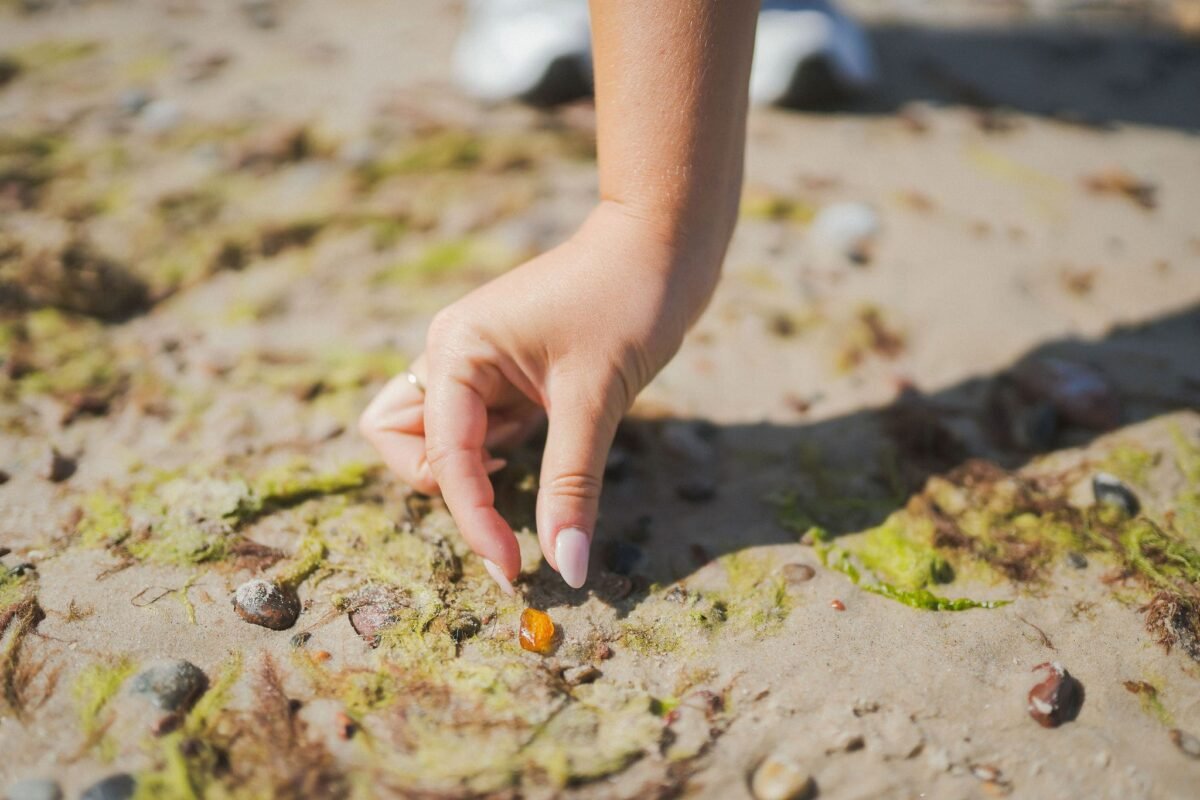
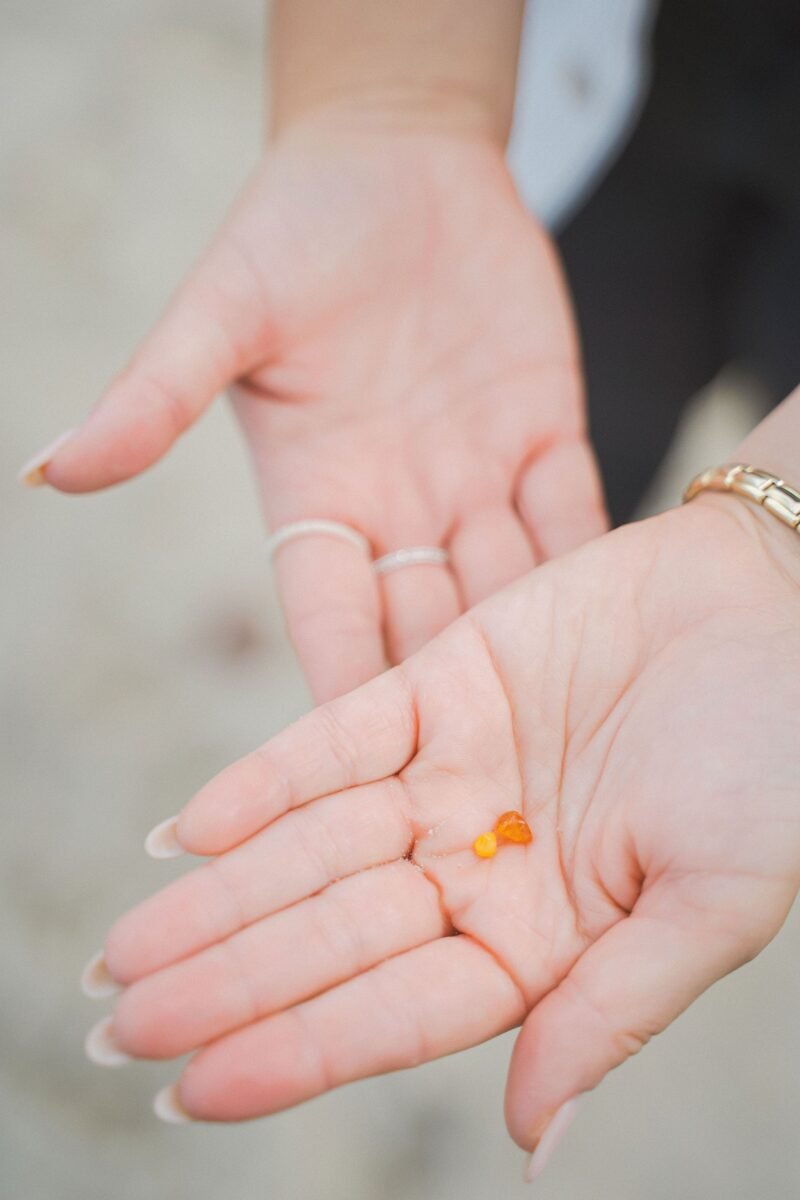
Allow around two hours for the experience. For me, this was one of the highlights of the entire trip.
This Baltic amber catching experience can be booked HERE
Continue to the Dutchman’s Cap
From Karklė, continue along the coast to Olando Kepurė – the Dutchman’s Cap.
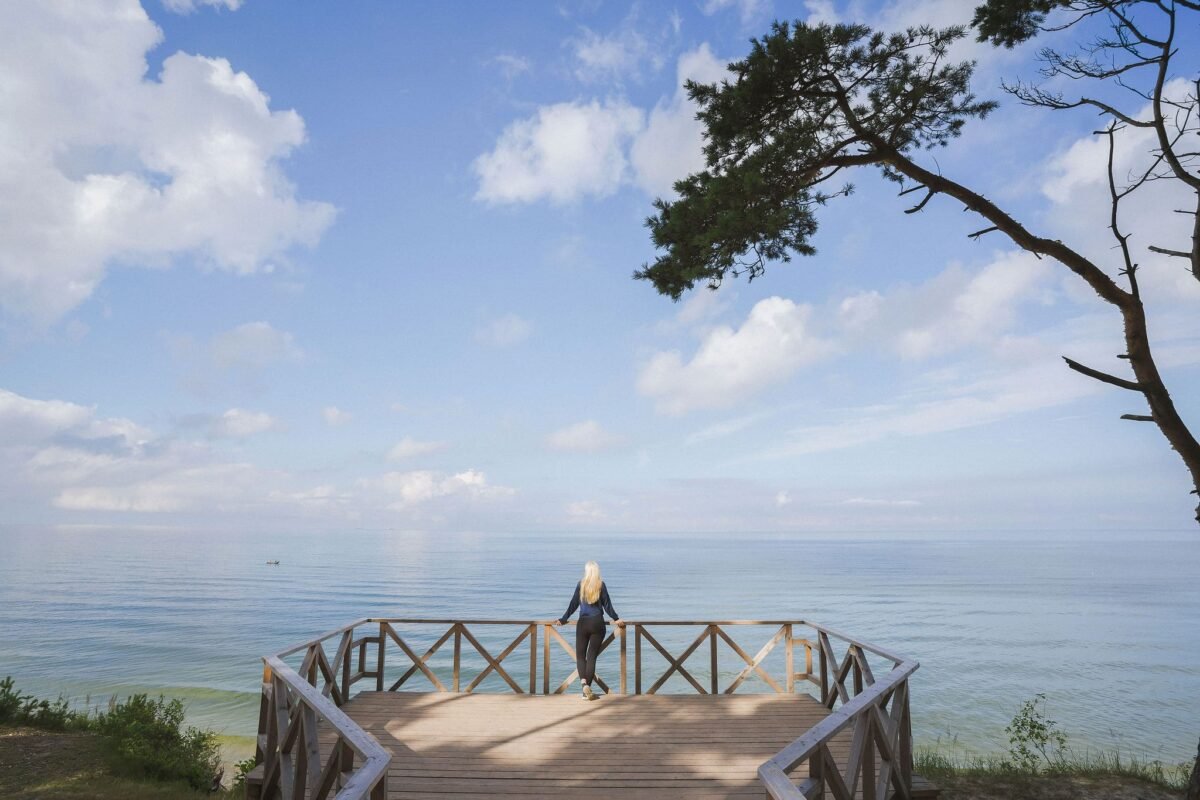
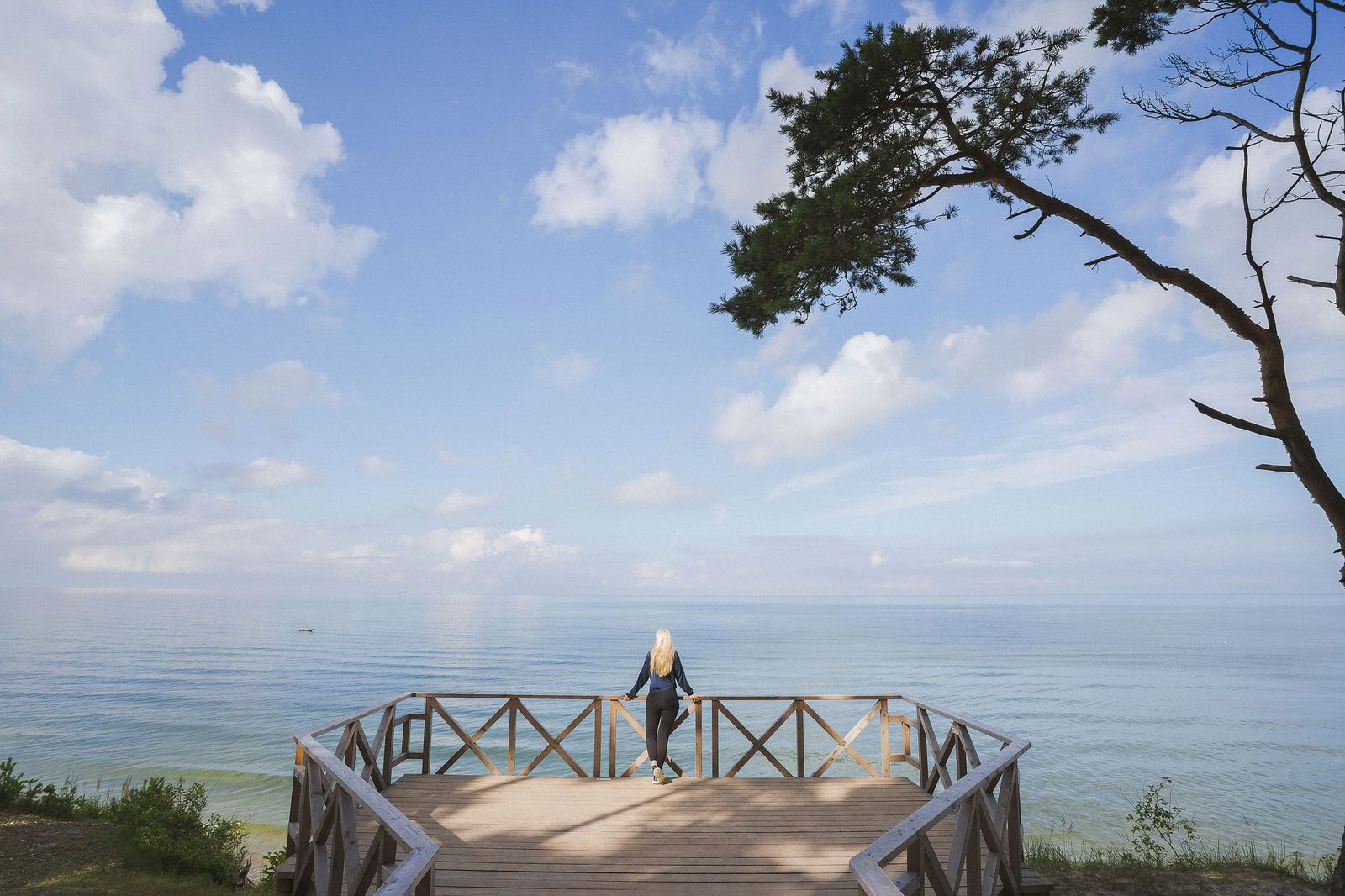
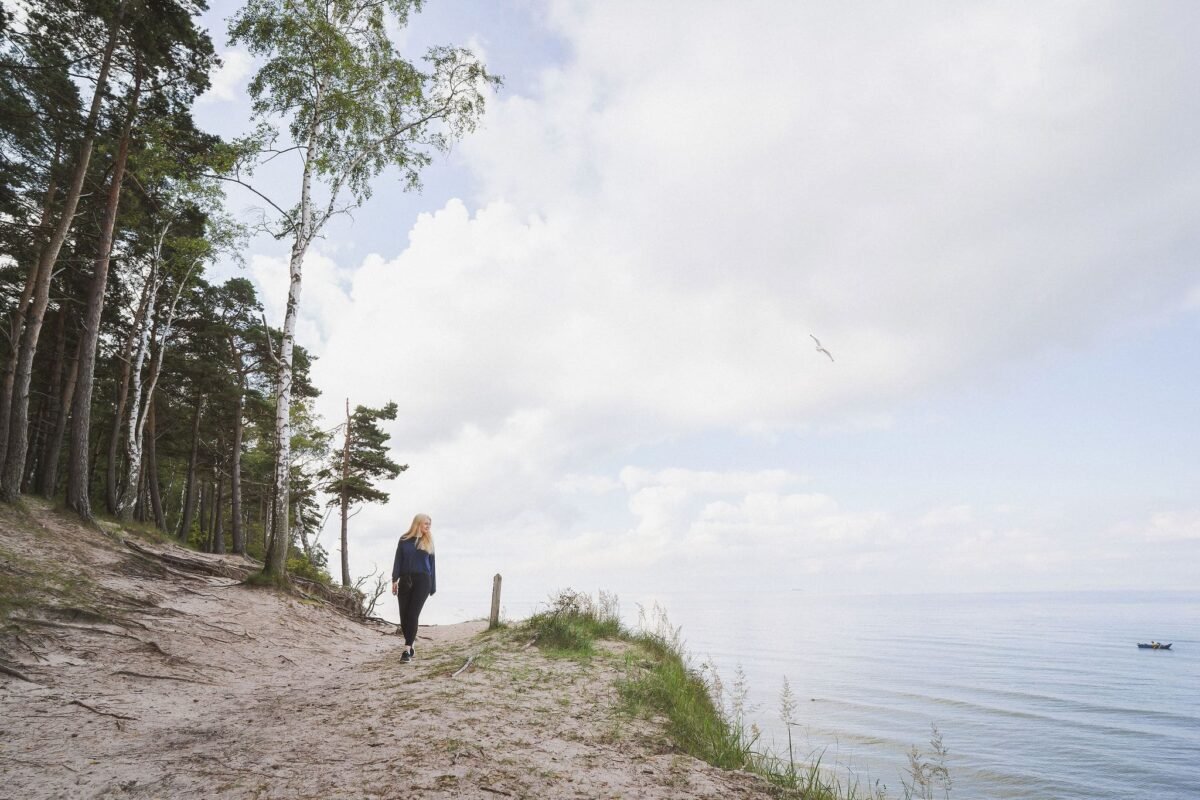
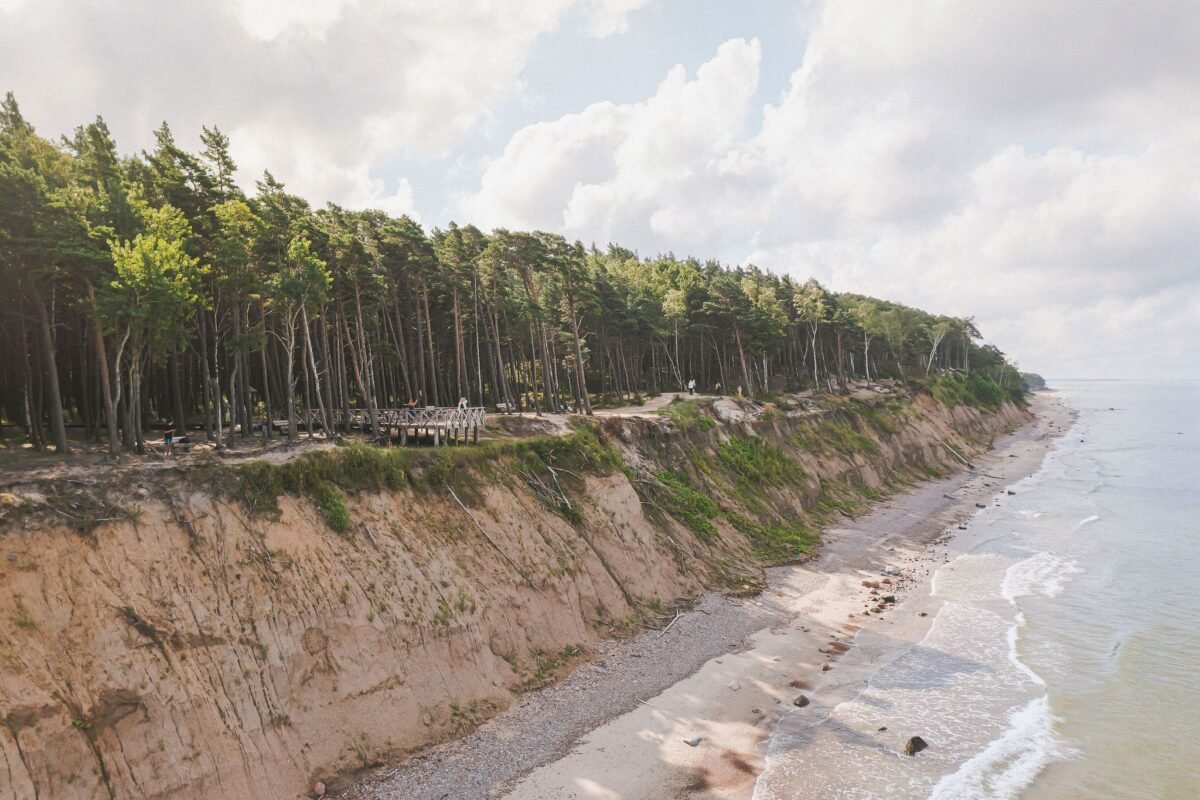
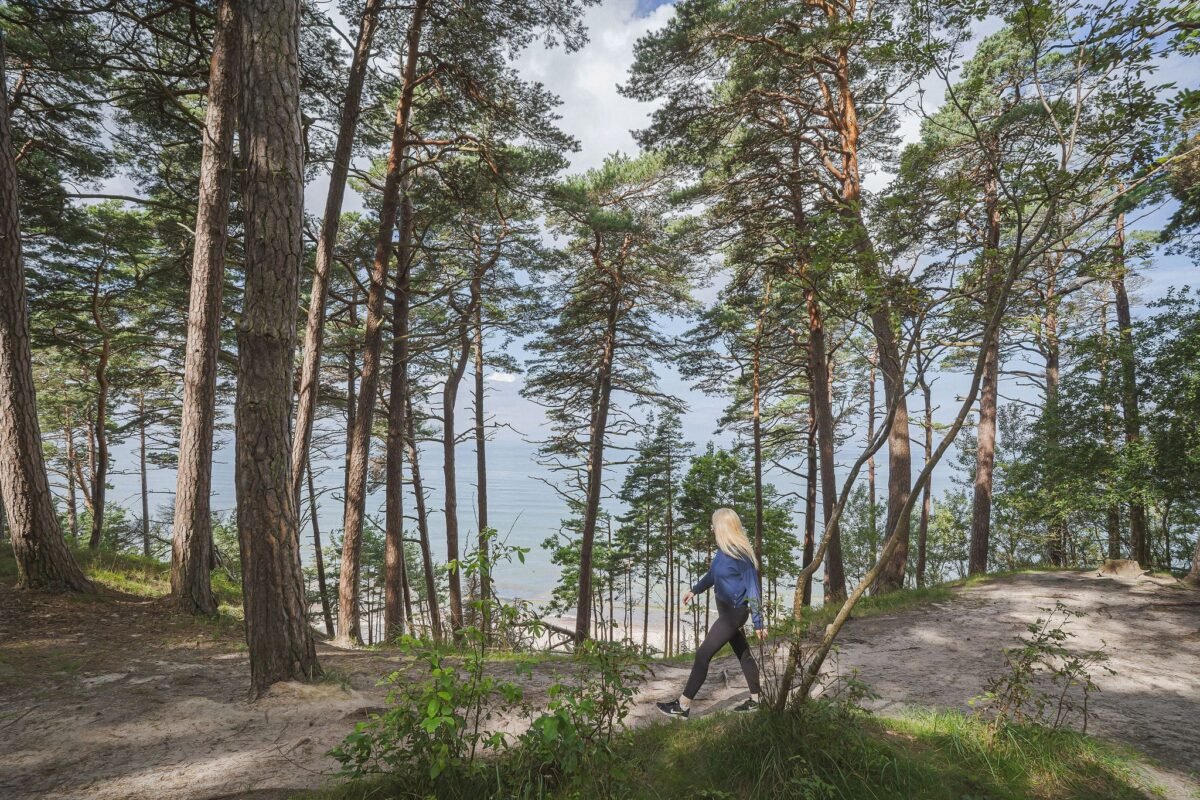
The landscape here is completely different from the flat sandy beaches you might associate with Lithuania’s coast. The bluff rises more than 20 metres above the Baltic, with tall pine trees and paths leading towards viewpoints over the sea.
Walk through the forest to the observation area, then take the stairs down towards the beach if you have time.
And this is something I particularly love about Lithuania: space.
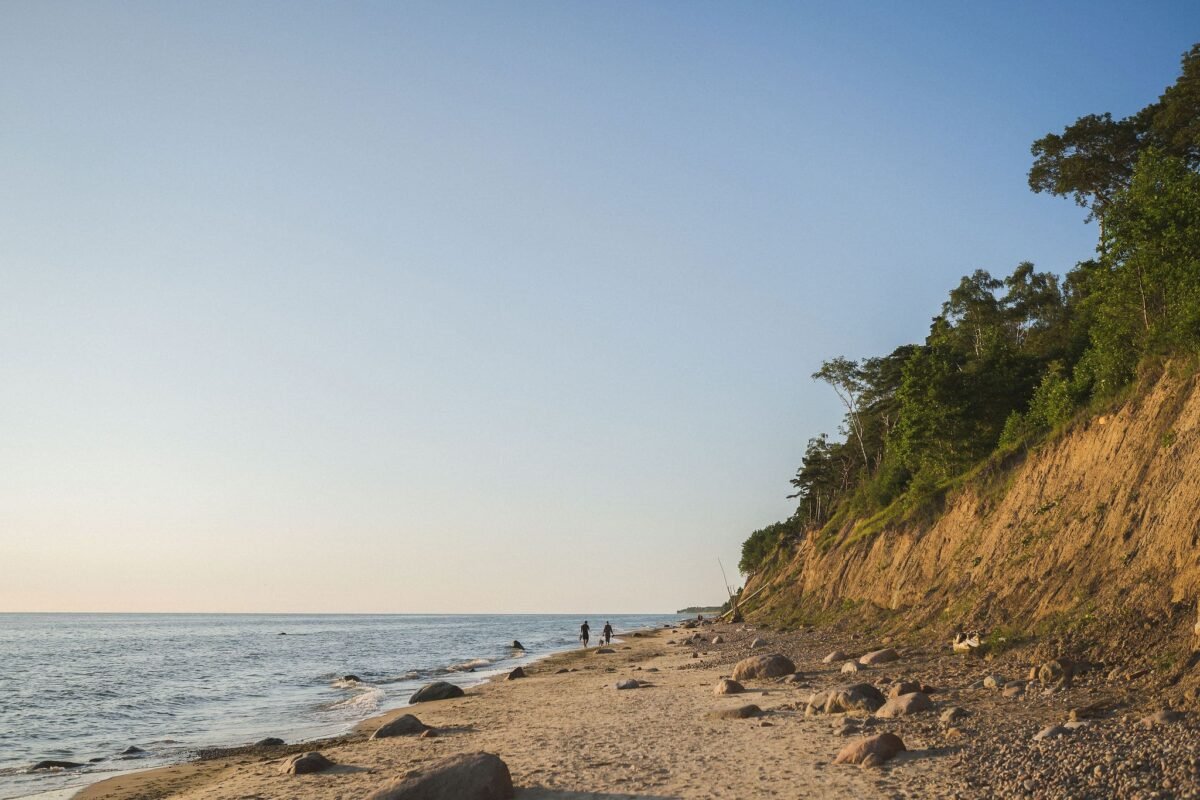
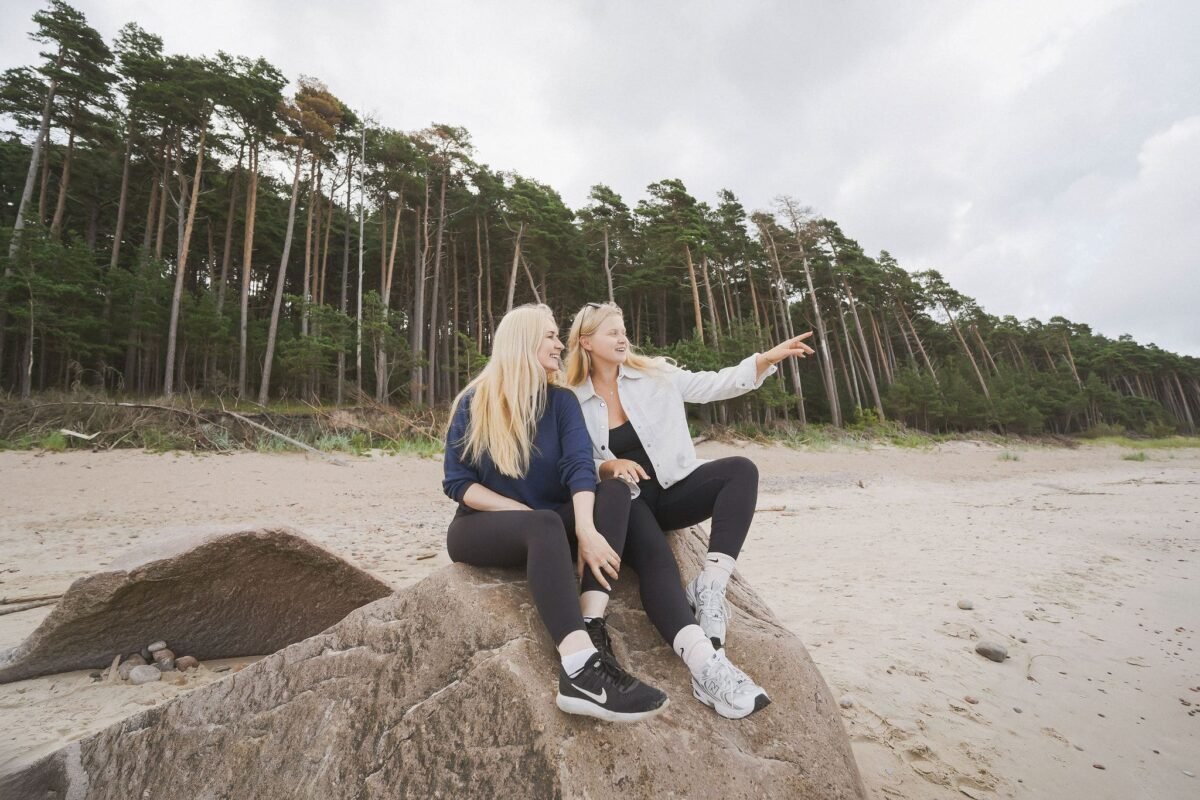
I’ve visited this part of the coast twice now and both times the beach was almost deserted. After living in Singapore, Delhi and Beijing, being able to walk along a beautiful beach and encounter perhaps five other people feels like an incredible luxury. You don’t need a beach club, music or a row of sun loungers. Sometimes you just need pine trees, Baltic wind and nobody else around.
Continue to Klaipėda
From Karklė, drive approximately another 20 minutes towards Klaipėda, Lithuania’s port city. You can spend the night here, but if your time is limited, I think a few hours is enough to get a taste of the Old Town, have an excellent lunch and continue towards the Curonian Spit.
Klaipėda feels different from other Lithuanian cities. Its architecture and history reflect centuries of Baltic, Prussian and German influence, and you’ll notice Fachwerk buildings and maritime details as you wander around. The Old Town isn’t huge, which is part of its charm. You don’t really need an ambitious sightseeing schedule. Start around Theatre Square, have a wander and see what you find.
The square itself developed as a market area in the 19th century and remains one of the city’s main gathering places. Its best-known sculpture is Ännchen von Tharau, the heroine associated with a poem by Klaipėda-born German poet Simon Dach.
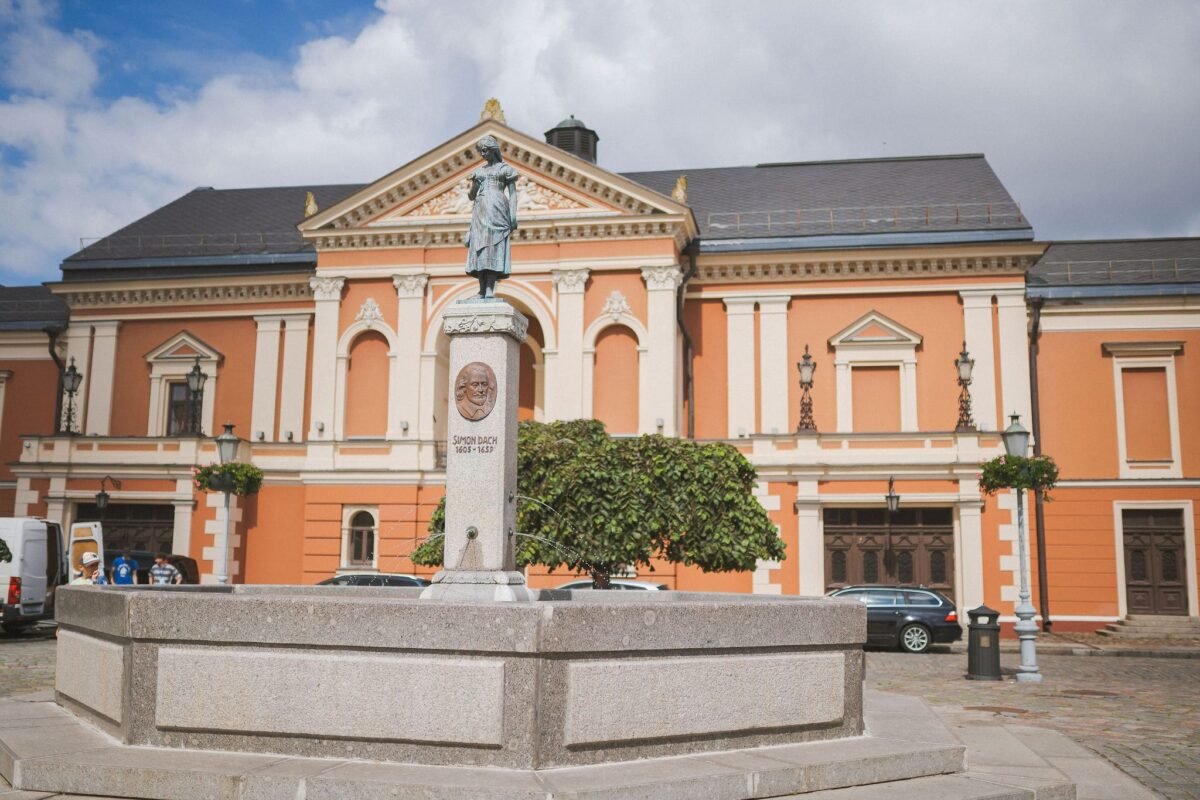
And now that you’ve spent your morning actually pulling amber out of the Baltic Sea, look at the amber jewellery sold around the centre.
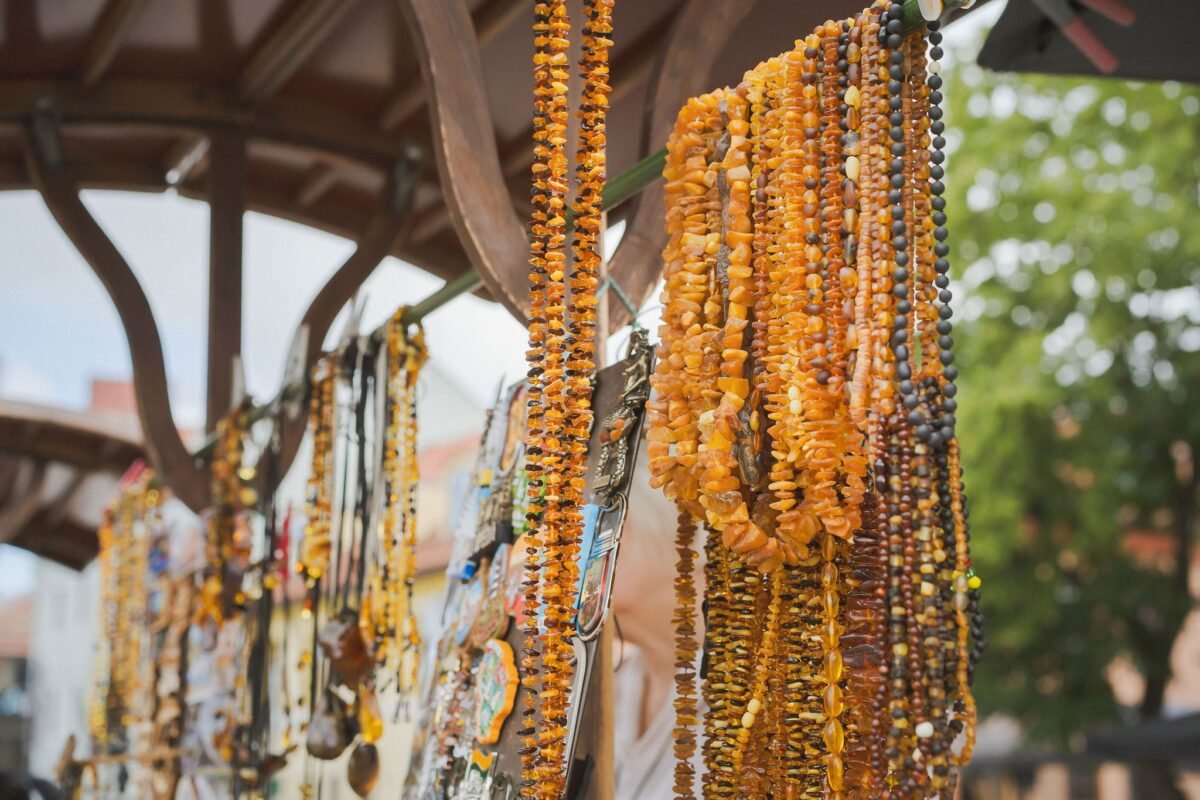
It feels different seeing polished pieces after you’ve just discovered where the material comes from.
Look for Klaipėda’s tiny sculptures
Klaipėda has a slightly quirky collection of sculptures scattered around its streets, which makes walking around particularly fun with children.
One is the Cat with the Face of a Gentleman, or Klaipėdis, originally created by sculptor Romualdas Midvikis in 1979. The cat has disappeared and returned more than once over the years and is now associated with a little local legend about having special powers.
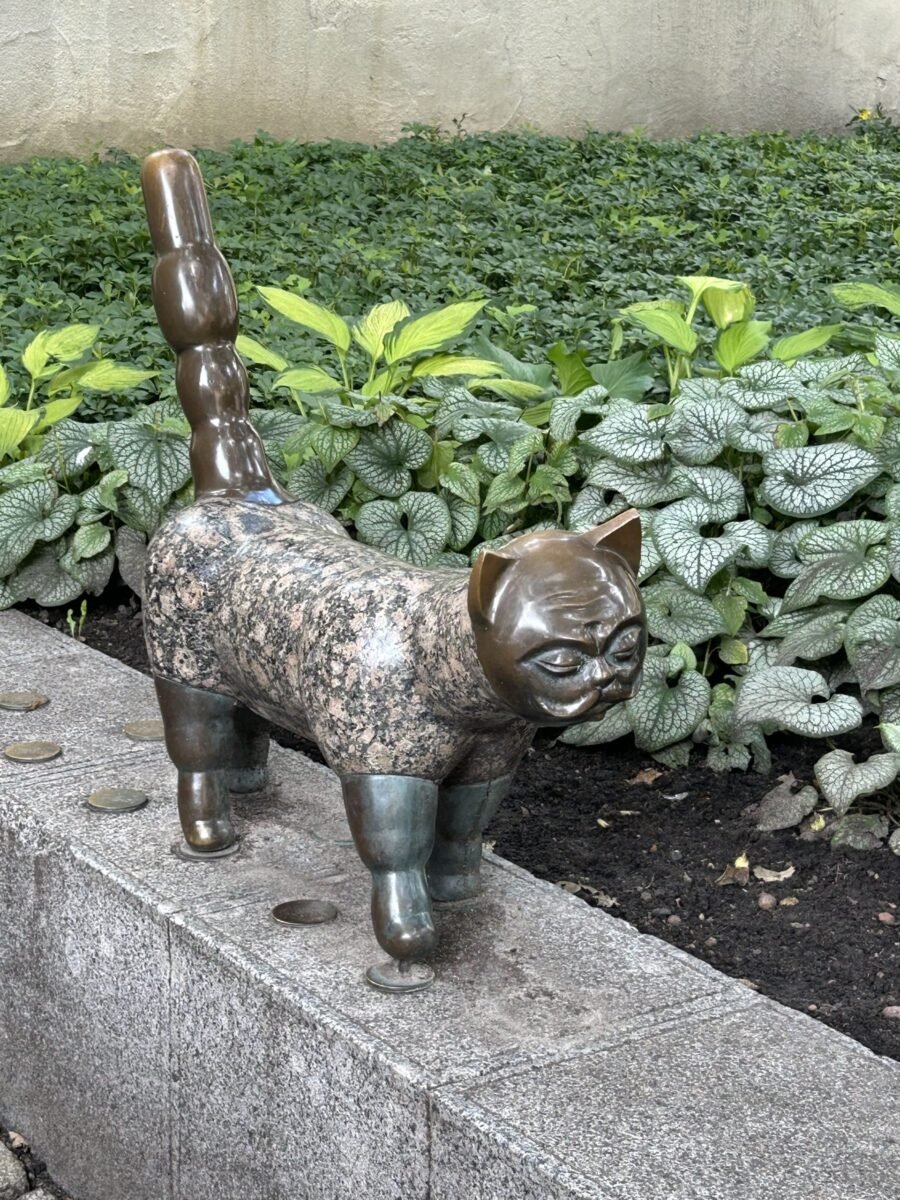
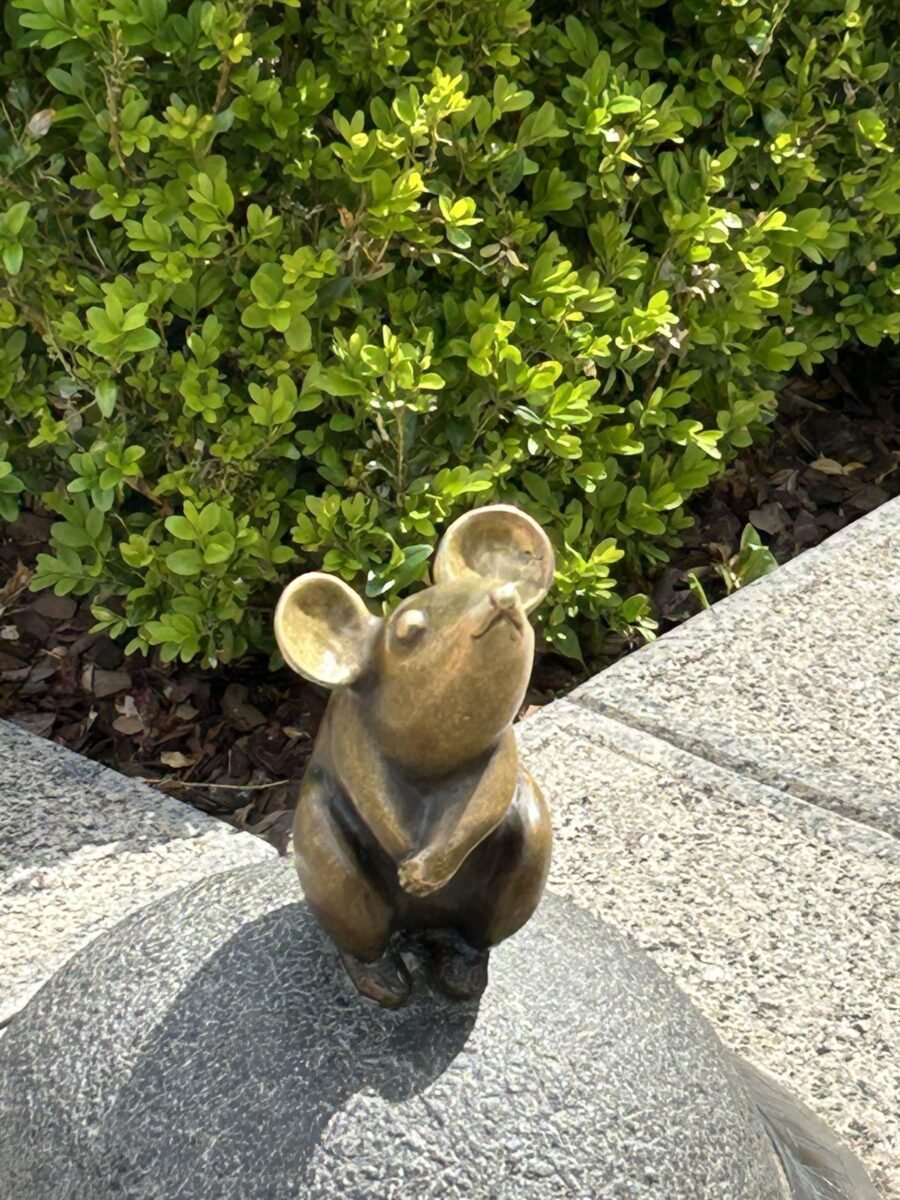
There are plenty of others to hunt for too, including a tiny magical mouse. Turning them into a treasure hunt is an easy way to make an Old Town walk more interesting for younger travellers.
Book a Klaipeda guided walking tour HERE
See the Meridianas
Eventually you’ll reach the Meridianas, the beautiful sailing ship moored on the Danė River.
It was built in Finland in 1948 and later became a training vessel for students of the Klaipėda Maritime School. After its sailing career ended, it eventually became a restaurant and has since become one of Klaipėda’s most recognisable landmarks.
You can admire it from the riverbank.
Or you can paddle towards it.
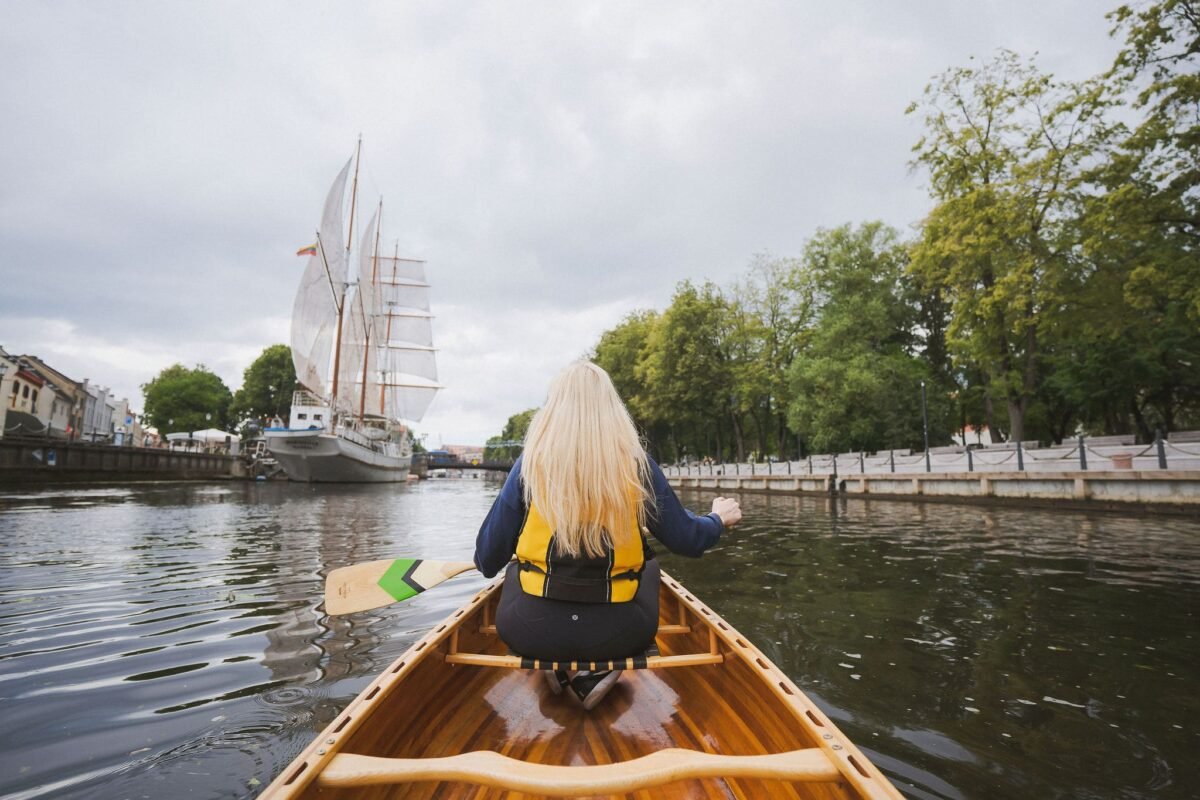
Canoe through Klaipėda on the Danė River
This is another experience I really enjoyed.
You can explore Klaipėda from the water in handmade wooden canoes, paddling along the Danė through the city. It takes a little getting used to at first, but once you find your rhythm, seeing the Old Town from the river gives you a completely different perspective.
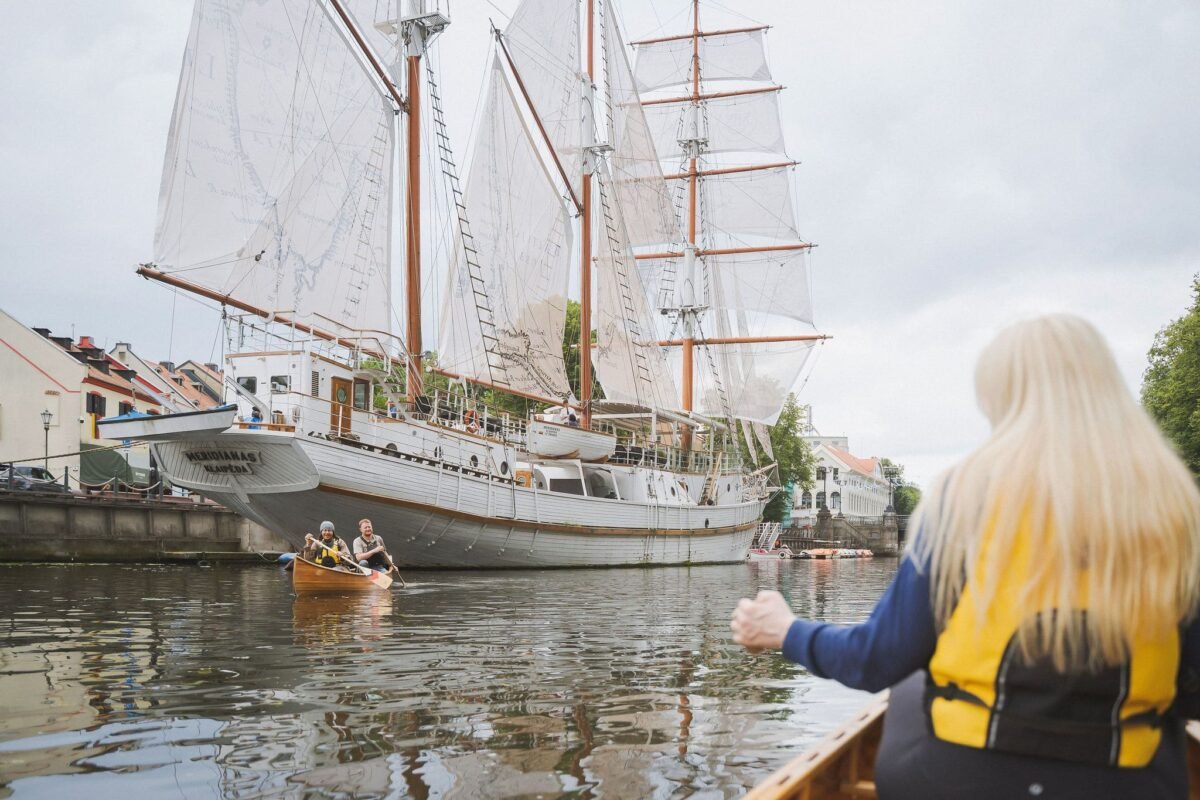
I did it during the day, but there is also a nighttime version. The guided NIGHTWATCH experience uses handmade wooden canoes and torches and takes you past Klaipėda’s illuminated waterfront and the Meridianas.
Having tried the daytime version, I think I’d choose nighttime next.
You can book the daytime version HERE and nighttime option HERE.
Where to eat in Klaipėda
I’ve eaten at monai several times and really like it – particularly the octopus.
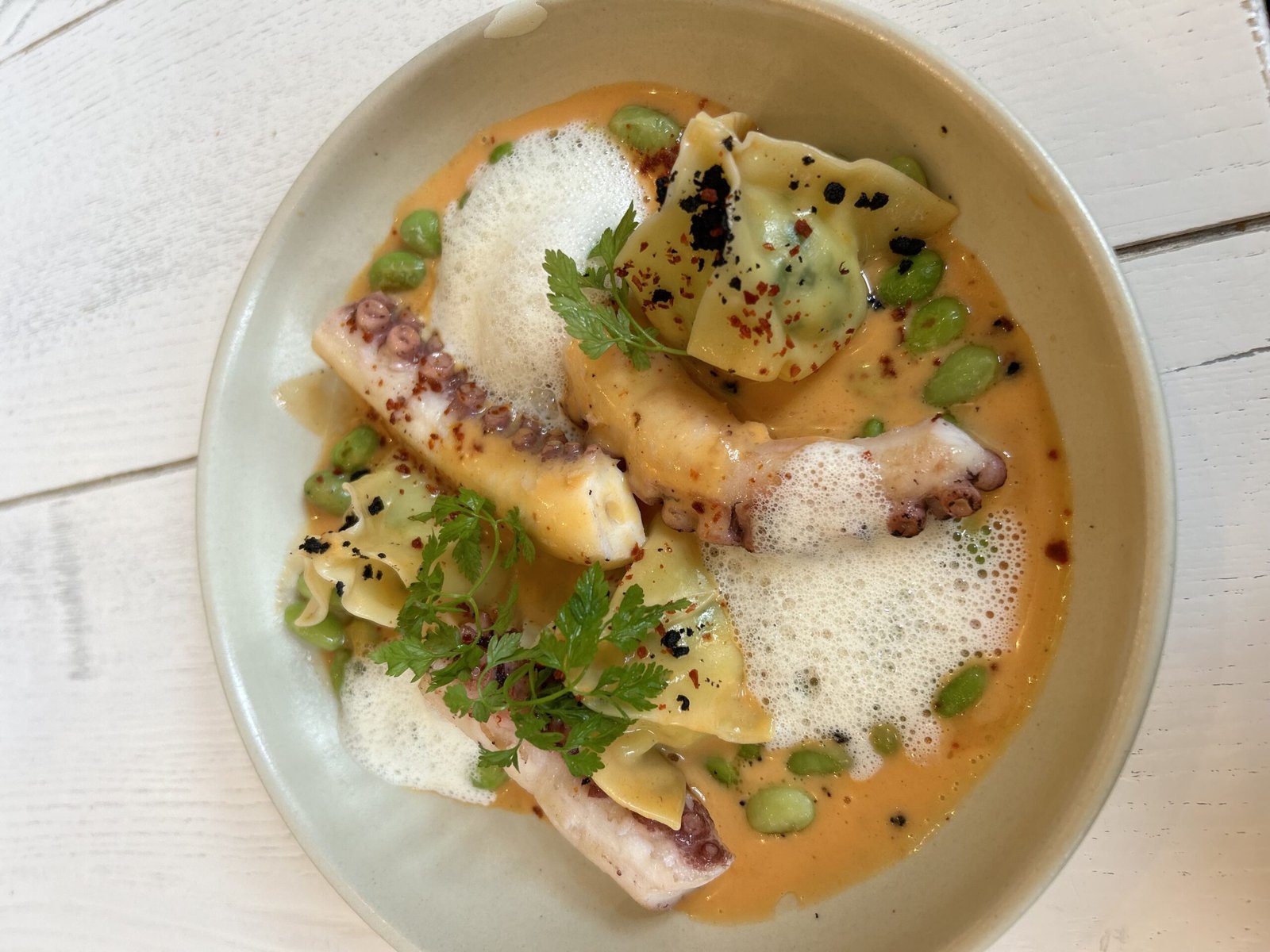
It’s a modern restaurant and is included in the MICHELIN Guide.
But if you give me only one meal in Klaipėda, I would currently choose ALBA Bistro. It’s an Italian restaurant in Theatre Square, and the first thing I noticed was the interior – colourful artwork, mismatched decorative ceramics and beautiful plates that make the whole place feel almost Mediterranean. MICHELIN added ALBA Bistro to its Lithuania selection in 2025 and specifically noted its Italian cooking and colourful ceramics. The food is excellent too.
Take the ferry to the Curonian Spit
From Klaipėda, the next part of the journey feels like entering another world. A very short ferry crossing (around 7 minutes) takes you across to Smiltynė and the Curonian Spit.
The Curonian Spit is a long, incredibly narrow strip of sand separating the Baltic Sea from the Curonian Lagoon. The entire spit is around 98 kilometres long and in places less than half a kilometre wide. UNESCO inscribed it on the World Heritage List in 2000 as a cultural landscape shaped over centuries by the interaction between people, wind, water and sand.
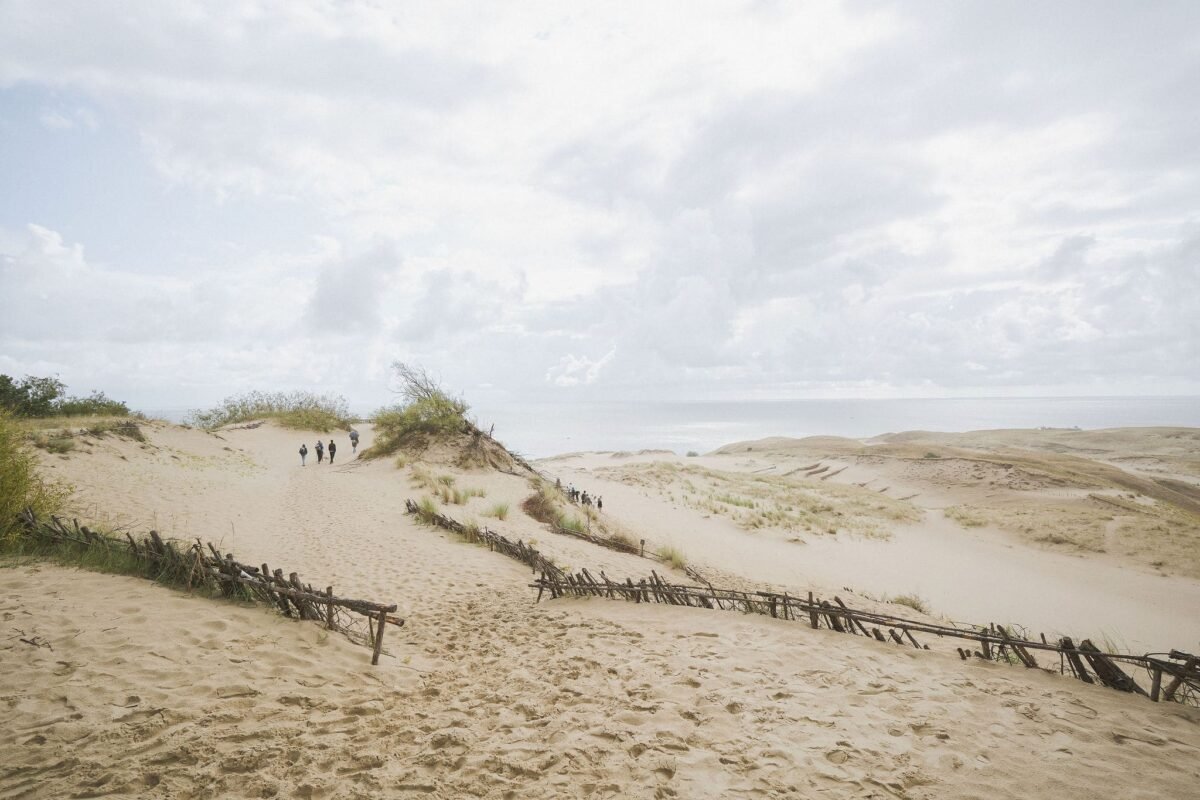
What makes its history particularly fascinating is that this beautiful landscape is partly the result of a battle with nature.
After extensive forest clearance in the 17th and 18th centuries, moving dunes began swallowing settlements. Large-scale dune stabilisation and reforestation followed in the 19th century, and those efforts continue to shape the landscape you see today.
The Lithuanian side is dotted with small settlements including Smiltynė, Juodkrantė, Pervalka, Preila and Nida.
If you only have time to choose one as your main base, I would choose Nida.
Good to know if you’re driving
If you take a car onto the Curonian Spit, remember that there are additional costs.
You need to pay for the vehicle ferry from Klaipėda to Smiltynė, and there is also an entrance fee for vehicles entering Neringa. Parking in Nida can be charged during the summer season too.
I wouldn’t rely on prices quoted in a travel blog because these can change, so check the current ferry, entrance and parking fees before travelling.
Nida: fishing-village charm and enormous dunes
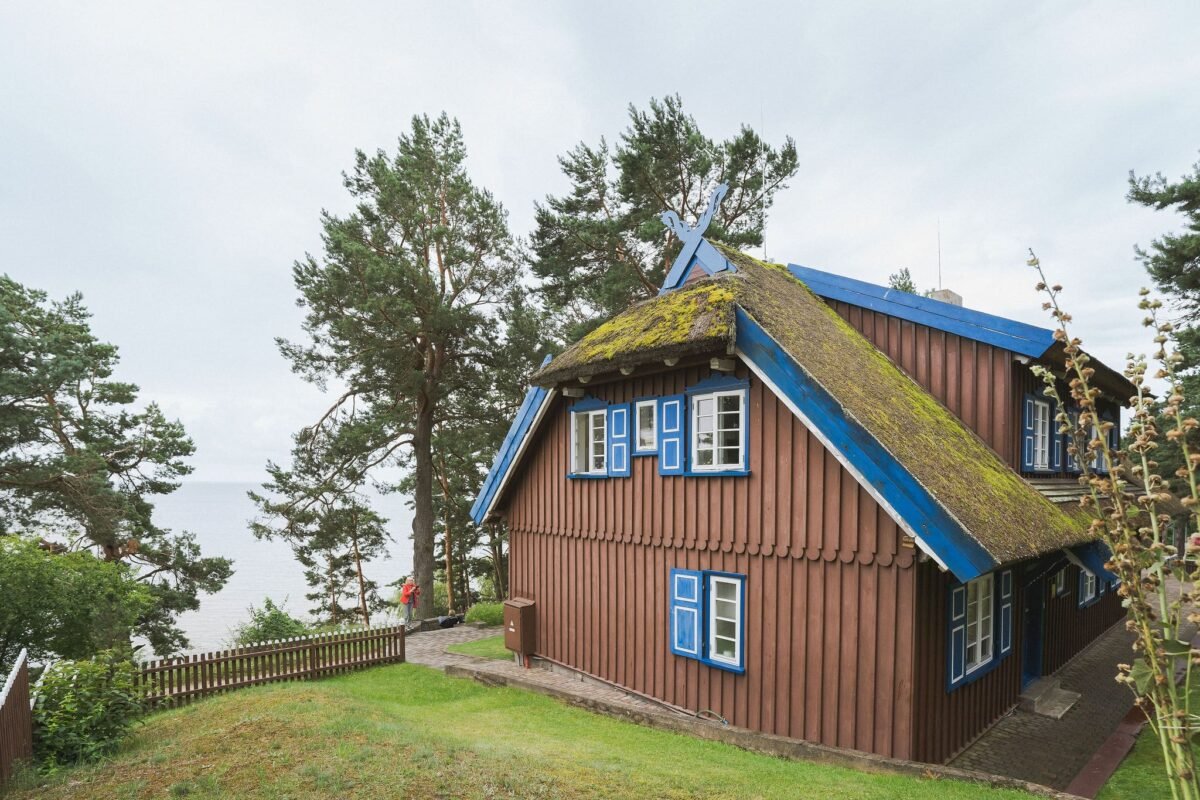
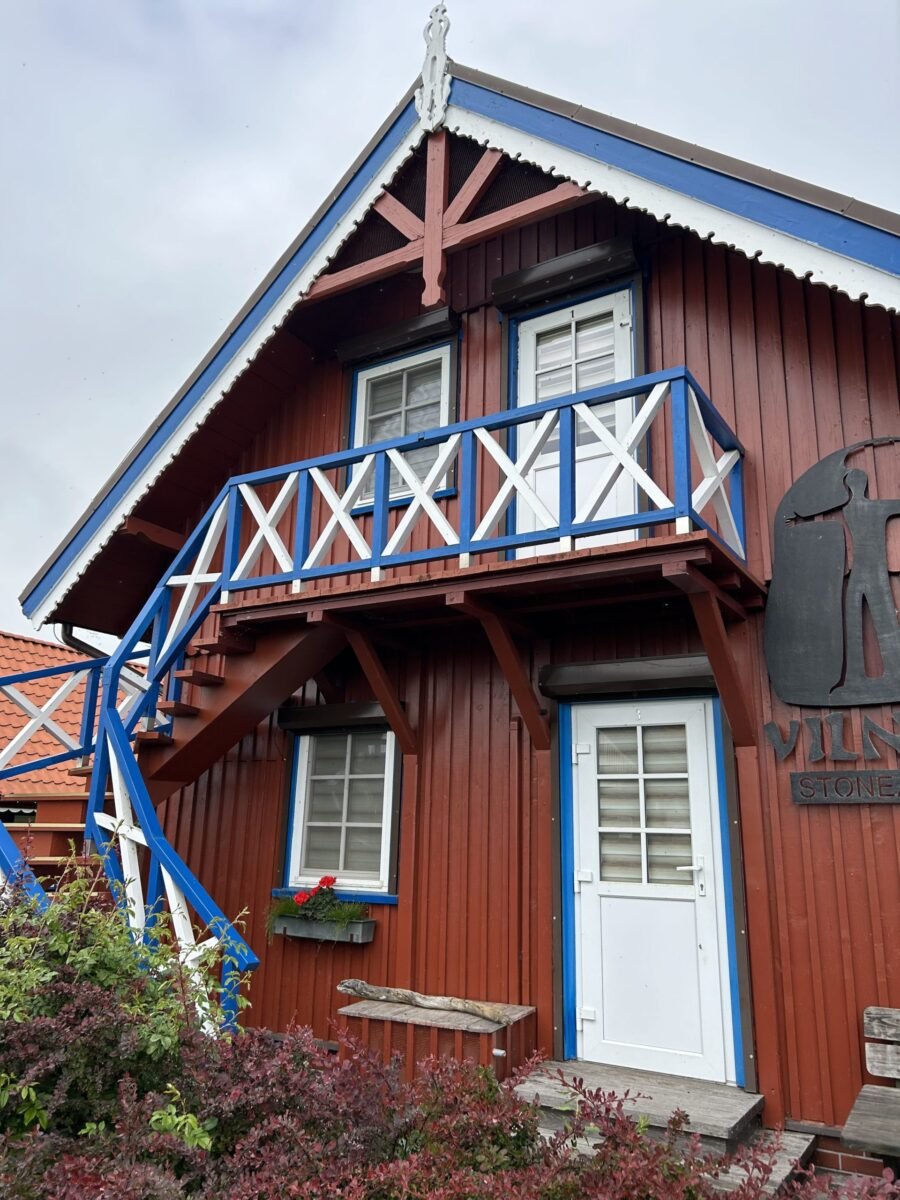
Nida is one of those places that doesn’t feel quite like the rest of Lithuania. Traditional wooden houses, the lagoon, boats, pine forests, dunes and colourful vėtrungės – traditional Curonian weathervanes – give it a very distinctive character. Those weathervanes aren’t just pretty decorations.
In the 19th century, fishing boats on the Curonian Lagoon were required to carry identifying signs so officials could tell which village the fishermen came from and whether they were fishing in their designated waters. Fishermen gradually began decorating the signs with elaborate carvings and symbols connected to their lives and communities.
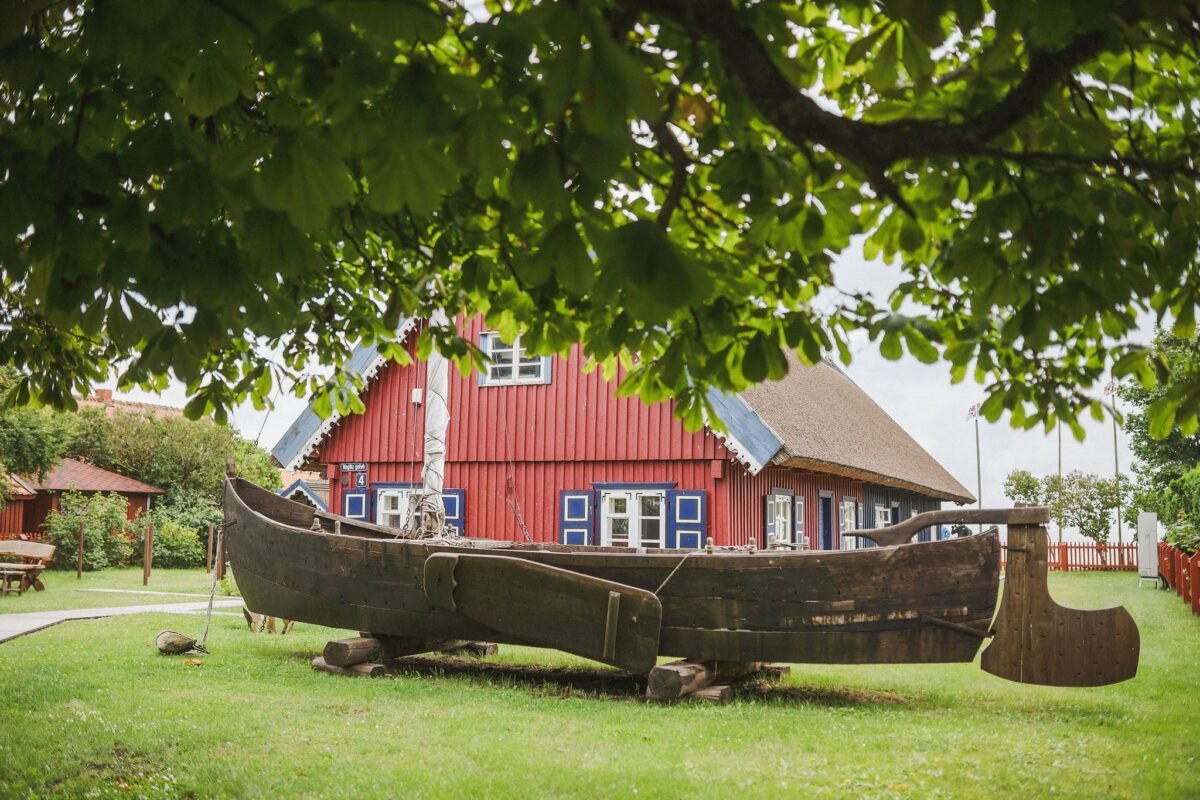
Today, more than 80 different weathervanes can be seen in the open-air exhibition along Nida’s quay.
If you’re travelling with children, make a game out of them. Look at the shapes and symbols together and try to guess what they might represent before reading the explanation.
Climb Parnidis Dune and see the sundial
One of the places you shouldn’t miss in Nida is Parnidis Dune. A 1.1-kilometre educational trail leads towards the dune and its viewpoint, with wooden paths, stairs and several places to stop along the way.
At the top you’ll find Nida’s enormous sundial-calendar.
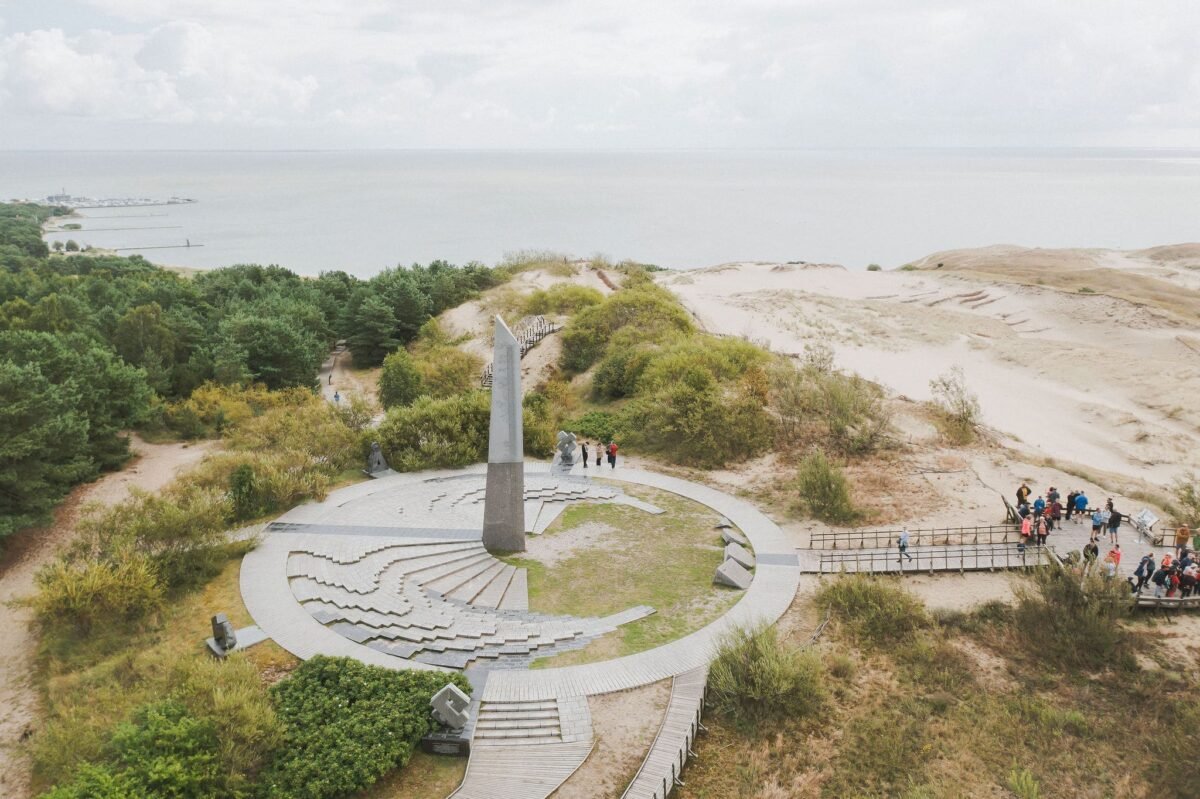
The location is particularly clever: from Parnidis Dune, the horizon opens in both directions, and you can watch the sun rise over the Curonian Lagoon and set towards the Baltic Sea. But even if you have absolutely no interest in sundials, come for the view. This is where you really understand how unusual the geography of the Curonian Spit is.
Walk above the Dead Dunes
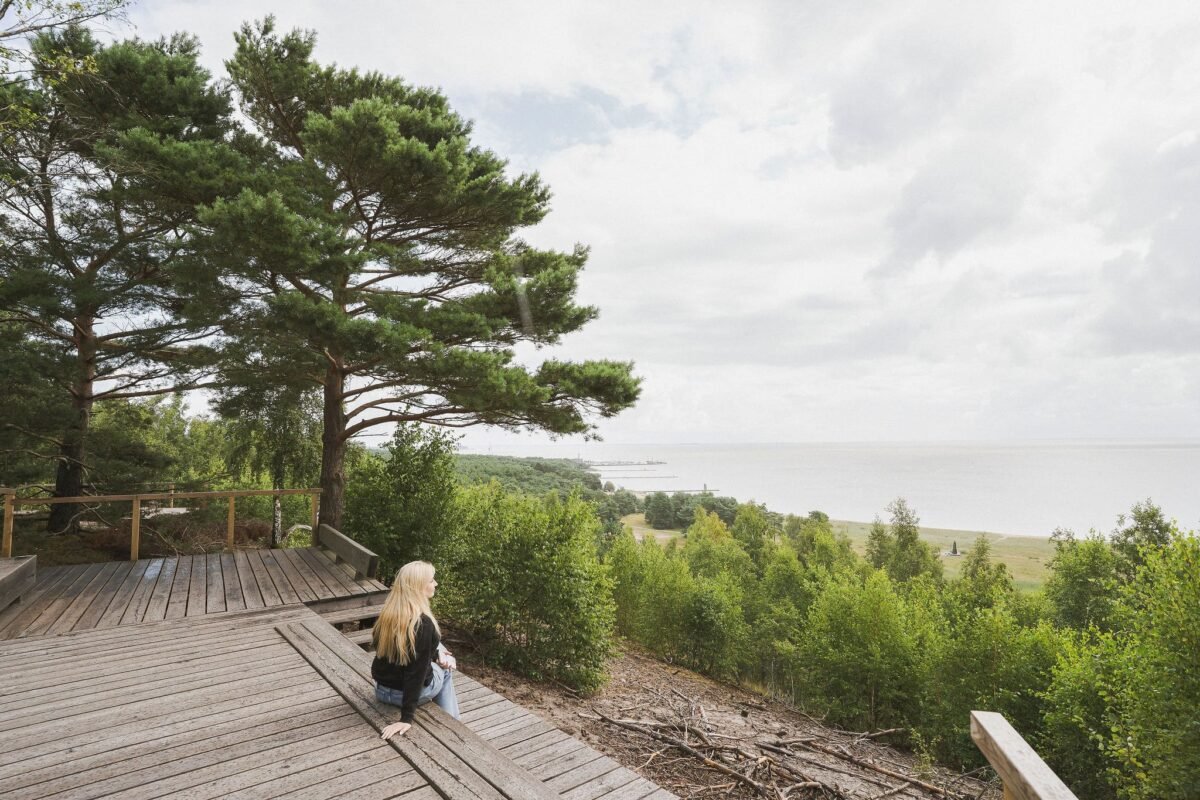
The name alone makes you want to visit: the Dead Dunes.
They’re part of the Nagliai Nature Reserve between Juodkrantė and Pervalka. A roughly 1.2-kilometre educational trail crosses forest and boardwalk before reaching the Grey Dunes, also known as the Dead Dunes.
Why “dead”?
Because the moving sand here once buried entire villages.
After deforestation destabilised the landscape centuries ago, enormous masses of sand began migrating across the spit. Settlements disappeared beneath them, and the landscape became a reminder of just how powerful the combination of wind and sand can be.
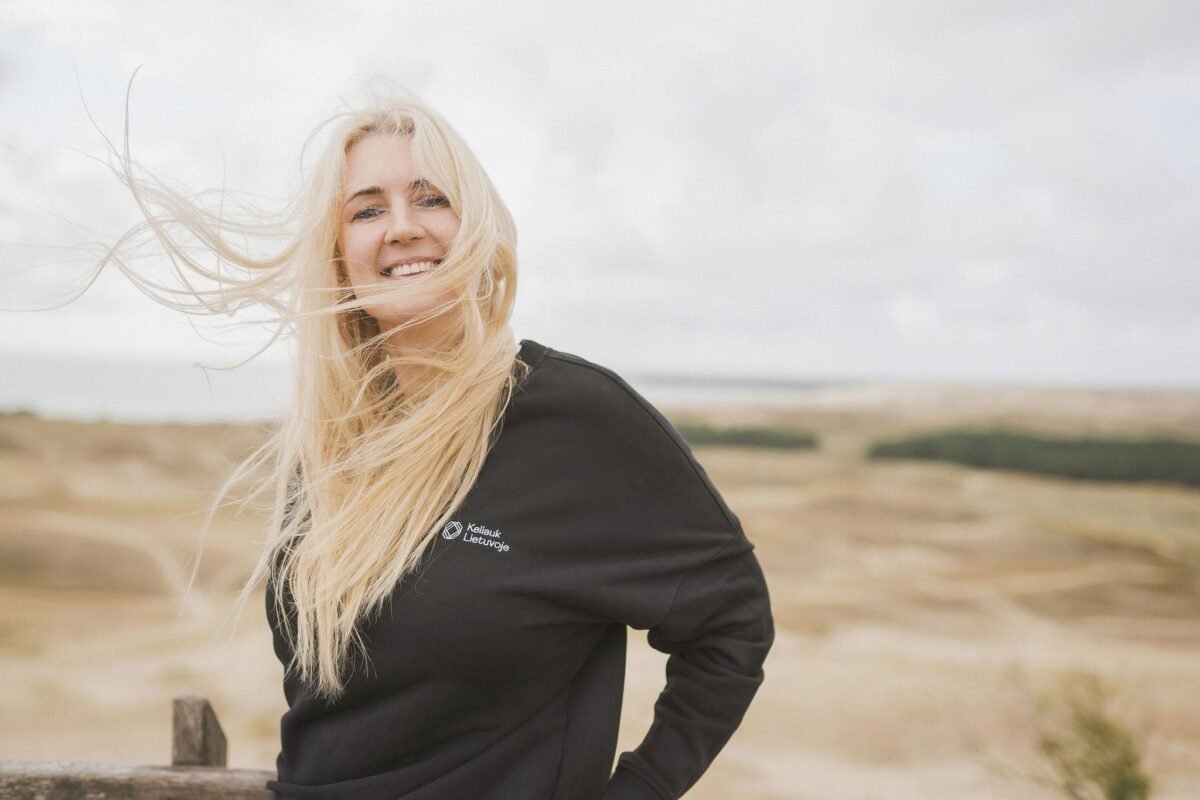
It’s beautiful, but there is something slightly eerie about knowing what lies beneath.
Stay on the designated paths and boardwalks. This is a fragile protected landscape, not simply a giant beach to climb wherever you like.
Visit the Mizgiris Amber Museum
Remember that tiny piece of amber you pulled from the Baltic Sea back in Karklė? By the time you reach Nida, you can complete the amber story at the Mizgiris Amber Museum.
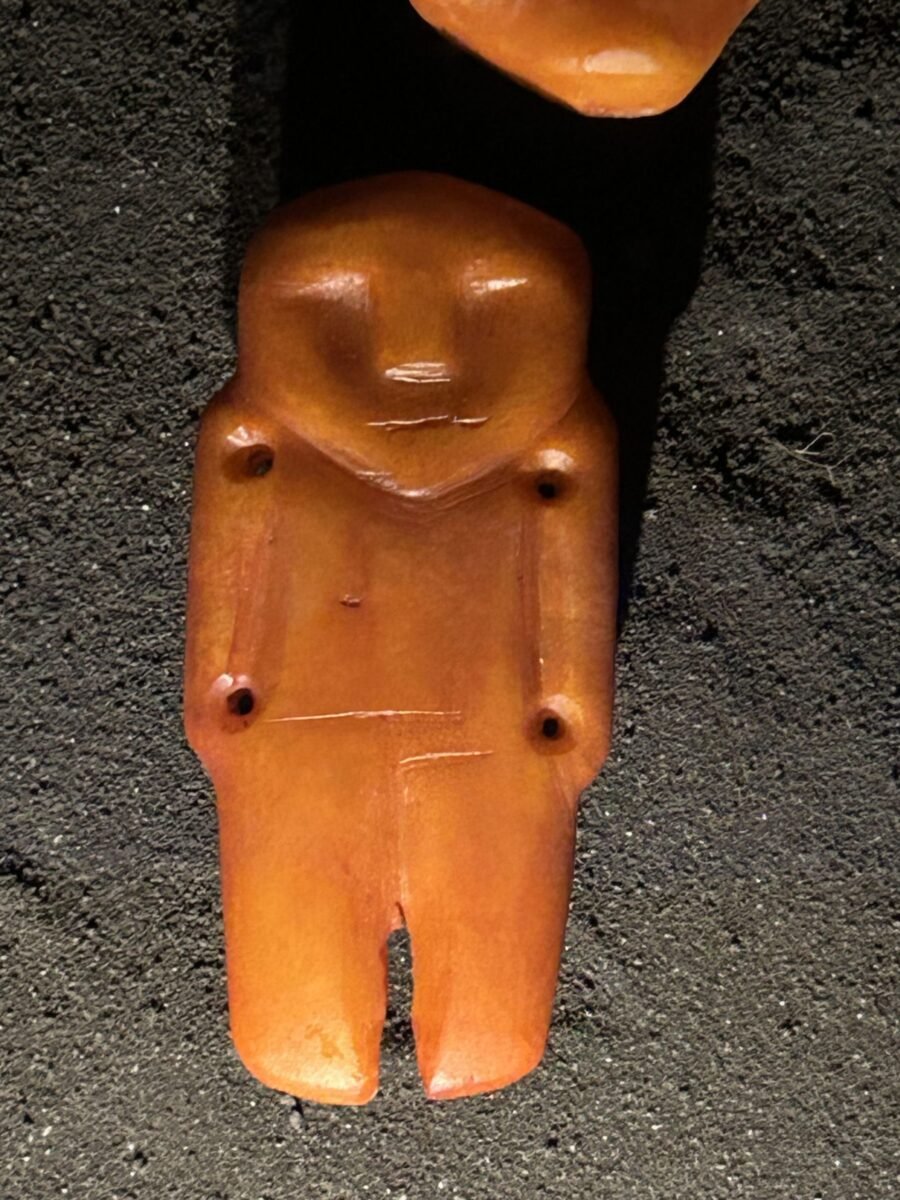
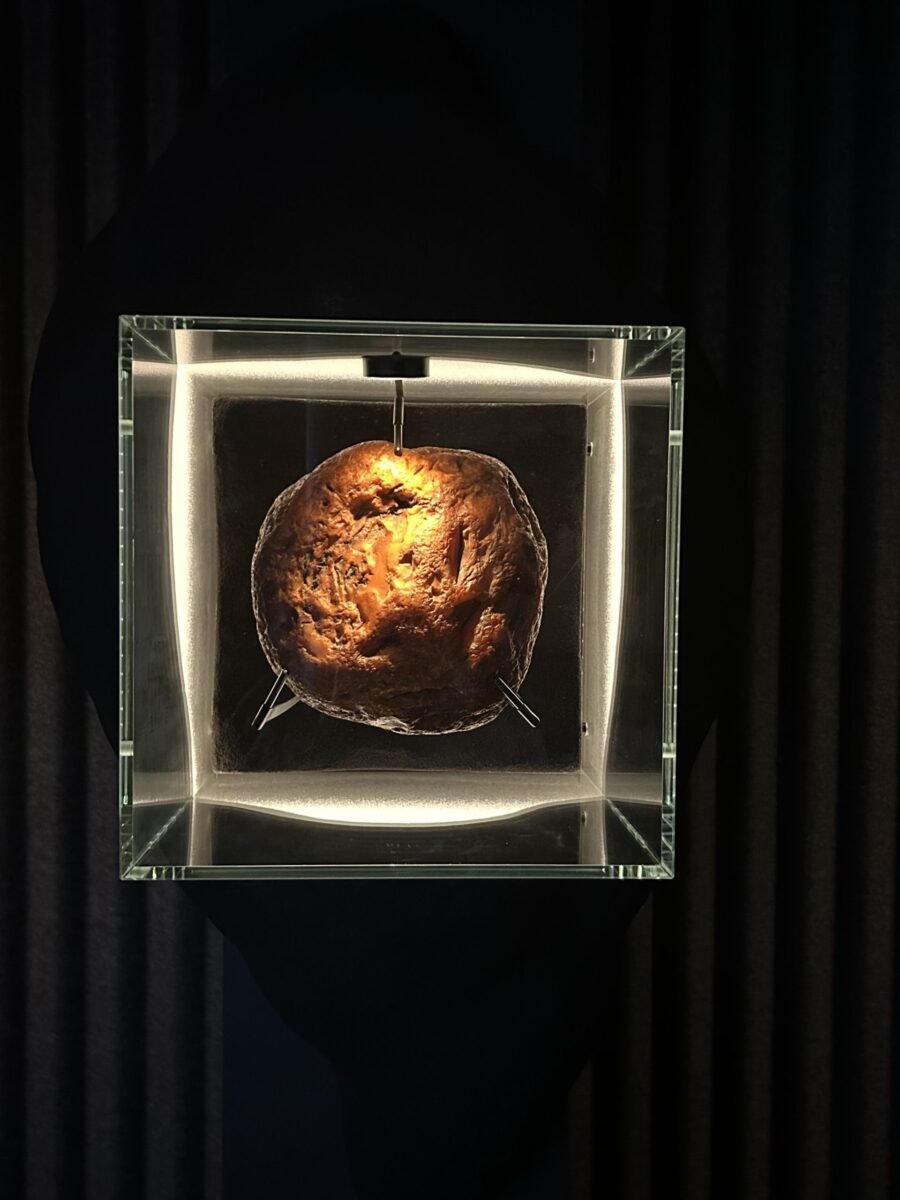
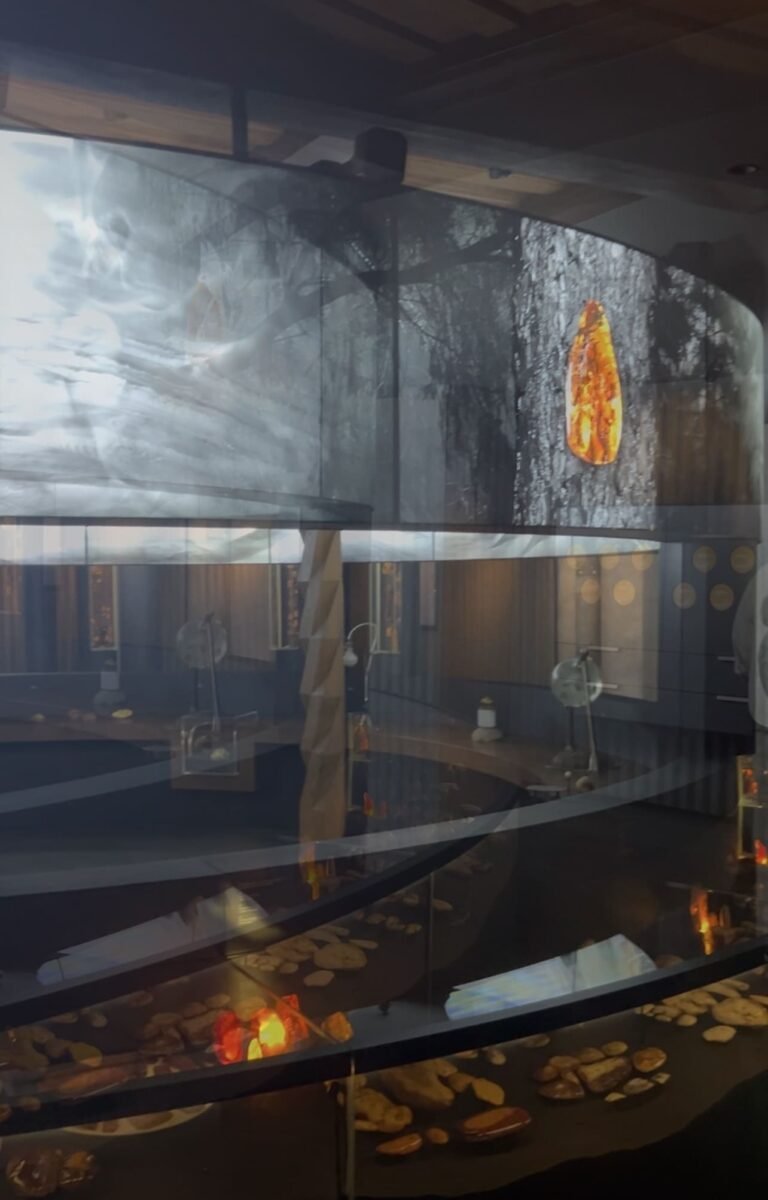
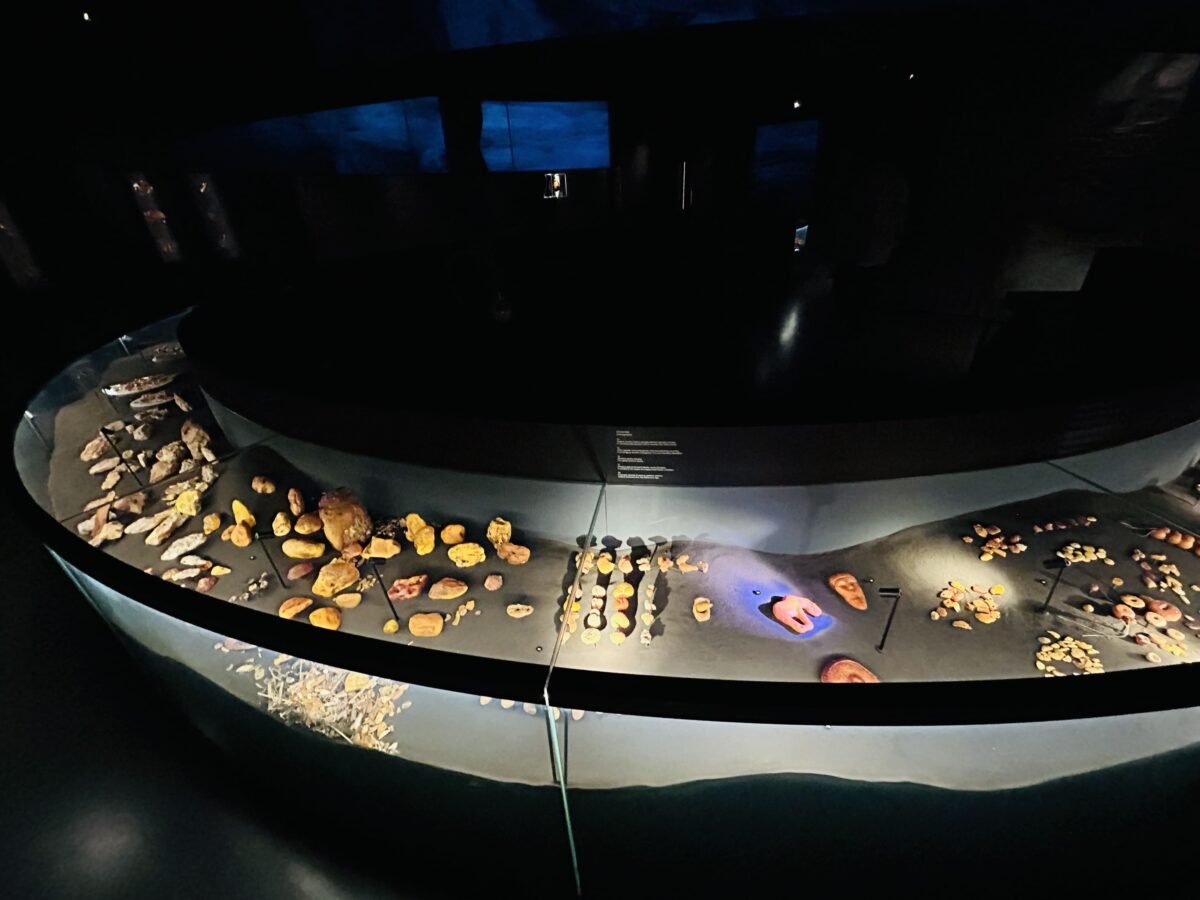
It’s a modern, interactive museum on Naglių Street, and I found it a really good counterpoint to the hands-on amber-catching experience.
Instead of simply looking at rows of amber jewellery, you get much more context about amber itself and see specimens in a modern museum setting.
For me, this creates a nice thread through the entire coastal journey:
Catch amber in Karklė. See it turned into jewellery in Klaipėda. Then understand it properly in Nida.
Try kayaking – weather permitting
You can also kayak on the Curonian Lagoon around Nida. I was supposed to do this. And then a storm arrived. The activity was cancelled, so unlike the canoeing in Klaipėda, I can’t personally tell you whether it’s worth doing.
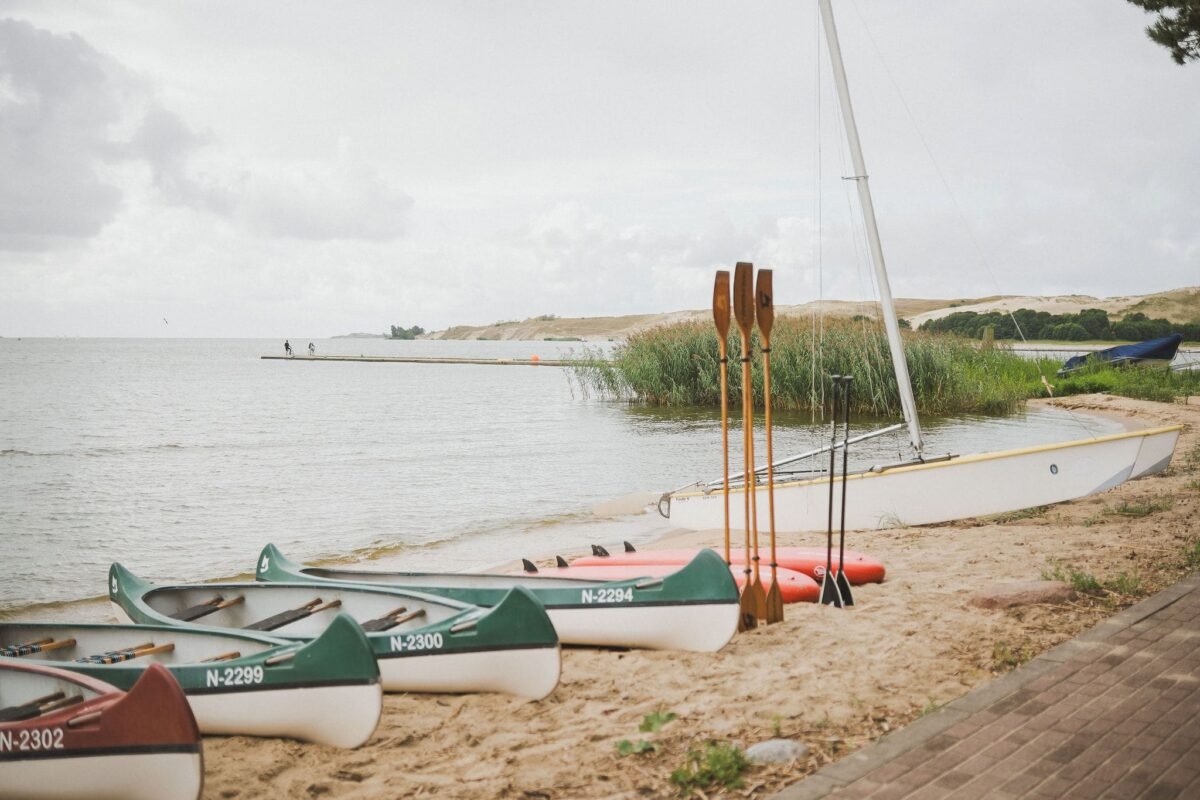
It still looks like a wonderful way to experience the landscape from the water, though, and it’s something I would try again on a future visit.
Book a guided Canoe Tour of the Curonian Spit, Lithuania HERE
Eat freshly smoked fish
There are some experiences on the Curonian Spit that don’t need to be complicated. One is eating freshly smoked fish. Fishing has shaped life around the Curonian Lagoon for centuries, and you’ll find smoked fish sold around the villages. Follow the smell. Buy some, sit outside and eat it while you’re there.
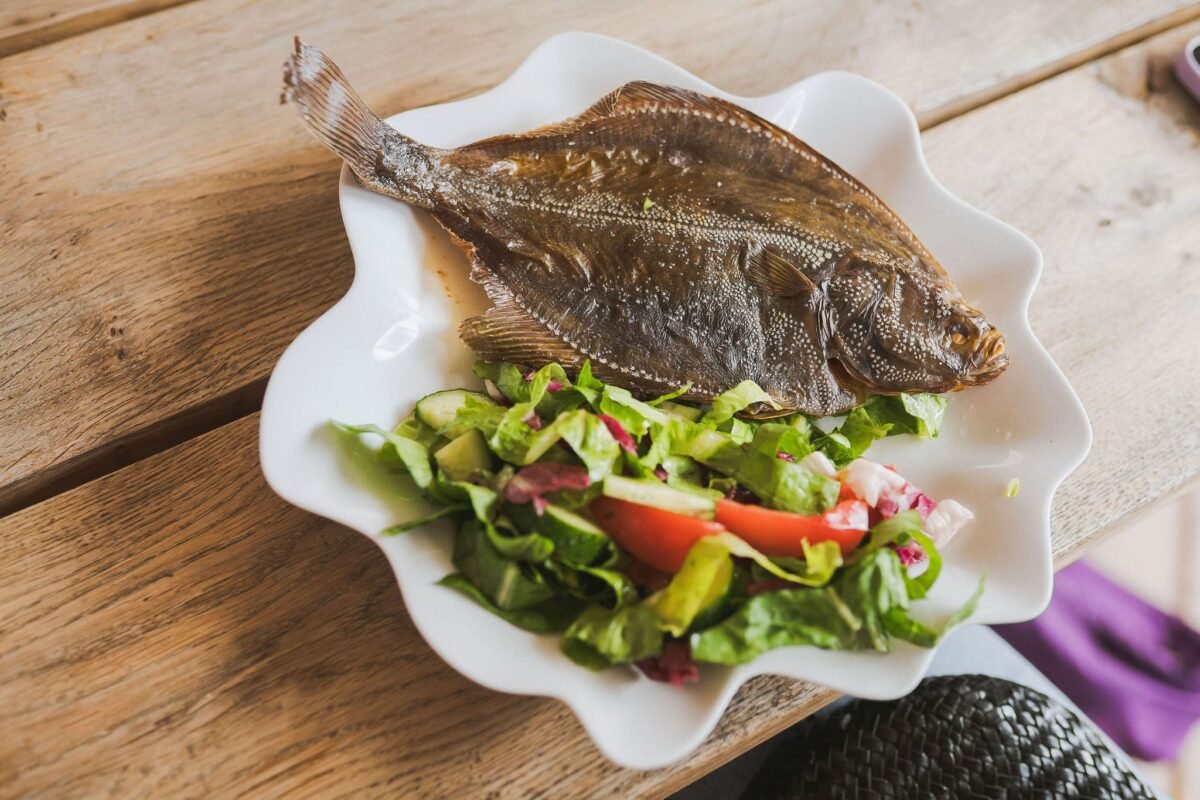
It is simple and delicious and, to me, feels far more connected to this landscape than searching for some elaborate international dish.
I also ate at Kuršis in Nida. It was perfectly fine, but not somewhere I would tell you that you absolutely must visit – and I’d rather be honest about that.
Stop at the Hill of Witches in Juodkrantė
On your way through Juodkrantė, particularly if you’re travelling with children, stop at the Hill of Witches – Raganų Kalnas.
A forest trail winds through more than 80 large oak sculptures inspired by Lithuanian folklore, including witches, devils and pagan characters. The sculpture project began around 1979–1981 and has grown into one of Juodkrantė’s best-known attractions.
It’s outdoors, slightly strange and much more entertaining for children than another conventional museum.
And if your children know nothing about Lithuanian folklore when they arrive, they’ll certainly have questions by the time they leave.
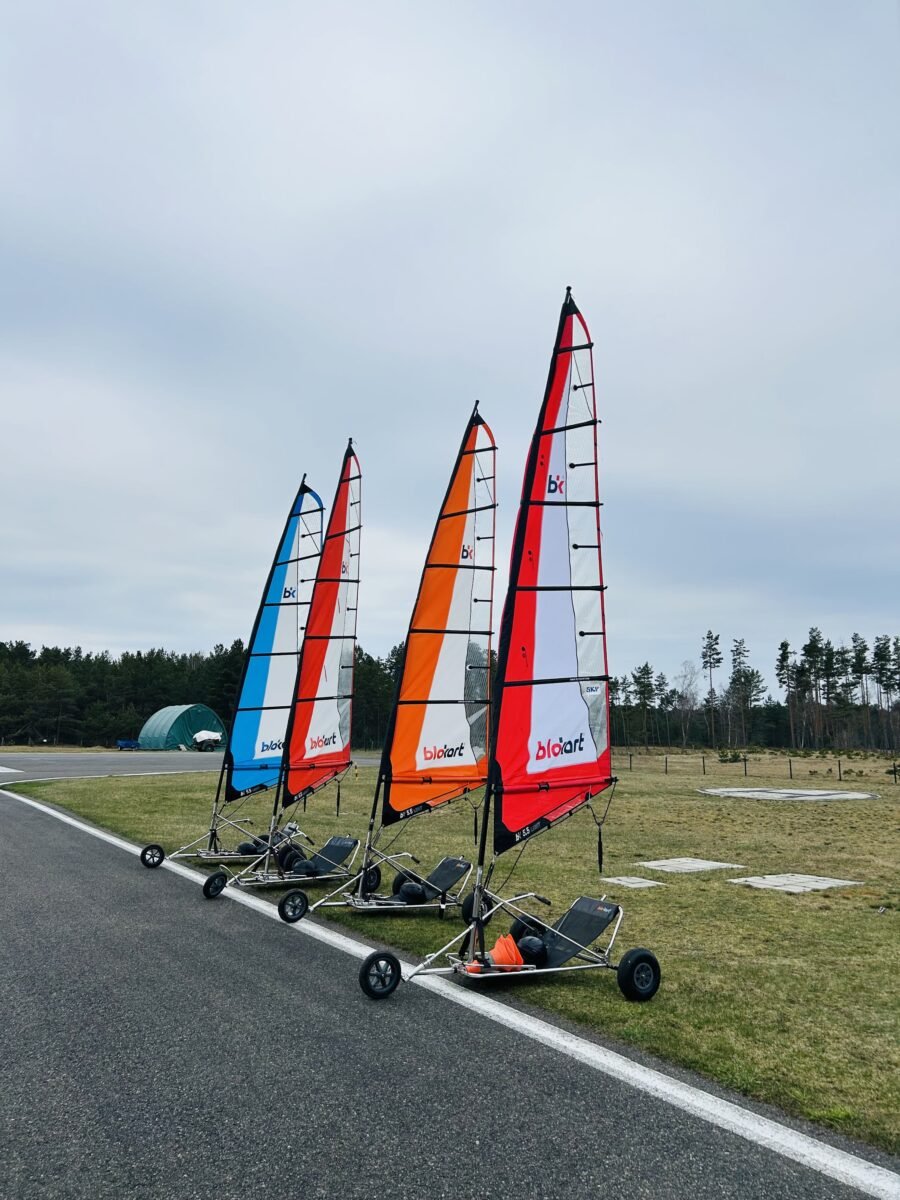
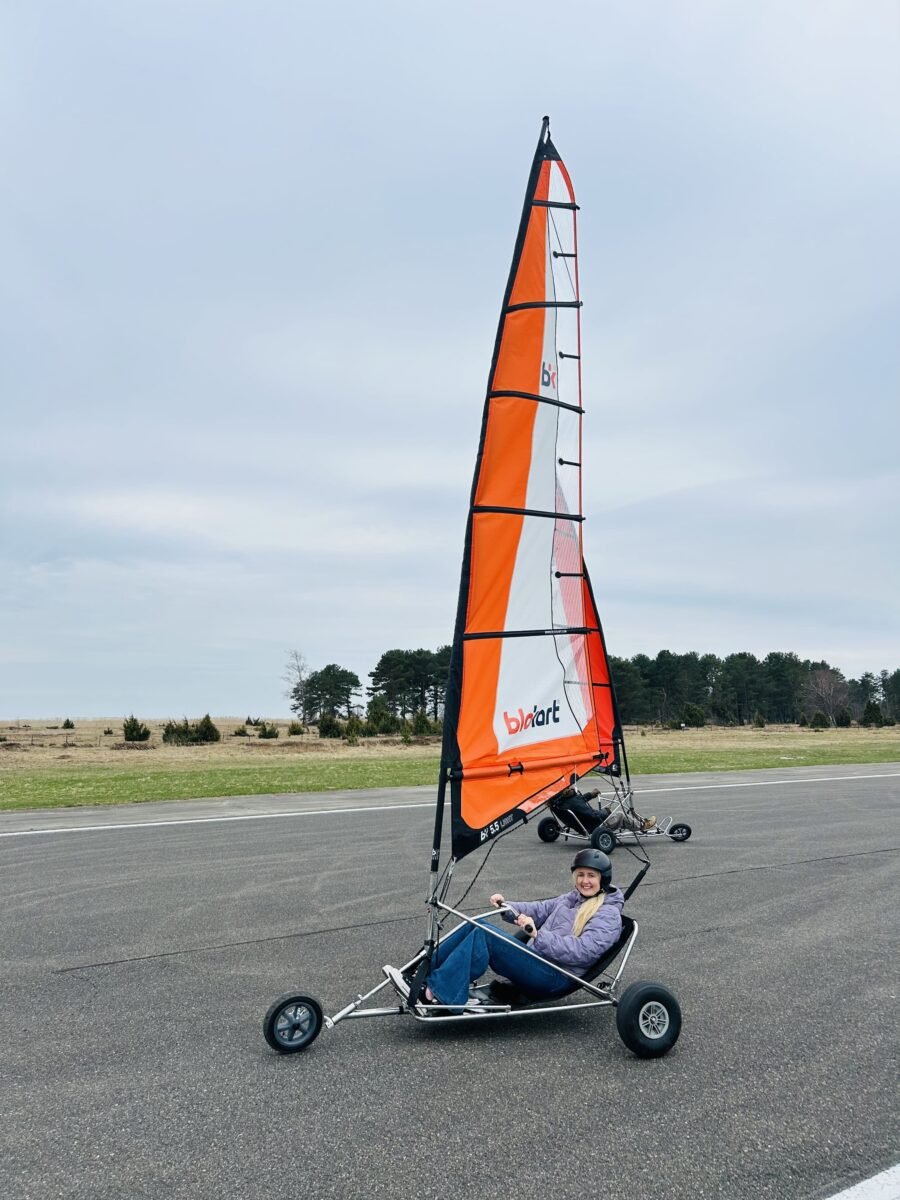
Try Blokart land sailing
If you want something a little more active in Nida, try Blokart land sailing at Nida Aerodrome. You sit low to the ground in a small three-wheeled land yacht and let the wind do the work. I tried it myself and, although it takes a few minutes to understand how to steer and control the sail, it quickly becomes really fun — especially once you start picking up speed. It’s one of those slightly unexpected activities you probably don’t associate with a quiet trip to the Curonian Spit, which is exactly why I liked it.
Where to stay in Nida
If you want to slow the itinerary down, I would definitely spend a night in Nida. I’ve stayed at SPA Nida. My experience was straightforward: clean, comfortable and convenient. It wasn’t a hotel I would travel to Nida specifically to experience, but it worked perfectly well as a base. And really, in Nida, the destination is outside your hotel room.
Book a Yacht Tour of the Curonian Lagoon & Port HERE
How many days do you need for Lithuania’s coast?
You could technically rush through much of this in two days.
I wouldn’t.
For a first visit, I think three to four days gives you a much better experience.
My ideal 4-day Lithuania coast itinerary
Day 1 – Palanga
Explore Palanga, visit the pier and Antanas Mončys Art Museum, have a good dinner and spend the night in Palanga.
Day 2 – Karklė and Klaipėda
Go amber catching in Karklė, visit the Dutchman’s Cap, continue to Klaipėda for the Old Town and lunch, then try canoeing on the Danė River. Stay in Klaipėda or continue across to the Curonian Spit.
Day 3 – Curonian Spit and Nida
Drive through Neringa, visit the Dead Dunes and continue to Nida. Explore the village, see the weathervanes, visit Mizgiris Amber Museum and climb Parnidis Dune. Spend the night in Nida.
Day 4 – Nida and Juodkrantė
Enjoy a slower morning in Nida, try kayaking if the Baltic weather behaves, eat smoked fish and stop at the Hill of Witches in Juodkrantė before heading back.
With children, I’d definitely choose the four-day version rather than trying to tick everything off as quickly as possible.
Is Lithuania’s coast worth visiting with kids?
Absolutely.
But I also don’t think you need to visit Lithuania’s coast because you’re travelling with children.
That’s an important distinction.
There is plenty here that works beautifully for families – searching for amber in the Baltic, hunting for Klaipėda’s tiny sculptures, touching art at the Mončys museum, climbing dunes, decoding Nida’s weathervanes and meeting wooden devils on the Hill of Witches.
But this is equally a trip I would recommend to adults travelling without children.
Come for the empty beaches. Come for the spas. Come for the seafood and restaurants. Come to paddle down a river at night or stand on top of a dune looking across two completely different bodies of water.
And come because this is a very different kind of European summer.
Lithuania’s Baltic coast isn’t about scorching temperatures, packed beaches or fighting for a sun lounger. The weather is milder, the Baltic can be moody, and you should probably have a jacket somewhere in the car even in summer.
But that’s part of what I like about it.
There are pine forests behind the beaches. There is space. There are places where you can walk down to the sea and realise there is almost nobody else there.
And perhaps because I spent so many years living in some of the world’s biggest cities, that feels increasingly luxurious to me.
Palanga will probably always be the most nostalgic part of the coast for me. I can walk onto the same pier I remember from childhood, but now I can follow it with an excellent dinner and an amber spa treatment.
Then, a day later, I can stand knee-deep in the Baltic searching for 50-million-year-old amber.
And another day after that, I can be on top of a dune in Nida looking across the Curonian Lagoon.
For such a small country, Lithuania manages to fit an awful lot into a very short stretch of coastline.
Practical information for visiting Lithuania’s coast
Best time to visit: I would choose late spring to early autumn. July and August give you the best chance of beach weather but are also the busiest months. Personally, I think the coast is beautiful when it’s slightly cooler too.
Do you need a car? Not necessarily for Palanga or Klaipėda, but for this complete itinerary I would strongly recommend one. It makes Karklė, the Dutchman’s Cap and exploring the Curonian Spit much easier.
Palanga or Nida? If you can, do both. They are completely different. Palanga has more of a resort atmosphere, restaurants and spas; Nida is about dunes, nature, fishing-village heritage and the Curonian Lagoon.
How long should you stay? Three days minimum; four is much more relaxed.
Can you visit with children? Yes. Amber catching, Klaipėda’s sculptures, the Mončys museum, Parnidis Dune and the Hill of Witches are particularly easy to turn into experiences rather than conventional sightseeing.
What should you pack? Layers. This is the Baltic, not the Mediterranean. Even during summer, wind and weather can change quickly.
One thing I wouldn’t skip: Amber catching in Karklė. I’ve travelled around Lithuania extensively, and this is still one of the most unusual experiences I’ve tried here.
Photos: by Simas Bernotas and myself